
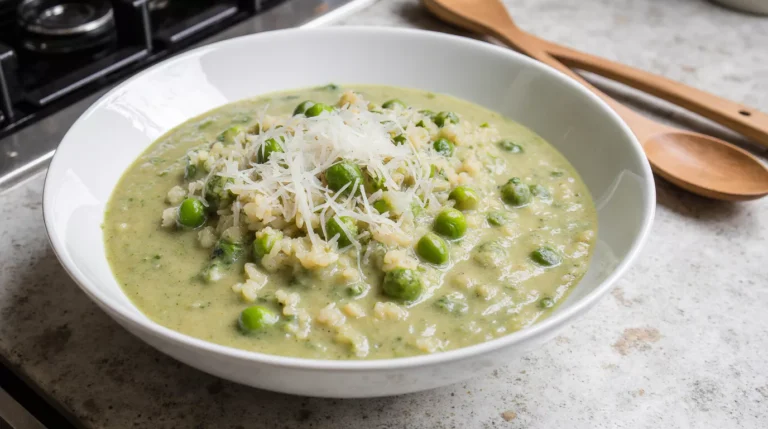
Some recipes make you feel like you’ve entered a more elegant version of your own kitchen, and risotto is one of them. It looks refined, tastes rich and gives the impression that you spent an hour crafting something special, even though the method is simple and mostly repetitive. That is the beauty of a well-made bowl, especially when you bring peas into the picture. Their sweetness blends into the warm starch of the rice, creating a dish that feels comforting, silky and bright all at once. That balanced texture is the result of small choices made with intention, which is why learning how to handle a pea risotto transforms your weeknight cooking.
Risotto fits naturally into many eating patterns because it adapts well to different sides and routines. People who enjoy balanced meal structures often pair it with simple energizing dishes such as the ideas shared in the high carb low fat meals collection. It brings warmth without heaviness and offers a steady rhythm in the kitchen. And on days when Alex needs a little push before stirring for twenty minutes, a quick homemade drink like the one from the iced shaken espresso dunkin guide is usually enough motivation. Good coffee leads to good stirring, and good stirring leads to good risotto.
What truly elevates this dish, beyond its simplicity, are five important secrets that shape how creamy, smooth and flavorful the final bowl becomes. Once you understand these details, your risotto becomes predictable in the best way, and you gain the confidence to make it anytime.
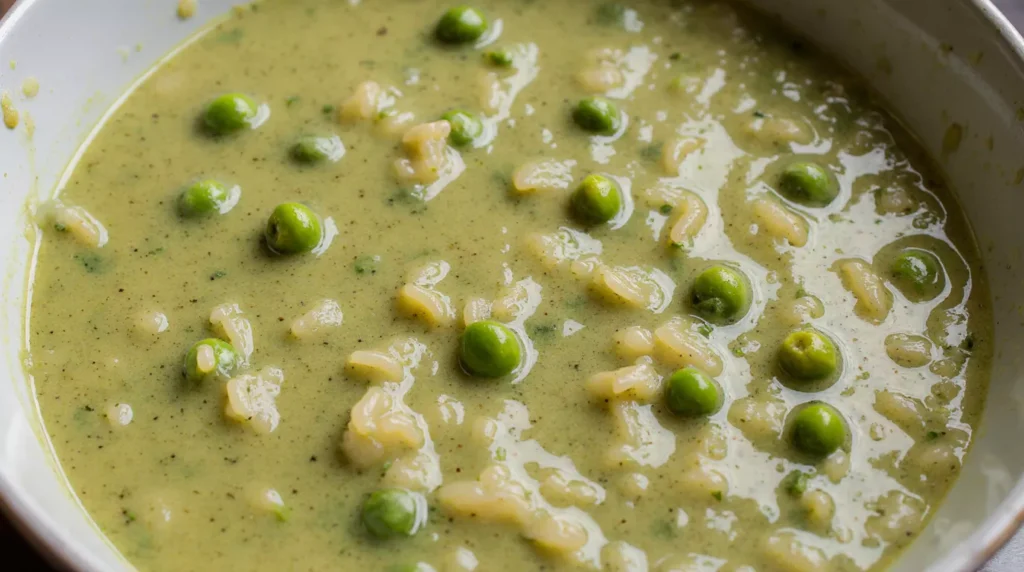
Why This Risotto Works Well in Different Routines
Pea risotto has a gentle sweetness that pairs beautifully with the savory foundation of Parmesan and broth. It is light enough to serve on warm days yet comforting enough for colder evenings. The ingredient list is short, and most kitchens already have everything needed to make it. Frozen peas work as well as fresh ones, and the rice keeps its quality for months in the pantry.
The method is structured but calm. If you already follow organized cooking habits similar to those in the low carb vegetarian meal prep selection, risotto becomes another reliable recipe in your routine. It scales easily, reheats well when handled correctly and welcomes seasonal variations.
Five Secrets for a Velvety Pea Risotto
Use the Right Rice
Short-grain rice is the foundation of any smooth risotto. Arborio and Carnaroli work best because they contain the starch that dissolves into the broth and creates natural creaminess. Long-grain rice cannot replicate this effect and will leave the dish loose instead of silky.
Arborio softens quickly and is ideal for beginners. Carnaroli holds its texture slightly longer, giving you a more controlled finish. Either one will produce a proper risotto when used with steady heat and gentle stirring.
Warm the Broth Before Adding It
Temperature stability shapes the entire dish. Cold broth tightens the rice unevenly and blocks the release of starch. Warm broth blends effortlessly with the grains and keeps the simmer consistent. This simple step is responsible for much of the smooth texture that risotto is known for.
Warming the broth is also helpful for cooks who prepare meals often. It prevents surprises and keeps the process predictable.
Stir Gently and Consistently
Creaminess comes from friction. The grains rub against each other as they cook, and this movement slowly releases starch into the broth. You do not need to stir constantly. You only need to stir often enough to keep the rice moving. The motion should feel relaxed and steady.
Stir, wait, add broth, repeat. This rhythm builds the texture naturally and makes the dish feel soothing both to cook and to eat.
Add the Peas at the Right Time
Peas cook quickly and lose color if heated too long. Add them near the end so they stay bright, sweet and firm. Fresh peas need three to four minutes. Frozen peas need less than two.
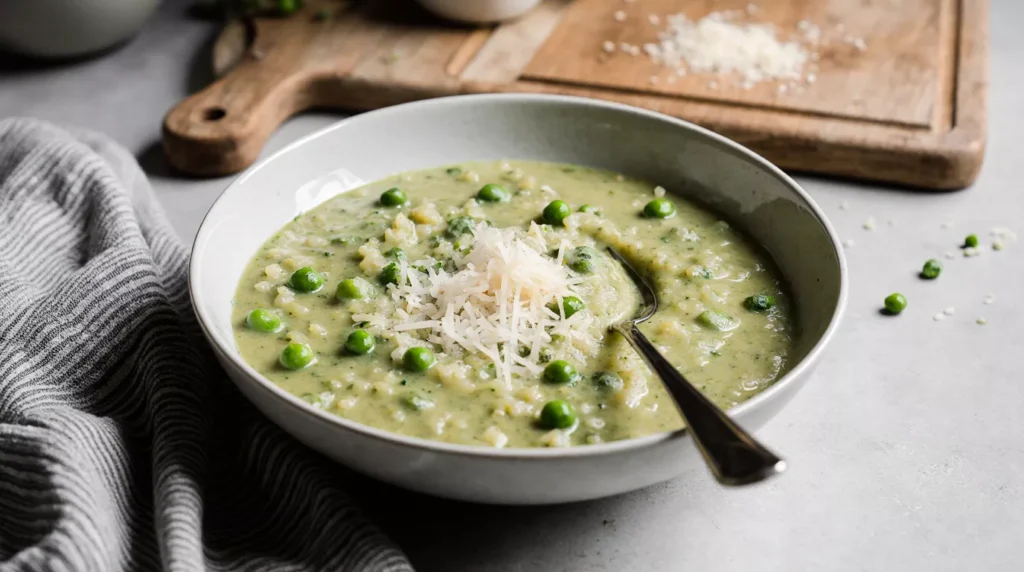
Some cooks blend a small handful of peas with a spoon of broth to create a green puree. Mixing this into the risotto deepens both color and flavor. It is optional but adds a lively touch that looks impressive without extra effort.
Let the Risotto Rest Before Serving
A brief rest allows the starch to settle and the texture to tighten. One minute off the heat can transform a loose mixture into a cohesive, velvety risotto. After resting, adjust the consistency with a splash of warm broth if you prefer a looser finish.
This small detail becomes especially useful when pairing the risotto with practical meals such as those featured in the healthy meals for truck drivers guide, where consistency and comfort matter.
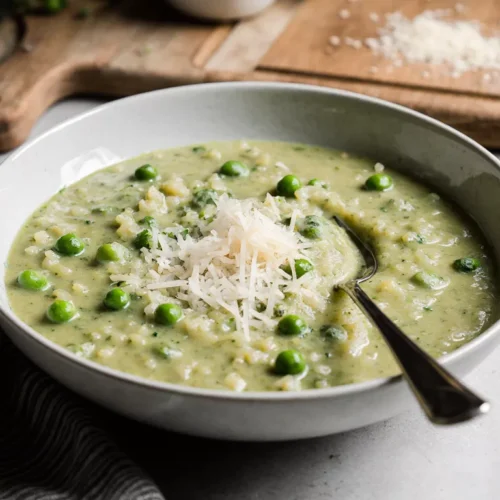
Pea Risotto
Ingredients
Main Ingredients
- 1 cup arborio rice
- 1 tbsp olive oil
- 1 small onion finely chopped
- 3 cups vegetable broth warmed
- 1 cup frozen peas
- 1/4 cup Parmesan cheese grated
Instructions
- Heat olive oil in a pan over medium heat.
- Sauté onion until soft and translucent.
- Stir in the arborio rice and cook for 1–2 minutes.
- Gradually add warm broth, stirring constantly until absorbed.
- Add peas during the last 5 minutes of cooking.
- Stir in Parmesan cheese before serving.
Notes
The Cooking Science Behind Risotto
Understanding the behavior of rice helps you control the final texture. Short-grain rice contains amylopectin, a starch that dissolves easily into warm broth. Adding broth gradually encourages the rice to release this starch in layers, building creaminess step by step.
Peas bring natural sugars that brighten the flavor. Butter and Parmesan melt into the dish, filling small spaces between grains and creating a smooth mouthfeel. Heat levels play a role too. The simmer must stay low and steady to avoid reducing the broth too quickly or cooking the rice unevenly.
Knowing these details gives you the confidence to make adjustments and keeps your risotto consistent even as you personalize the recipe.
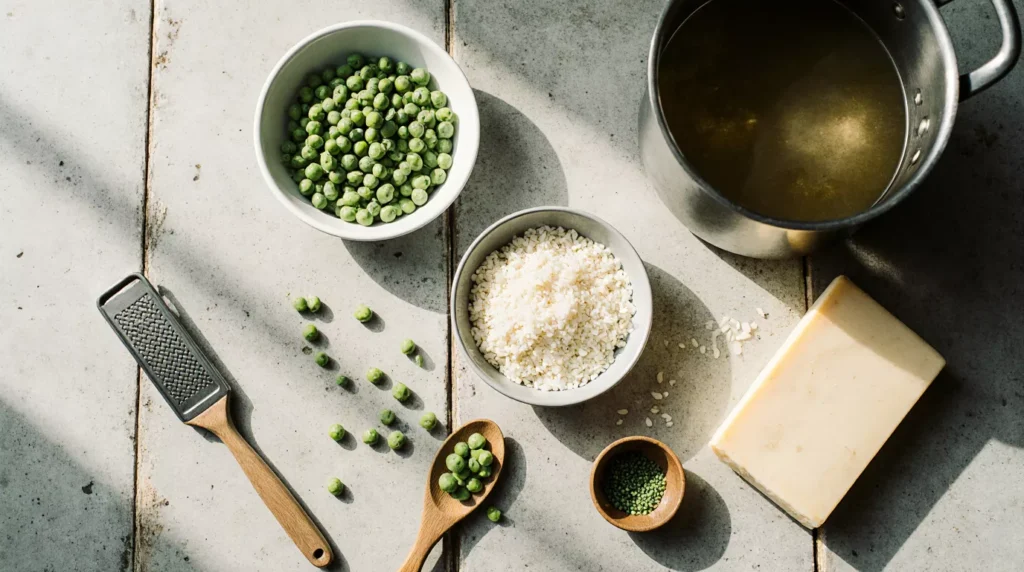
Ingredients for a Proper Pea Risotto
Arborio or Carnaroli rice
Fresh peas or frozen peas
Warm vegetable or chicken broth
Butter
Olive oil
Finely chopped onion or shallot
Parmesan cheese
Salt and pepper
Optional additions such as mint, lemon zest or mascarpone
Step-by-Step Method
Warm the Broth
Keep the broth on a low simmer so every ladle blends smoothly.
Build the Flavor Base
Cook chopped onion or shallot in a mix of olive oil and butter until soft and fragrant.
Toast the Rice
Add the rice and stir for a minute or two to strengthen the grains and improve absorption.
Add Broth Gradually
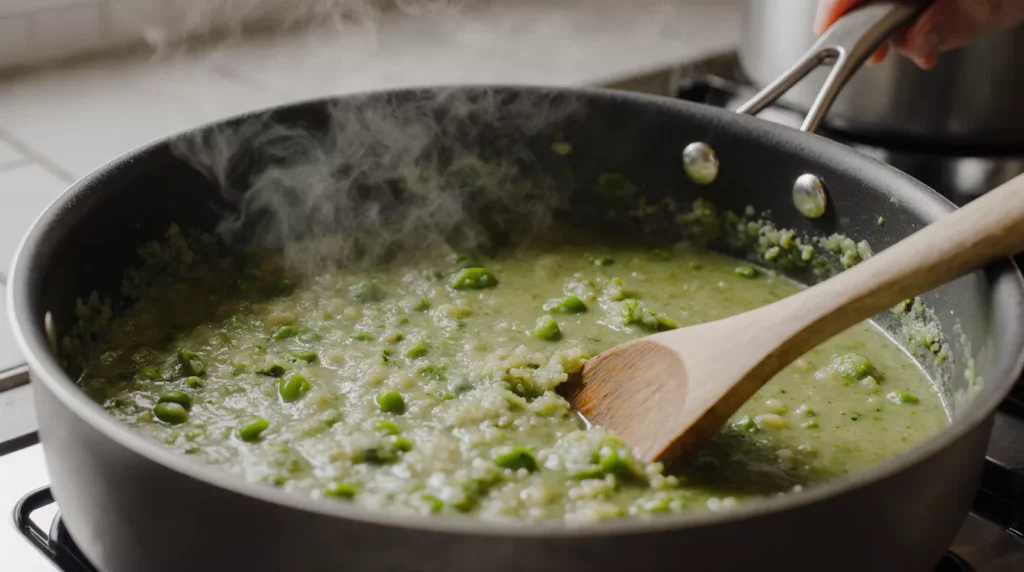
Pour one ladle of warm broth at a time. Stir gently, let it absorb and repeat. This slow method creates the creamy structure.
Add the Peas
Stir in the peas near the end of cooking. Fresh peas need a few minutes. Frozen peas need less.
Finish With Butter and Parmesan
Turn off the heat. Stir in butter and Parmesan until the risotto becomes glossy.
Rest and Adjust
Let the risotto rest for a minute. Adjust the texture with a spoon of warm broth if needed.
Variations That Add New Flavor
Pea risotto is flexible. It welcomes new ingredients without losing its core character. These variations add flavor and color while keeping the method almost identical.
Lemon and Herb Pea Risotto
Lemon zest and fresh herbs lift the sweetness of the peas. Mint gives the dish a bright freshness, while parsley adds a clean herbal note. Add herbs at the very end so they stay vibrant.
Mushroom and Pea Risotto
Sauté sliced mushrooms at the beginning to build depth. Their earthy flavor pairs naturally with the soft sweetness of the peas. Add them back near the end to preserve their texture.
Mascarpone Pea Risotto
A spoon of mascarpone stirred in after cooking makes the risotto smoother and richer without adding heaviness. This variation works especially well when you want a more luxurious finish.
Green Puree Pea Risotto
Blend a small handful of peas with a little warm broth. Stir this puree into the risotto to deepen the color and flavor. This technique is simple yet makes the dish look almost restaurant-ready.
Each variation stays true to the dish and requires no complex changes.
Mistakes to Avoid
Some small habits can affect the final texture of risotto. These are the most common mistakes and how to avoid them.
Using the Wrong Rice
Long-grain rice will not release enough starch to create creaminess. Stick to Arborio or Carnaroli for consistent results.
Adding Cold Broth
Cold broth interrupts the cooking process and tightens the rice. Warm broth keeps the dish smooth.
Rushing the Cooking Time
Risotto needs slow heat and gradual broth additions. If you cook too fast, the texture becomes uneven.
Adding Peas Too Early
Peas lose their bright color and fresh taste quickly if overheated. Add them during the final minutes.
Over-Stirring
Stirring too aggressively breaks the grains and makes the dish mushy. Gentle stirring works best.
Skipping the Resting Step
Resting helps the texture settle so the risotto becomes silky rather than loose.
Following these habits ensures the dish stays smooth and flavorful.
Nutrition Guide
Pea risotto feels creamy, but it stays balanced because the ingredients are simple. The peas add fiber and plant protein. The rice provides slow energy. Parmesan and butter contribute richness without overpowering the dish.
Approximate values for one serving:
Calories: 380 to 420
Protein: 11 to 13 g
Carbohydrates: 55 to 60 g
Fat: 10 to 14 g
Fiber: 4 to 6 g
Sugar: 3 to 4 g
Sodium: depends on the broth
This profile fits well in structured eating routines and pairs naturally with balanced sides or lighter dishes. Readers who follow routines similar to the meals in the healthy meals for truck drivers guide often appreciate meals that feel satisfying without being heavy.
Macronutrient Table
| Component | Amount per serving |
|---|---|
| Carbohydrates | 55 to 60 g |
| Protein | 11 to 13 g |
| Fat | 10 to 14 g |
| Fiber | 4 to 6 g |
| Net Carbs | 49 to 56 g |
These values help you adjust portions based on your goals. You can pair the dish with vegetables or a simple salad if you want a lighter plate.
Meal Prep and Storage
Risotto is known for being best when fresh, but pea risotto adapts surprisingly well to meal prep with the right technique.
Storing the Risotto
Place portions in airtight containers. Add a thin layer of broth on top before closing the lid. This prevents the rice from drying out. The risotto keeps well in the fridge for two to three days.
Reheating
Warm the risotto gently in a pan with a splash of broth. Stir slowly until the creamy texture returns. Avoid reheating without added liquid, because the rice may tighten too quickly.
Freezing
Freezing works best with the blended green version, as it maintains a smoother texture after thawing. The classic version is less ideal because risotto becomes softer once frozen.
Meal prep flexibility is one reason this dish pairs well with balanced routines. People who organize weekly meals in a simple, structured way, often inspired by ideas like those in the low carb vegetarian meal prep, appreciate how risotto can be prepared ahead without losing comfort or flavor.
Serving Ideas
Pea risotto welcomes toppings that add freshness or contrast. A squeeze of lemon brightens the dish. Black pepper adds aromatic warmth. Fresh herbs, roasted vegetables or seared mushrooms complement the sweetness of the peas.
For a clean pairing, a simple salad with lemon dressing works well. If you prefer something refreshing to sip with your meal, a light homemade drink like the one in the how to make salted caramel cold foam guide can add a pleasant contrast without feeling heavy.
Why This Dish Fits Modern Cooking Routines
Pea risotto shows how simple ingredients can turn into an elegant meal with minimal effort. It fits many routines because it is flexible, affordable and easy to adapt. You can prepare it on a quiet evening, serve it during the weekend or portion it for a few easy lunches.
It blends comfortably with practical weekly cooking styles. When paired with energizing dishes like those in the high carb low fat meals collection or enjoyed alongside a cool homemade drink from the iced shaken espresso dunkin guide, it becomes part of a balanced and enjoyable mealtime rhythm.
Final Thoughts
Pea risotto proves that impressive meals do not require complicated steps. A handful of accessible ingredients, a calm cooking rhythm and a little attention to detail are enough to create a dish that tastes rich, smooth and satisfying. The five secrets in this guide ensure that your risotto becomes velvety every time, no matter your experience level.
Once you learn how to manage heat, stirring and timing, the dish becomes second nature. It works in every season, pairs easily with other recipes and brings a restaurant-style feel to your table without extra work. This is the kind of recipe that grows with you. The more you make it, the better it becomes.