
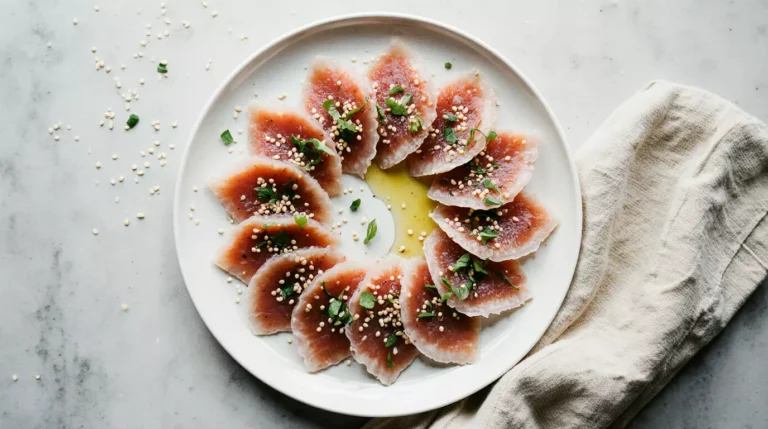
Some nights you want dinner to feel a little fancy without turning your kitchen into a disaster zone. That is exactly when tuna carpaccio shines. It looks like a white-tablecloth starter, but it can be a calm, clean prep if you know the few details that actually matter.
It also hits a sweet spot for everyday eating. It is light, high in protein, fast to assemble, and it does not rely on heavy sauces. The catch is that raw tuna is unforgiving. A small mistake in fish choice, temperature, or slicing can take it from “wow” to “why is this chewy?”
By the end of this guide, you will know how to pick the right tuna, slice it paper-thin without shredding it, and build a bright, balanced dressing that makes the fish taste like itself, only better. You will also get my go-to tuna carpaccio recipe with smart variations that stay true to the dish.
Quick Answer
Tuna carpaccio is thinly sliced raw tuna served chilled with a bright dressing, usually olive oil plus citrus, and a few sharp toppings for contrast. The key is sushi-grade tuna, very cold fish, and slicing across the grain as thin as you can.
What Tuna Carpaccio Is (And What It Is Not)
Carpaccio started as thinly sliced raw beef, but in modern kitchens “carpaccio” often means any protein sliced very thin and served raw or barely cured. Carpaccio tuna is all about delicate texture and clean flavor. You are not hiding the fish. You are framing it.
Here is what tuna carpaccio is not:
- It is not a poke bowl flattened on a plate
- It is not seared tuna sliced thick
- It is not a heavily marinated ceviche
A proper tuna fish carpaccio is chilled, sliced very thin, lightly dressed, and topped with just enough bite and crunch to keep each bite interesting.
In my kitchen, this works because I treat carpaccio like a balance equation: cold, fat, acid, salt, and one crunchy element. Too much of any one thing and the tuna disappears.

Tuna Carpaccio
Ingredients
For the Tuna
- 10 to 12 oz sushi-grade tuna loin or block yellowfin or bigeye
- fine sea salt a pinch, for finishing
For the Dressing
- 3 tbsp extra virgin olive oil
- 1 tbsp toasted sesame oil
- 1.5 tbsp fresh lemon juice
- 1 tbsp fresh lime juice
- 1 tsp low-sodium soy sauce or tamari
- 1 tsp rice vinegar
- 1/2 tsp grated fresh ginger very fine
- 1 small garlic clove microplaned or a tiny pinch of garlic paste
- 1/2 tsp honey or maple syrup optional, for roundness
- freshly ground black pepper to taste
For Finishing (Optional Mix)
- 1 tbsp toasted sesame seeds
- 1 to 2 tbsp thin-sliced scallions
- 1 small radish shaved paper-thin
- 1 tsp capers rinsed and patted dry
- cucumber ribbons or thin slices optional
- chili flakes or chili oil a few dots, optional
- 1 small handful arugula or microgreens optional
Instructions
- Slice the tuna very thinly using a sharp knife; arrange in a single layer on a serving plate.
- In a bowl, whisk together all dressing ingredients until well blended.
- Drizzle dressing over the tuna slices evenly.
- Sprinkle with sea salt and freshly ground black pepper.
- Finish with a balanced mix of toppings like sesame seeds, scallions, and microgreens.
- Serve immediately as a chilled appetizer or light main course.
Notes
Fish Safety and Buying Tuna You Can Serve Raw
Raw fish is not the place to gamble. I am going to be direct and practical here.
What to look for
- Sushi-grade or sashimi-grade tuna from a reputable fishmonger or trusted market. “Sushi-grade” is not a regulated term everywhere, but good sellers use it to indicate handling intended for raw use.
- A clean smell (almost neutral). If it smells “fishy,” skip it.
- Firm, glossy flesh with no slimy surface.
- Deep color (varies by species). It should look fresh, not dull or brown.
Ask one question that matters
If you can, ask: “Was this handled for raw consumption?” A good counter person will answer confidently.
Frozen tuna is not a downgrade
A lot of raw-safe tuna is frozen at some point. Freezing can help manage parasite risk for certain fish, and it also makes slicing easier once you use partial freezing for carpaccio texture. I buy high-quality frozen blocks often, especially when fresh supply is inconsistent.
What I avoid for carpaccio
- Pre-cut “stew” tuna scraps
- Previously thawed tuna sitting in a puddle of liquid
- Tuna steaks that have been sitting uncovered in a case for days
If you are unsure, cook the tuna instead. Carpaccio should feel confident, not anxious.

The Real Secret: Temperature and Texture
If you take only one technique from this article, make it this:
Tuna carpaccio slices best when the fish is very cold and just slightly firm.
When tuna is fully soft, the knife drags and the slices tear. When it is rock-solid frozen, it can shatter and look ragged. The sweet spot is “semi-firm.”
My quick method
- Pat the tuna dry.
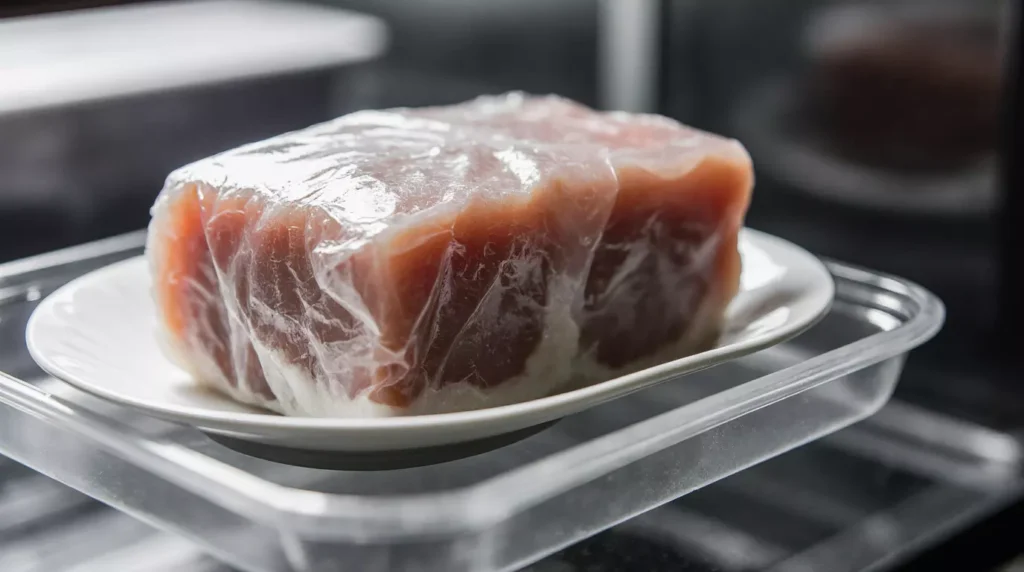
- Wrap it tightly in plastic wrap.
- Place it in the freezer for 12 to 18 minutes (timing depends on thickness).
- You want it firm enough that your finger leaves a faint imprint, not a deep dent.
That short chill window is the difference between clean, elegant slices and shredded fish confetti.
Tools That Make This Easier (No Fancy Gear Required)
You do not need a chef’s knife collection. You need one sharp blade and a calm setup.
- Very sharp slicing knife (a long chef’s knife works if sharp)
- Cutting board that will not slide (damp towel underneath helps)
- Parchment paper for shaping and pressing
- A chilled plate (I put plates in the fridge for 10 minutes)
- Optional: microplane for citrus zest
If your knife is dull, stop and sharpen it. Carpaccio is basically a knife test.

Tuna Carpaccio Recipe (My Bright Citrus-Sesame Version)
This is my primary, complete recipe for the article.
Yield
Serves 4 as a starter, or 2 as a light main with sides
Ingredients
For the tuna
- 10 to 12 oz sushi-grade tuna loin or block (yellowfin or bigeye work well)
- Fine sea salt (a pinch at the end)
For the dressing
- 3 tbsp extra virgin olive oil
- 1 tbsp toasted sesame oil
- 1½ tbsp fresh lemon juice
- 1 tbsp fresh lime juice
- 1 tsp low-sodium soy sauce (or tamari)
- 1 tsp rice vinegar
- ½ tsp grated fresh ginger (very fine)
- 1 small garlic clove, microplaned (or a tiny pinch of garlic paste)
- ½ tsp honey or maple syrup (optional, for roundness, can be omitted)
- Freshly ground black pepper
For finishing
Choose a mix that feels balanced, not crowded:
- 1 tbsp toasted sesame seeds
- 1 to 2 tbsp thin-sliced scallions
- 1 small radish, shaved paper-thin (optional but great crunch)
- 1 tsp capers, rinsed and patted dry (optional)
- A few cucumber ribbons or thin slices (optional)
- Chili flakes or a few dots of chili oil (optional)
- 1 small handful arugula or microgreens (optional)
Step-by-step instructions
1) Chill the tuna for clean slicing
Pat tuna dry. Wrap tightly. Freeze 12 to 18 minutes until slightly firm.
2) Make the dressing
Whisk olive oil, sesame oil, lemon, lime, soy sauce, rice vinegar, ginger, garlic, and pepper. Taste it. You want it bright and slightly salty, not sour like salad dressing. Adjust with a few drops of oil or citrus as needed.
3) Slice the tuna paper-thin
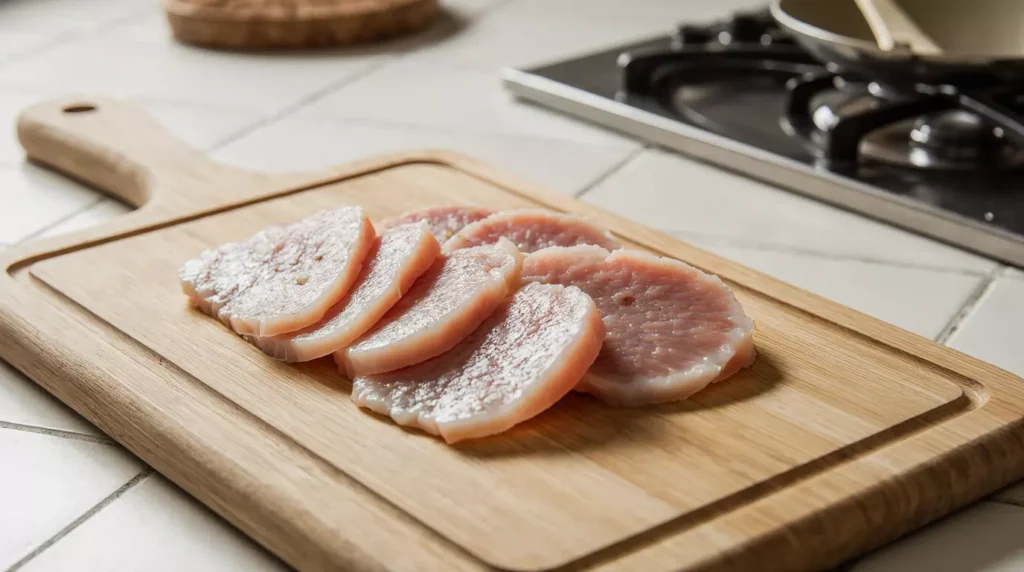
Unwrap tuna. Place it on a stable board. Slice across the grain using long, smooth strokes. Do not saw back and forth. Aim for slices about the thickness of a playing card or thinner.
If slices are sticking, wipe the blade clean and try again.
4) Plate like a pro, the easy way
Lay slices on a chilled plate in a single layer, slightly overlapping in a circle. For extra clean presentation, place the slices between two sheets of parchment and gently press with a flat-bottom pan for 5 seconds. This spreads them a touch and looks restaurant-level without effort.
5) Dress and finish
Spoon dressing lightly over the tuna. Start small. You can always add more, but you cannot take it back.
Finish with sesame seeds, scallions, and one crunchy element like radish or cucumber. Add a pinch of salt at the very end if needed.
Serve immediately
Tuna carpaccio is best within 10 to 15 minutes of dressing. After that, it starts to “cook” and lose that silky texture.
The 4-Step Process I Use Every Time
Here is the practical rhythm that keeps this stress-free:
- Chill plates and tuna first
- Mix dressing and prep toppings while tuna firms up
- Slice, plate, then dress lightly
- Serve right away, while everything is cold and clean
That is it. When you keep the order tight, the whole dish feels effortless.
What to Serve With Tuna Carpaccio
You can keep it simple or build it into a full meal. In my kitchen, I usually pair it with something warm and neutral so the raw tuna stays the star.
Good pairings:
- Crispy toast points or thin crostini
- A simple rice bowl on the side
- Roasted asparagus or blistered green beans
- A small citrusy salad
If you want a fun contrast to end the meal, I like something sweet that does not feel heavy. I have served carpaccio nights followed by a small portion of these zero sugar Oreo cookies when I want dessert without a sugar bomb.
Macronutrients Per Serving (Estimated)
| Per serving (1 of 4) | Amount |
|---|---|
| Calories (kcal) | 210 |
| Protein (g) | 28 |
| Carbohydrates (g) | 3 |
| Fat (g) | 10 |
Nutrition values are estimates and will vary by tuna type, exact oil used, and serving size.
Why This Recipe Works in Real Life
A lot of carpaccio tuna recipe write-ups act like you need a professional kitchen. You do not. You need control over three things: temperature, slicing, and restraint.
In my kitchen, this works because I build flavor in layers without drowning the fish:
- Olive oil gives body and mouthfeel
- Citrus adds lift
- Sesame adds depth
- Ginger and garlic add aroma
- Crunch adds contrast so each bite feels complete
The tuna stays recognizable. That is the point.
Troubleshooting: Fix the Common Carpaccio Problems
“My tuna is chewy.”
Usually this is one of three things:
- You sliced with the grain instead of across it
- Your slices are too thick
- The tuna warmed up before slicing
Fix: Chill longer, slice thinner, and cut across the grain.
“It looks messy on the plate.”
That is normally because the slices are sticking or tearing.
Fix:
- Wipe the blade between slices
- Use one long stroke
- Use the parchment press trick to clean up the look
“The dressing tastes too sharp.”
Citrus can take over fast.
Fix: Add a bit more olive oil, or a tiny touch of sweetness (even ¼ teaspoon) to round it out.
“It tastes bland.”
Raw tuna needs salt, but it needs it at the right moment.
Fix: Add a small pinch of fine salt after dressing and taste again. Also consider capers or soy sauce in tiny amounts.
Ingredient Swaps That Still Respect the Dish
You can customize without turning it into something else.
Tuna options
- Yellowfin: widely available, clean flavor
- Bigeye: richer and fattier
- Bluefin: luxurious, but often pricey and not necessary for great carpaccio
Acid options
- Lemon + lime is my favorite
- Yuzu juice (if you have it) is excellent
- Orange can work, but use less because it is sweeter and softer
Crunch options
- Shaved radish
- Thin cucumber
- Crispy shallots (use sparingly)
- Toasted pine nuts (tiny handful)
Herb options
- Chives
- Cilantro (if you love it)
- Microgreens
If you want to keep the vibe light after dinner, I sometimes point people toward naturally lighter sweets like these sugar-free dairy-free desserts so the whole meal feels intentional without being rigid.
Make-Ahead Tips (What You Can Prep Early)
Carpaccio is fast, but you can still prep smart.
You can do ahead
- Mix dressing up to 24 hours ahead and refrigerate
- Prep toppings (slice radish, toast sesame, slice scallions)
- Chill plates
What I do not do ahead
- I do not slice tuna hours ahead if I can avoid it. The surface dries out and the texture changes.
If you absolutely must slice ahead, do it within 30 to 45 minutes, keep slices covered tightly, and store them on the coldest shelf of your fridge. Then dress right before serving.
Storage and Food Safety Notes
Tuna carpaccio is a “make it and eat it” dish.
- Best eaten immediately after dressing
- If you have leftovers, keep them covered and cold and eat within 24 hours
- Expect texture to change. It will be less silky and more firm, because the acid continues working
When I have extra tuna that I do not want to serve raw the next day, I sear it quickly and use it in a rice bowl. That way nothing gets wasted.
Two Variations I Actually Use
These are not new recipes, just smart spins that keep the carpaccio identity.
1) Mediterranean-leaning tuna carpaccio
Use only olive oil and lemon for the dressing. Top with capers, shaved fennel, parsley, and a few crushed pink peppercorns. Finish with flaky salt.
2) Clean heat and crunch version
Keep the citrus-sesame dressing. Add thin cucumber ribbons and a few dots of chili oil. Skip capers so the heat feels clean, not salty-chaotic.
If you want a sweet bite after a spicy finish, something mellow works best. I have paired this meal with a small square of cottage cheese banana brownies because it feels cozy without competing with the bright tuna.
How to Make It Look Restaurant-Level Without Overthinking It
Most people think plating is about fancy tools. It is mostly about spacing and contrast.
My rules:
- Use a chilled, plain plate
- Keep the tuna in one thin layer
- Add toppings in a light, even scatter
- Leave some negative space
- Add crunch last so it stays crisp
If you want to take a photo for Discover or social, shoot from a slight angle and keep the background honest. A real kitchen counter looks better than a staged prop explosion.
Tuna Carpaccio and E-E-A-T: What Makes This Trustworthy
I do not publish raw fish advice unless it is grounded in practical handling and real outcomes. I have made versions of this for family meals, for friends who “do not eat raw fish” until they try it, and for those nights when I want dinner to feel special without a full production.
The consistent wins come from repeatable habits:
- Buy from a reputable source
- Keep it cold
- Slice thin
- Dress lightly
- Serve immediately
That is the difference between an internet idea and a dish you will actually make again.
What is in tuna carpaccio?
Tuna carpaccio is made from very thin slices of raw tuna served chilled and lightly dressed. A classic tuna carpaccio recipe usually includes high-quality tuna, olive oil, citrus juice, and a small amount of salt. Many versions also add subtle toppings like capers, shaved radish, scallions, or sesame seeds for texture. The goal is to enhance the natural flavor of the fish without covering it up, which is why carpaccio tuna is kept simple and clean.
What is the difference between tuna tartare and tuna carpaccio?
The main difference is how the tuna is cut and how the dish feels when you eat it. Tuna carpaccio is sliced paper-thin and laid flat on a plate, creating a delicate, silky texture. Tuna tartare, on the other hand, uses diced raw tuna mixed with seasoning and sometimes avocado or herbs. A tuna fish carpaccio highlights the purity of the fish through slicing, while tartare focuses more on mixing flavors together.
What tuna to use for carpaccio?
For carpaccio, always use sushi-grade or sashimi-grade tuna that is intended for raw consumption. Yellowfin and bigeye tuna are the most common choices for a reliable carpaccio tuna recipe because they have clean flavor and firm texture. The tuna should be very fresh, properly handled, and slightly chilled before slicing to achieve thin, even pieces.
What exactly is carpaccio?
Carpaccio is a dish made by slicing an ingredient extremely thin and serving it raw or barely cured. It originally referred to raw beef, but today the term includes fish and vegetables as well. In the case of tuna carpaccio, the fish is sliced thin, served cold, and finished with a light dressing to highlight its natural taste rather than transform it.
Final Thoughts
A great tuna carpaccio is not complicated. It is disciplined. You are working with a premium ingredient, so the job is to highlight it, not bury it.
If you make this once, you will start spotting the pattern behind every good raw-fish dish: cold fish, sharp knife, bright acid, and restraint. That is why this recipe holds up.
And if you want to end the meal on a playful seasonal note, I have also served carpaccio nights with a couple of delicate fall-flavored macarons when I want something small, pretty, and not heavy.