
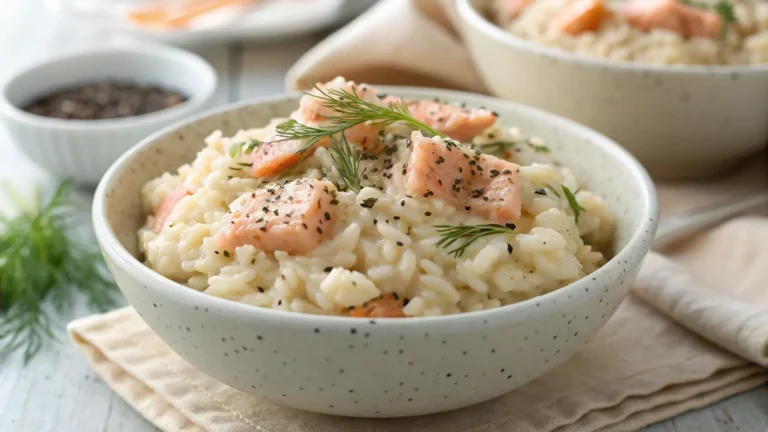
There are days when you want dinner to feel calm and intentional, not rushed or improvised. That is usually when salmon risotto makes sense in my kitchen. It is not fast food, but it is not fussy either. It rewards attention without demanding perfection, and the result feels nourishing in a quiet, steady way.
Salmon risotto matters because it combines two ingredients that can easily overpower each other if handled carelessly. Risotto needs patience and gentle heat. Salmon needs respect for timing and texture. When they come together properly, the dish is creamy without being heavy and rich without being overwhelming.
In this article, I am going to walk you through a salmon risotto recipe that works in real kitchens. You will learn how to build the risotto base, how to cook salmon so it stays tender, and how to bring everything together without losing balance. This is both a recipe and a practical guide, written from experience, not shortcuts.
Quick Answer
Salmon risotto is a creamy rice dish made by slowly cooking short grain rice with broth and finishing it with tender salmon. The creaminess comes from the rice starch, while salmon adds richness and protein without needing cream.
What Makes Salmon Risotto Different From Other Risottos
At its core, risotto with salmon follows the same technique as any classic risotto. The difference is timing and restraint.
Salmon brings:
- Natural oils
- Strong flavor
- Delicate texture
Risotto brings:
- Starch
- Structure
- Neutral richness
If salmon is added too early, it dries out or breaks apart. If added too late, it can feel disconnected from the dish. In my kitchen, the goal is integration without dominance. The rice should support the salmon, not bury it.
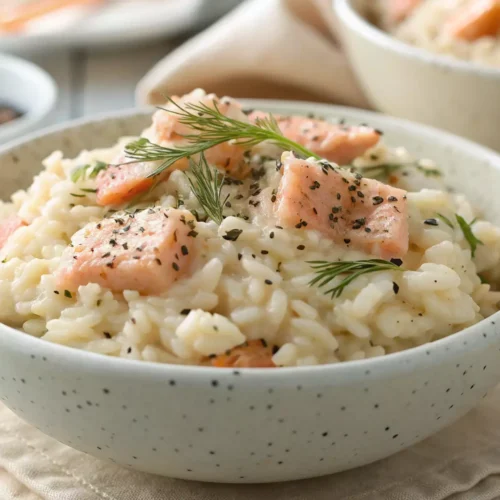
Salmon Risotto
Ingredients
Main Ingredients
- 1½ cups Arborio rice
- 4½ to 5 cups warm low sodium broth
- 2 tablespoons olive oil
- 1 tablespoon unsalted butter
- 1 small shallot finely minced
- ½ cup dry white wine
- 12 ounces fresh salmon cut into bite-sized pieces
- Salt to taste
- Freshly ground black pepper
Instructions
- Heat olive oil and butter in a pan over medium heat.
- Sauté the shallot until soft and fragrant.
- Add Arborio rice and stir for 1–2 minutes until slightly toasted.
- Pour in the white wine and cook until absorbed.
- Add warm broth gradually, stirring continuously, until rice is creamy and tender.
- Stir in salmon and cook for 3–5 minutes until fully cooked. Season with salt and pepper.
Notes
Choosing the Right Rice for Salmon Risotto
This is non negotiable. The rice determines the texture.
Use one of the following:
- Arborio
- Carnaroli
- Vialone Nano
Arborio is the most accessible and works well for salmon risotto at home. Carnaroli is slightly firmer and more forgiving, especially if you are new to risotto.
Avoid:
- Long grain rice
- Jasmine
- Basmati
- Converted rice
They will not release enough starch to create the creamy texture that defines risotto salmon.
Salmon Selection: Fresh, Smoked, or Leftover
This recipe uses fresh salmon, but understanding your options matters.
Fresh salmon
This is my default. It allows you to control texture and seasoning fully.
Choose:
- Center cut fillets
- Skin removed or skin on, your choice
- Firm flesh with clean smell
Smoked salmon
Smoked salmon changes the dish entirely. It becomes saltier and more aromatic. I use it in specific variations, not in the base recipe.
If you enjoy smoky flavors, dishes like smoked salmon chowder or smoked coho salmon show how smoke can be used intentionally rather than overpowering.
Leftover salmon
Leftover cooked salmon works if handled gently. Add it at the very end and warm it through without stirring aggressively.
The Broth Choice Matters More Than You Think
Broth shapes the entire risotto.
Use:
- Light vegetable broth
- Or mild chicken broth
Avoid strong seafood stocks. They can clash with salmon and overwhelm the rice.
Always keep broth warm. Cold broth interrupts starch release and throws off texture.
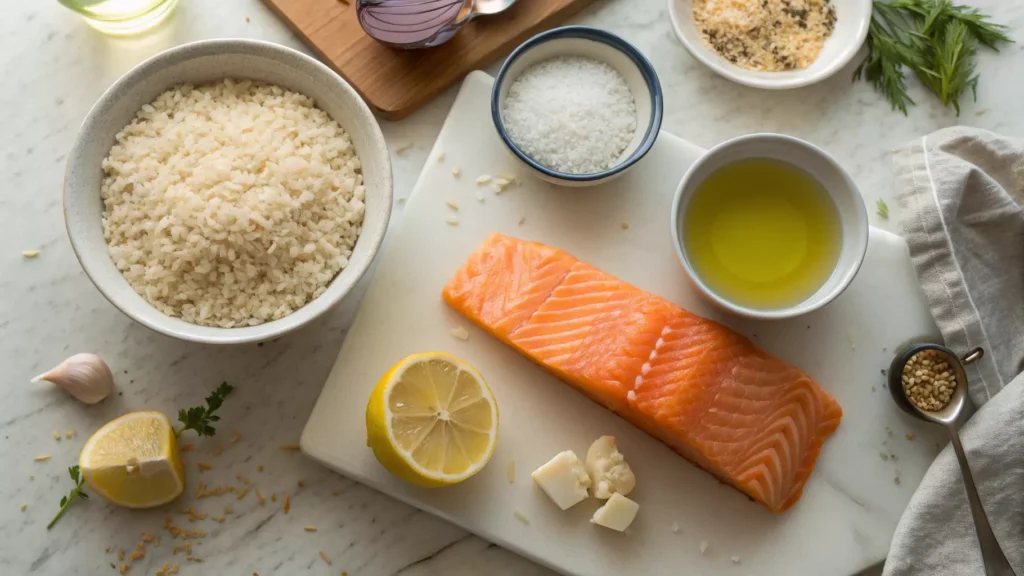
The Primary Recipe: Classic Salmon Risotto
This is the single primary recipe for the article.
Yield
Serves 4 as a main course
Serves 6 as a lighter portion
Ingredients
- 1½ cups Arborio rice
- 4½ to 5 cups warm low sodium broth
- 2 tablespoons olive oil
- 1 tablespoon unsalted butter
- 1 small shallot, finely minced
- ½ cup dry white wine
- 12 ounces fresh salmon, cut into bite sized pieces
- Salt, to taste
- Freshly ground black pepper
Optional finish:
- Lemon zest
- Fresh dill or chives
- Extra butter for gloss
Step by Step Instructions
Step 1: Warm the broth
Heat broth in a separate pot and keep it warm over low heat. Do not boil aggressively.
Step 2: Build the base
In a wide, heavy bottomed pot, heat olive oil and butter over medium heat. Add shallot and cook gently until translucent. No browning.
Step 3: Toast the rice
Add the rice and stir to coat each grain with fat. Cook for 1 to 2 minutes until the edges become translucent and the center remains opaque.
This step helps the rice maintain structure while releasing starch later.

Step 4: Deglaze with wine
Add wine and stir until mostly absorbed. This adds acidity and balance.
Step 5: Add broth gradually
Begin adding warm broth one ladle at a time, stirring gently. Allow each addition to be mostly absorbed before adding more.
Continue for about 15 minutes.
Step 6: Cook the salmon
While the risotto cooks, season the salmon lightly with salt and pepper. In a separate pan, cook salmon gently over medium heat until just opaque. Remove from heat and set aside.
This keeps the salmon tender and prevents overcooking.
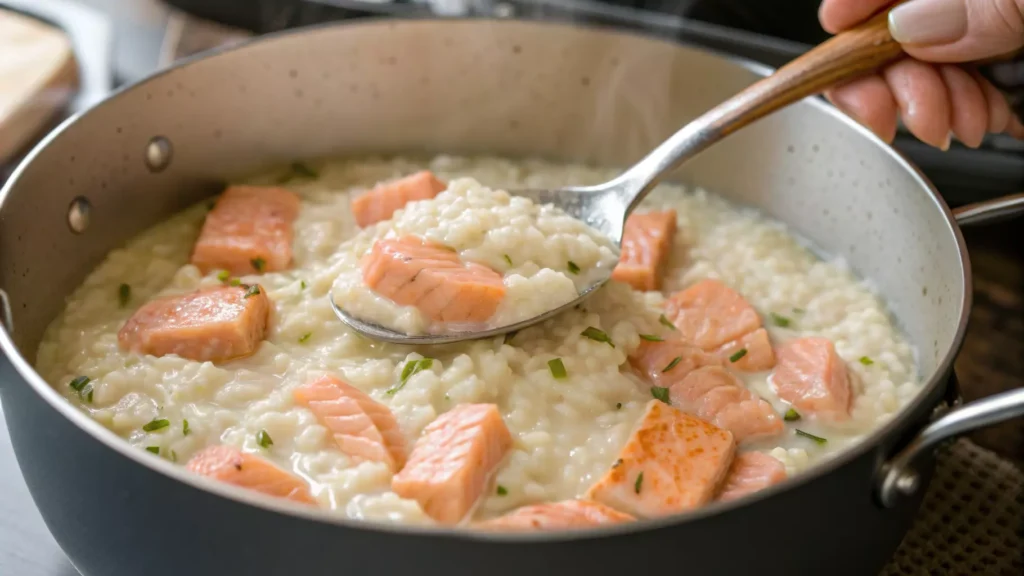
Step 7: Finish the risotto
When the rice is tender with a slight bite, remove the pot from heat. Gently fold in the salmon pieces.
Add extra broth if needed to loosen texture. Finish with herbs, zest, and butter if using.
Rest one minute, stir gently, and serve immediately.

Macronutrient Breakdown (Estimated Per Serving)
| Nutrient | Amount (Estimated) |
|---|---|
| Calories | 480 kcal |
| Protein | 32 g |
| Carbohydrates | 55 g |
| Fat | 16 g |
Nutrition values are estimates and vary based on salmon type and portion size.
Understanding Texture: What Salmon Risotto Should Look Like
Proper risotto should move. Italians describe it as all’onda, meaning it flows like a wave.
Signs you are there:
- Risotto spreads gently on the plate
- Rice is tender with slight resistance
- Salmon holds its shape
- Sauce looks creamy, not stiff
If it is too thick, add warm broth. If it is too loose, let it rest briefly and stir again.
Why This Salmon Risotto Works in Real Kitchens
In my kitchen, this works because it separates responsibilities. The risotto cooks on its own timeline. The salmon cooks quickly and joins at the end.
This approach avoids common problems:
- Dry salmon
- Mushy rice
- Overpowering fish flavor
It is the same principle I use in other seafood meals, even simple ones like smoked oysters, where restraint makes all the difference.
Common Mistakes and How to Avoid Them
Overcooking the salmon
Salmon should be just opaque. It will continue to warm once folded into the risotto.
Adding salmon too early
This breaks the fish apart and dulls flavor.
Using cold broth
Cold liquid shocks the rice and ruins texture.
Over stirring aggressively
Gentle stirring encourages starch release without making risotto gummy.
Flavor Variations That Still Respect Salmon Risotto
I keep variations restrained. Salmon risotto should stay balanced.
Lemon and herb salmon risotto
Add lemon zest and fresh dill at the end for brightness.
Spinach salmon risotto
Fold in a handful of wilted spinach before adding salmon. This echoes the flavor balance found in dishes like salmon and spinach stuffed pasta shells.
Light smoked salmon finish
Use a small amount of smoked salmon folded in at the end for aroma only.
Make Ahead, Storage, and Reheating
Risotto is best fresh, but leftovers can work.
Storage
- Cool quickly
- Store airtight up to 2 days
Reheating
- Add broth or water
- Heat gently while stirring
- Avoid high heat
This same moisture first approach keeps seafood dishes from drying out.
How Salmon Risotto Fits Into a Balanced Menu
Salmon risotto is rich but not heavy when portioned correctly.
I often serve it with:
- Simple green salad
- Steamed vegetables
- Roasted asparagus
If you want another salmon preparation for a different night, dishes like honey garlic glazed salmon show how salmon can shift from subtle to bold while still staying balanced.
Scaling the Recipe Without Losing Control
For larger groups:
- Use a wider pot
- Add broth slowly
- Cook salmon in batches
Crowding leads to uneven cooking.
Why Learning Salmon Risotto Is Worth It
Once you master salmon risotto, you understand:
- Timing
- Texture control
- Protein integration
- Starch management
These skills transfer to countless dishes. That is why I still make this recipe regularly.
Does salmon go with risotto?
Yes, salmon pairs very well with risotto when it is handled gently. The creamy texture of risotto balances the richness of the fish, while the mild flavor of properly cooked salmon blends into the dish without overpowering it. In a well-made salmon risotto, the rice provides structure and comfort, and the salmon adds depth and protein. The key is adding the salmon at the right moment so it stays tender and integrated.
Is risotto with salmon healthy?
Risotto with salmon can be a balanced and nourishing meal when portions are reasonable. Salmon provides high-quality protein and natural fats, while risotto offers energy from rice and satiety from its creamy texture. A risotto with salmon made without heavy cream and with moderate butter stays lighter than many people expect. As with most dishes, balance across the day matters more than labeling one meal as healthy or unhealthy.
What kind of fish should I eat with risotto?
Fish that works best with risotto is tender, flaky, and not overly strong. Salmon is a popular choice because it holds its shape and adds richness. Other good options include trout, cod, or halibut, depending on the flavor direction you want. For a classic risotto salmon style, fish that cooks quickly and stays moist is ideal. Strongly flavored or oily fish can overwhelm the rice.
What herbs are good in salmon risotto?
Fresh herbs that complement salmon risotto include dill, chives, parsley, and a small amount of tarragon. Dill pairs especially well with salmon, while chives add gentle onion notes without heaviness. Herbs should be added at the end so they stay fresh and aromatic. In a balanced salmon risotto recipe, herbs should lift the dish rather than dominate it.
Final Thoughts From My Kitchen
Salmon risotto is not about showing off. It is about patience and care. When you respect both the rice and the fish, the dish gives back comfort and depth.
This salmon risotto recipe is designed to be dependable. Make it once with attention, and it will become part of your rotation. It is the kind of meal that feels steady, nourishing, and worth the time you give it.