
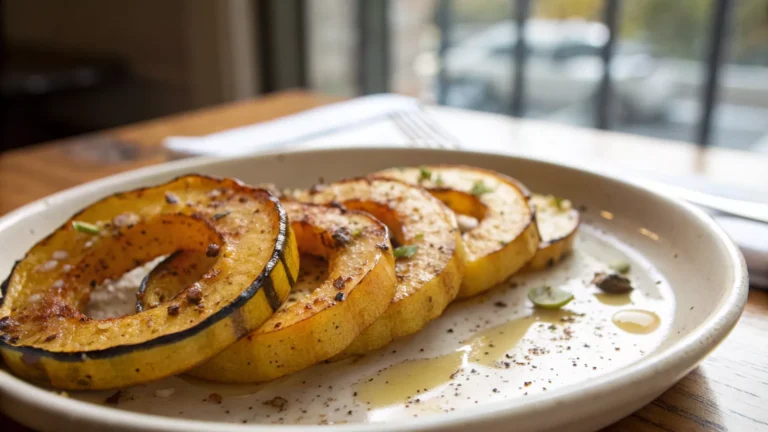
There are vegetables that demand work before they give anything back. Delicata squash is not one of them. The first time I cooked it, I kept waiting for the annoying part. The peeling, the soaking, the long roasting time. None of it came. I sliced it, seasoned it, cooked it, and it just worked.
That ease is exactly why delicata squash deserves more attention. It behaves like a comfort ingredient. Mild, slightly sweet, tender without turning mushy, and forgiving if you do not hit perfect timing. It fits into real home cooking, not just styled recipe photos.
This guide is not about one single recipe. It is about understanding delicata squash well enough that you can cook it confidently in different ways depending on your kitchen, your mood, and your time.
By the end, you will know how to cook delicata squash in the oven, in an air fryer, and on the grill, and more importantly, how to choose the right method for the result you actually want.
What Makes Delicata Squash Different From Other Squash
Delicata squash looks similar to acorn squash at first glance, but it behaves very differently once you cut into it. The most important difference is the skin.
Delicata squash has thin, tender skin that becomes completely edible when cooked. This changes everything. No peeling. No fighting with a vegetable peeler. No wasted flesh.
Texture-wise, delicata sits between butternut squash and sweet potato. It softens quickly but keeps its shape if cooked properly. Flavor-wise, it is lightly sweet with a subtle nutty note, not overpowering and not bland.
From a cooking perspective, this means delicata squash is ideal for:
- High-heat roasting
- Quick air frying
- Direct grilling without foil
It also means mistakes are easier to recover from. Even if you slightly overcook it, delicata rarely turns watery or stringy.
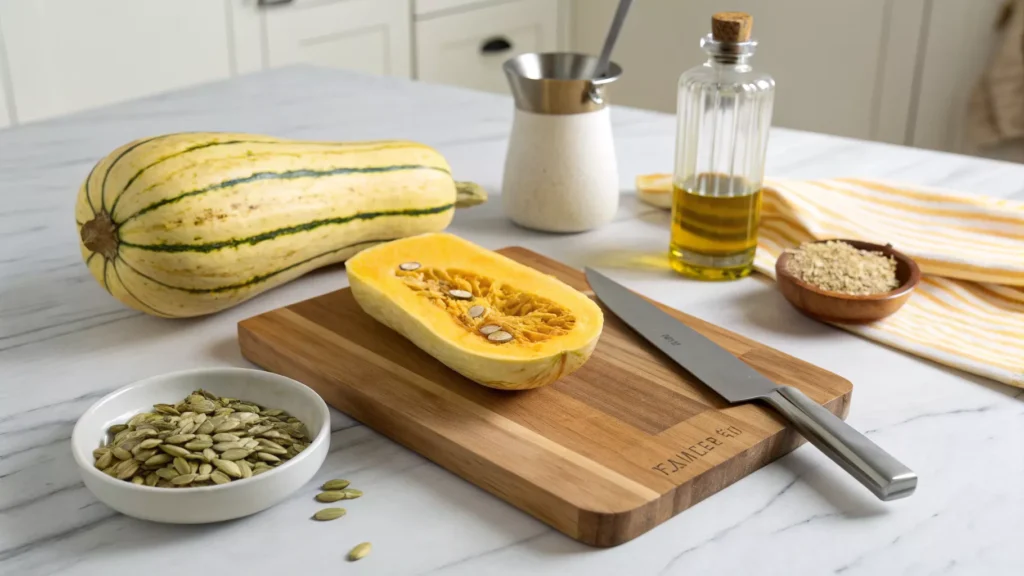
Do You Need to Peel Delicata Squash
This is the most common question, and the answer is simple.
No, you do not need to peel delicata squash.
The skin softens as it cooks and becomes completely edible. In fact, peeling delicata removes one of its best features. The skin helps the slices hold their shape and adds a slight chew that contrasts nicely with the soft interior.
The only preparation needed is:
- Wash the squash well
- Cut off the stem end
- Slice it lengthwise
- Scoop out the seeds
Once sliced, you can cut it into half-moons or rings depending on how you plan to cook it.
How to Cut Delicata Squash Without Struggling
Delicata squash is much easier to cut than most winter squash, but a few small habits make it even simpler.
Use a sharp chef’s knife, not a serrated one. Cut the squash lengthwise rather than trying to saw through the middle crosswise first. If the squash rolls, slice a thin piece off one side to create a flat base.
When removing seeds, use a regular spoon and scrape gently. Delicata seeds are usually smaller and less stubborn than those in acorn or spaghetti squash.
Once seeded, cut into slices about half an inch thick. Thinner slices crisp better. Thicker slices stay softer and creamier inside.
“A simple roasted delicata squash recipe used as an example”
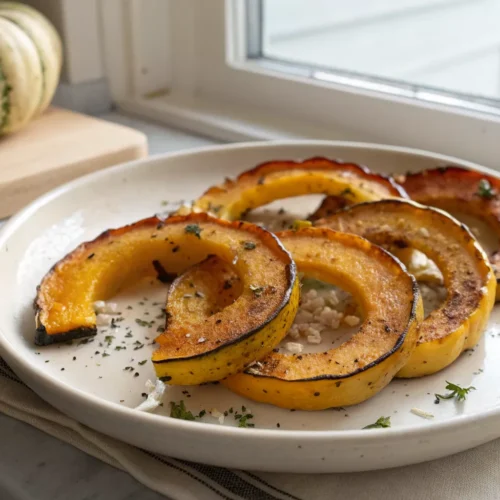
Simple Roasted Delicata Squash
Ingredients
Main Ingredients
- 2 delicata squash halved and seeded
- 2 tbsp olive oil
- 1 tsp sea salt
- 0.5 tsp black pepper
- 1 tsp garlic powder
- 1 tbsp fresh parsley chopped (optional)
Instructions
- Preheat oven to 400°F (200°C).
- Slice squash into ½-inch thick half-moons.
- Toss squash slices with olive oil, salt, pepper, and garlic powder.
- Spread on a baking sheet in a single layer.
- Roast for 25–30 minutes, flipping halfway through.
- Garnish with parsley before serving, if desired.
Notes
Choosing the Best Cooking Method for Delicata Squash
Before jumping into methods, it helps to understand what each one does best.
- Oven roasting gives you deep caramelization and even browning
- Air frying gives you speed and crisp edges with minimal oil
- Grilling gives you light smokiness and char without heaviness
None of these methods is “better” in general. The best one depends on how you plan to eat the squash and what else you are cooking.
If delicata is the star of the plate, roasting usually wins. If it is a quick side on a busy night, the air fryer is hard to beat. If you are already grilling protein, throwing delicata on the grill makes sense.
When you’re choosing how to serve delicata squash as part of a balanced weeknight dinner, it helps to build your cooking around meals that are easy to reheat or reuse during the week. This kind of approach pairs nicely with a thoughtful meal prep strategy so you can enjoy more home-cooked food with less stress and less cleanup.
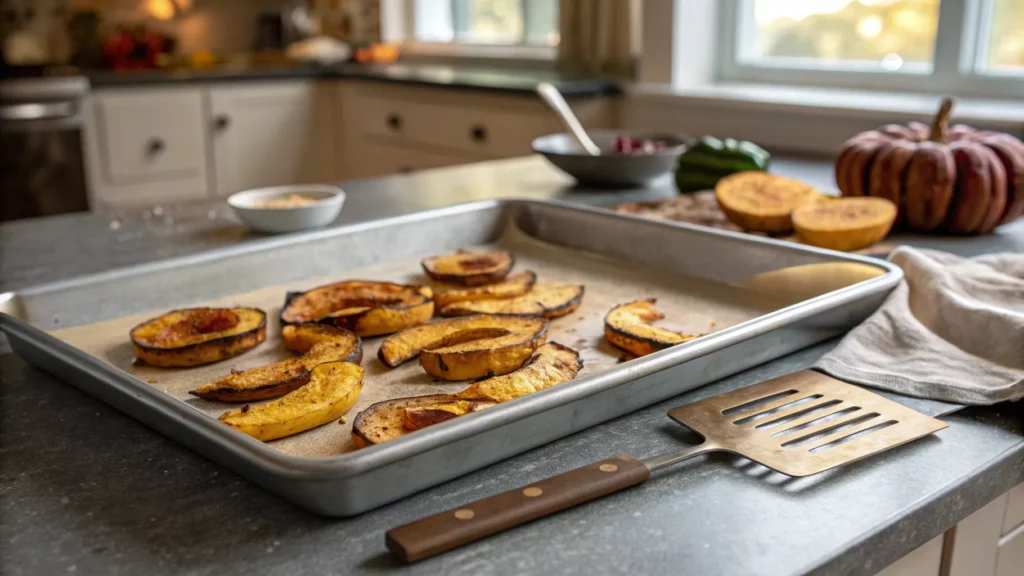
How to Roast Delicata Squash in the Oven
Roasting is the most reliable way to cook delicata squash, especially if it is your first time.
Why roasting works so well
The oven gives delicata enough time to soften while allowing natural sugars to caramelize. The result is tender slices with golden edges and a concentrated flavor.
Basic oven temperature
A hot oven works best. Aim for 400°F (205°C). Lower temperatures steam the squash instead of roasting it.
Seasoning approach
Delicata does not need much. Olive oil, salt, and pepper are enough to highlight its natural sweetness. From there, you can layer flavors depending on the meal.
Good additions include:
- Smoked paprika
- Garlic powder
- Fresh thyme or rosemary
- A light drizzle of maple syrup if serving with savory mains
Roasting method
Spread the slices in a single layer on a baking sheet. Overcrowding traps steam and prevents browning. Turn the slices once halfway through cooking.
Most delicata squash will be perfectly roasted in 25 to 30 minutes, depending on thickness.
You are looking for:
- Fork-tender centers
- Golden brown edges
- No visible moisture pooling on the tray
If the squash browns too fast, lower the rack or reduce the oven temperature slightly.
Delicata squash has a mild sweetness that works well alongside proteins and grains you might already be cooking ahead of time, and if you’re already prepping several components for the week, taking a few extra minutes for squash fits right into a high-protein meal prep routine that keeps lunches and dinners satisfying.
Common Roasting Mistakes and How to Avoid Them
The biggest mistake is using too much oil. Delicata does not need to be drenched. Excess oil makes it greasy instead of crisp.
Another mistake is under-seasoning. Because delicata is mild, salt matters. Season lightly before roasting and adjust after.
Finally, avoid parchment paper if you want deep browning. Roasting directly on a metal pan gives better caramelization.
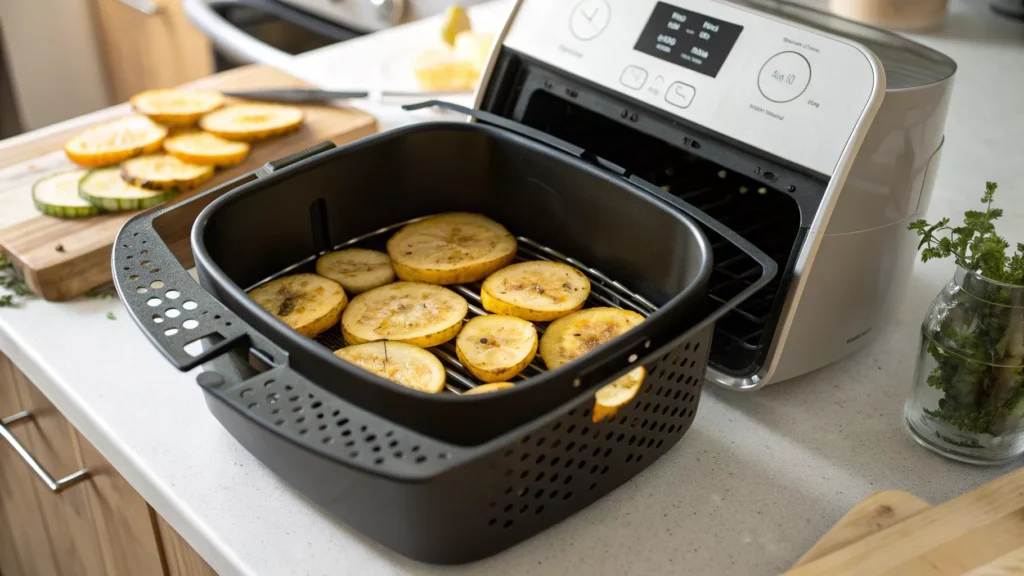
How to Cook Delicata Squash in the Air Fryer
Air frying delicata squash is ideal when you want speed without sacrificing texture.
Why the air fryer works
The air fryer concentrates heat and airflow, which helps delicata crisp quickly. Because the squash is already tender by nature, it cooks evenly without drying out.
Preparation tips
Cut the squash into evenly sized slices. Toss lightly with oil and seasoning. Too much oil prevents crisping.
Air fryer temperature
375°F (190°C) is a good balance. Higher temperatures risk burning the edges before the center softens.
Cooking time
Most slices cook in 12 to 15 minutes. Shake the basket halfway through to promote even browning.
The result should be:
- Lightly crisp edges
- Soft interior
- No bitterness or scorching
Air fryer delicata squash works especially well as a snack-style side or paired with quick proteins like chicken or tofu.
When Air Frying Is Not the Best Choice
If you are cooking a large batch, the air fryer becomes inefficient. Overcrowding leads to uneven cooking.
Air frying also produces less caramelization than oven roasting. If you want deep roasted flavor, the oven is still the better option.
How to Grill Delicata Squash Without It Falling Apart
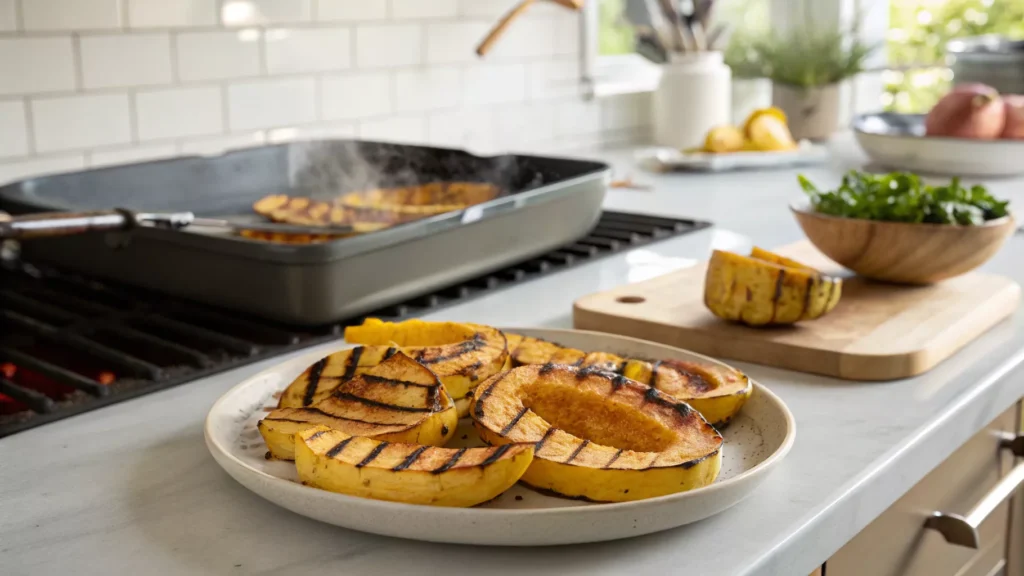
Grilling delicata squash is less common, but it is one of the most rewarding ways to cook it when done correctly. The key is understanding that delicata cooks quickly and does not need aggressive heat.
Why grilling works
Delicata squash has enough natural sugar to caramelize over direct heat, but its thin skin and tender flesh mean it benefits from moderate temperatures rather than high flames. When grilled properly, it develops light char marks and a subtle smoky flavor without losing moisture.
How to prepare delicata squash for the grill
Slice the squash lengthwise and then into half-moons about half an inch thick. Thinner slices are more likely to fall through grates or overcook before grill marks form.
Toss lightly with oil, salt, and pepper. Avoid sugary marinades at this stage, as they burn quickly on the grill.
Grill setup
Preheat the grill to medium heat. Clean and lightly oil the grates to prevent sticking. If your grill runs hot, cook over indirect heat first and finish over direct heat for marks.
Grilling technique
Place the slices directly on the grates and let them cook undisturbed for a few minutes before turning. This allows grill marks to form and reduces sticking. Flip once and cook until tender.
Most delicata squash will be ready in 8 to 10 minutes total.
The final texture should be:
- Lightly charred on the outside
- Tender but intact inside
- Not mushy or brittle
Flavor Pairings That Work Especially Well With Delicata Squash
Delicata squash is flexible. It can lean savory, sweet, or somewhere in between depending on how you season it.
Savory pairings
- Olive oil and fresh herbs
- Garlic and black pepper
- Parmesan or pecorino added after cooking
- Lemon zest for brightness
Sweet-leaning pairings
- Maple syrup or honey in small amounts
- Cinnamon or nutmeg
- Toasted nuts for texture contrast
Balanced combinations
One of the best ways to use delicata squash is to combine savory and sweet elements. For example, roasted delicata with olive oil, salt, and rosemary finished with a drizzle of maple syrup creates depth without overpowering the squash itself.
The key is restraint. Delicata squash tastes best when the seasoning supports it rather than covers it.
Comparing Oven, Air Fryer, and Grill Results
Each cooking method produces a slightly different outcome, even with the same seasoning.
Oven roasted delicata squash
- Deep caramelization
- Even tenderness
- Best for larger portions and meal prep
- Strongest flavor concentration
Air fryer delicata squash
- Crisp edges
- Faster cooking time
- Ideal for small batches
- Lighter overall texture
Grilled delicata squash
- Subtle smokiness
- Light char
- Best as part of a grilled meal
- Slightly firmer texture
Choosing the right method is less about preference and more about context. What else is cooking. How much time you have. Whether delicata is the centerpiece or a supporting side.
How to Use Delicata Squash in Real Meals
Delicata squash works best when treated as part of a complete plate rather than a standalone dish.
It pairs naturally with:
- Roasted chicken or turkey
- Grilled fish
- Lentils or beans
- Grain bowls with farro or quinoa
Because it cooks quickly and reheats well, delicata squash is especially useful for weeknight meals where you want something comforting without committing to a long cooking process.
Storing Cooked Delicata Squash
Cooked delicata squash stores surprisingly well if handled properly.
Let it cool completely before storing. Transfer to an airtight container and refrigerate. It will keep for up to four days without losing texture.
Avoid stacking slices tightly while hot, as trapped steam softens the surface and reduces texture.
Reheating Without Losing Texture
The best way to reheat delicata squash is to avoid the microwave when possible.
Best reheating options
- Oven at 350°F for 8 to 10 minutes
- Air fryer at 350°F for 4 to 5 minutes
- Skillet over medium heat with a small amount of oil
Microwaving is convenient, but it softens the edges and removes any crispness. If you do use the microwave, reheat gently and uncovered.
Common Mistakes That Hold Delicata Squash Back
The most common mistake is treating delicata squash like other winter squash. It does not need heavy seasoning, long cooking times, or excessive oil.
Another mistake is cutting uneven slices. Inconsistent thickness leads to uneven cooking, especially in the air fryer or on the grill.
Finally, many people overcomplicate it. Delicata squash is forgiving, but it shines when kept simple.
Why Delicata Squash Is Worth Keeping in Rotation
Delicata squash fits modern home cooking better than most seasonal vegetables. It is fast, flexible, and approachable. It does not demand special equipment or advanced techniques.
Once you understand how to cook delicata squash properly, it stops feeling like a seasonal novelty and starts becoming a dependable ingredient you can rely on.
Whether roasted, air fried, or grilled, delicata squash rewards simplicity, attention to heat, and confidence in your choices. And that is exactly what good home cooking should feel like.
Do you eat the skin on a delicata squash?
Yes, the skin of a delicata squash is edible.
Delicata squash has thin skin that softens fully when cooked, so it does not need to be peeled before roasting, air frying, or grilling.
How do you prepare delicata squash?
To prepare delicata squash, wash it, trim the ends, cut it lengthwise, and remove the seeds.
The squash is then sliced and cooked with the skin on, since the skin becomes tender during cooking.
What does a delicata squash taste like?
Delicata squash has a mild, slightly sweet flavor.
When cooked, delicata squash is soft and creamy with a light nutty taste that is less sweet and less dense than butternut squash.
Is delicata squash the same as butternut squash?
No, delicata squash is not the same as butternut squash.
Delicata squash has edible skin and cooks faster, while butternut squash has thick skin that must be peeled and a denser, sweeter flesh.
do you have to peel delicata squash ?
No, you do not have to peel delicata squash.
Delicata squash has thin skin that becomes soft and fully edible when cooked. Unlike butternut or acorn squash, the skin does not stay tough, so the squash can be sliced and cooked with the skin on. This makes delicata squash easier and faster to prepare.