There is a quiet doubt that shows up early for many people eating plant-based. You build a meal, feel good about the ingredients, and then wonder if it will actually hold you. Hunger comes back sooner than expected, and protein becomes the question mark. High protein vegan meals exist because that doubt is real, and it is solvable.
In short, vegan meals can be high in protein when they are built intentionally. Protein does not disappear when animal foods do. It simply requires a different structure. When that structure is missing, meals feel incomplete. When it is present, vegan meals are just as satisfying as any other.
The key point is this: vegan eating works best when protein is planned, not assumed.
Why Protein Feels Harder on a Vegan Diet
Protein feels harder on a vegan diet because it is spread across more foods instead of concentrated in one.
Animal-based meals often rely on a single protein source. Vegan meals usually combine multiple sources to reach the same effect. Without planning, this leads to meals that look balanced but fall short in protein.
High protein vegan meals solve this by shifting the focus. Protein becomes the foundation instead of a side effect.
What Counts as High Protein in Vegan Meals
High protein vegan meals are not defined by one ingredient. They are defined by intention.
A high protein vegan meal:
- Has a clear protein base
- Uses protein-rich plant foods
- Combines sources when needed
- Treats protein as essential, not optional
If you can identify where most of the protein is coming from, the meal is on the right track.
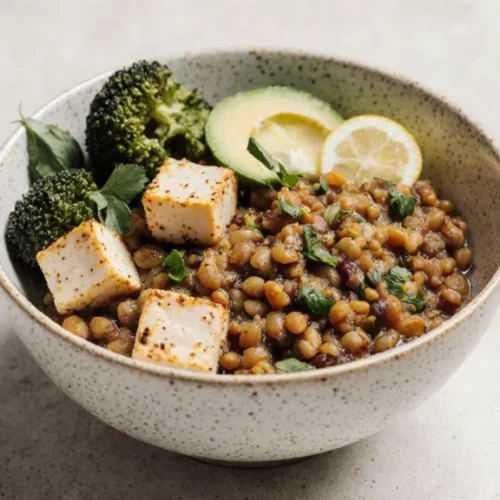
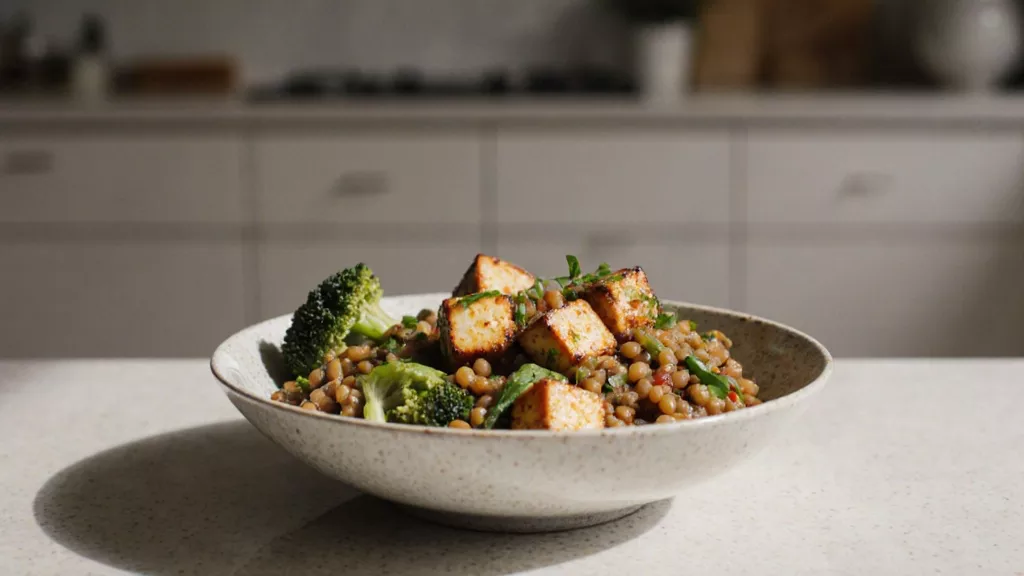
High Protein Tofu, Lentil & Veggie Bowl
Ingredients
Main Ingredients
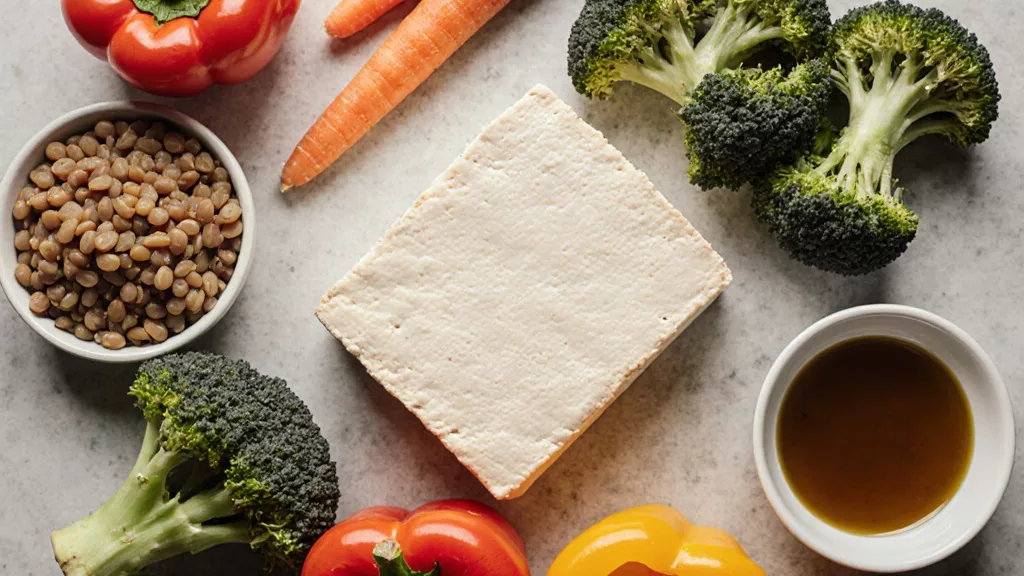
- 1 block firm tofu pressed and cubed
- 1 cup cooked lentils canned or pre-cooked
- 2 cups mixed vegetables broccoli, carrots, peppers
- 1 tablespoon olive oil
- 1 tablespoon soy sauce or lemon juice
- Salt to taste
- Black pepper to taste
Instructions
- Warm lentils until heated through.
- Heat olive oil in a pan and lightly brown tofu cubes.
- Cook vegetables until just tender.
- Combine tofu, lentils, and vegetables in a bowl.
- Season with soy sauce or lemon, salt, and pepper.
Notes
Reliable Vegan Protein Sources That Actually Work
Not all plant foods contribute meaningful protein.
Reliable vegan protein sources include:
- Legumes like lentils, chickpeas, and beans
- Soy-based foods such as tofu and tempeh
- Protein-rich grains
- Nuts and seeds used intentionally
- Plant-based protein blends used as part of meals
High protein vegan meals rely on these foods consistently, not occasionally.
The Protein-First Rule for Vegan Meals
In my kitchen, vegan meals follow the same rule as any other high protein approach.
Choose the protein first.
Before thinking about flavors or sides, decide:
- What is the main protein source in this meal?
Once that decision is made, the rest of the meal becomes easier to build and more satisfying to eat.
High Protein Vegan Breakfast Meals
Breakfast is where vegan meals often feel light.
Why Vegan Breakfast Needs Structure
Many vegan breakfasts lean heavily on fruit or grains. Without protein, hunger returns quickly.
High protein vegan breakfasts work best when built around:
- Tofu or tempeh
- Protein-rich grains
- Legume-based options
- Structured bowls instead of loose components
When protein is present early, the rest of the day becomes easier.
High Protein Vegan Lunch Meals
Lunch is a key opportunity to secure protein.
What a High Protein Vegan Lunch Looks Like
A satisfying vegan lunch usually includes:
- A legume or soy-based protein
- Vegetables for volume
- A supporting carb if needed
These meals travel well and hold up during busy days.
High Protein Vegan Dinners
Dinner is often where vegan meals shine.
Why Dinner Feels Easier
Vegan dinners allow more time and flexibility, making it easier to build balanced plates.
High protein vegan dinners often include:
- A strong protein base
- Cooked vegetables
- Simple combinations repeated across the week
Repetition builds confidence and consistency.
Combining Proteins for Better Results
Vegan meals often benefit from combining protein sources.
This does not need to be complicated.
Combining:
- Legumes with grains
- Soy-based proteins with vegetables
- Multiple moderate protein foods in one meal
Creates meals that feel fuller and last longer.

Common Mistakes With Vegan Protein
Certain mistakes repeat often.
Assuming All Vegan Foods Are High Protein
Many plant foods are nutritious but low in protein.
Treating Protein as a Topping
Protein needs to be central, not decorative.
Overcomplicating Meals
Simple, repeatable meals work best.
Avoiding these mistakes makes vegan eating more sustainable.
How Vegan Meals Fit Into the Bigger Protein System
High protein vegan meals are one variation within a larger protein-first framework.
The full system that connects different high protein approaches is explained in the main guide on high protein meals.
This cluster focuses only on plant-based, vegan meals.
Who Benefits Most From High Protein Vegan Meals
High protein vegan meals work especially well for people who:
- Eat fully plant-based
- Prefer plant-forward eating
- Want more structure in vegan meals
- Feel hungry too soon after eating vegan food
They are not about restriction. They are about balance.
How to Plan a Week of High Protein Vegan Meals
Vegan meals become much easier when protein planning happens once instead of every day. The goal is not to design perfect meals, but to remove daily uncertainty.
In short, a successful vegan week starts by choosing a small number of protein sources and repeating them across meals.
The key point is consistency, not variety.
A Simple Weekly Vegan Protein Structure
Most people do best with a light structure like this:
- One or two protein-focused breakfasts
- Two lunches rotated during the week
- Two or three dinners repeated as needed
This keeps shopping simple and meals predictable while maintaining adequate protein intake.
Budget-Friendly Protein Choices for Vegan Meals
High protein vegan meals do not require specialty products.
Affordable Vegan Protein Staples
Budget-friendly options include:
- Lentils
- Beans
- Chickpeas
- Tofu
- Tempeh
- Peanut-based foods
- Protein-rich grains used intentionally
Using these foods regularly keeps costs low while maintaining structure.
Portion Guidance Without Tracking Numbers
Vegan protein is spread across foods, which makes portion awareness more important than exact grams.
A practical visual guide:
- Protein should take up the largest intentional portion
- Vegetables add volume
- Carbohydrates support energy, not dominate the plate
- Fats add flavor, not bulk
When meals look balanced, they usually are.
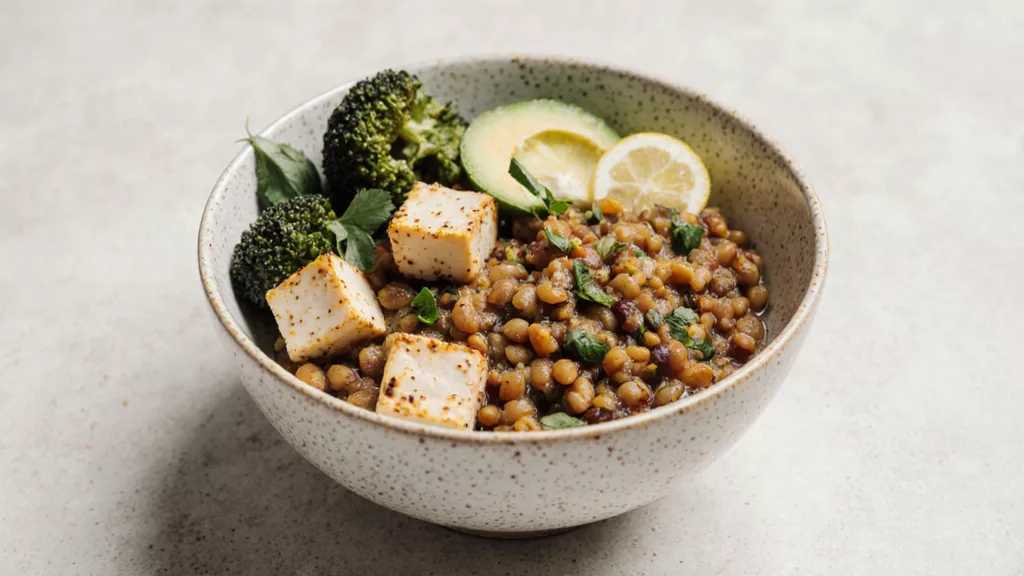
Why Vegan Meals Feel Better When Protein Is Central
Many vegan meals fail not because of ingredients, but because of order.
When meals are built around vegetables or grains first, protein becomes secondary. Hunger returns quickly.
High protein vegan meals reverse that order. Protein is chosen first. Everything else supports it.
This shift alone improves satisfaction.
How to Combine Plant Proteins Without Overthinking
Protein combining does not need to be technical.
Simple combinations work because they are repeatable:
- Legumes with grains
- Soy-based proteins with vegetables
- Multiple moderate protein foods in one meal
You do not need perfect combinations at every meal. Consistency across the day matters more.
Common Myths About Vegan Protein
Some ideas make vegan eating harder than it needs to be.
Myth: Vegan Protein Is Incomplete
Most people eat enough variety across the day for this not to matter.
Myth: You Need Supplements for Every Meal
Whole foods can provide plenty of protein when meals are structured well.
Myth: High Protein Vegan Eating Is Complicated
It is only complicated when meals lack planning.
Eating High Protein Vegan Meals Outside the Home
Eating out does not require perfection.
A simple approach:
- Choose a legume- or soy-based option
- Ask for extra protein if available
- Do not worry about small gaps
Structure matters more than precision.
When Vegan Meals Feel Unsatisfying
If vegan meals stop working, it is usually due to one issue.
Most often:
- Protein portions are too small
- Protein sources are missing entirely
- Meals rely too heavily on vegetables or grains
Fixing protein first usually fixes the meal.
How High Protein Vegan Meals Support Long-Term Consistency
Consistency is what makes vegan eating sustainable.
High protein vegan meals support consistency because they:
- Reduce constant hunger
- Simplify decisions
- Make meals more predictable
- Fit real schedules
When meals feel reliable, habits last longer.
How This Vegan Cluster Fits the Bigger System
This article focuses on plant-based eating only.
Other clusters address speed, work meals, low carb approaches, and no-cook situations. Together, they form a flexible protein-first framework that adapts to different lifestyles.
Vegan meals are not separate from the system. They are one variation within it.
A Clear Summary of High Protein Vegan Meals
High protein vegan meals are meals built intentionally around plant-based protein sources.
In short:
- Protein is chosen first
- Plant proteins are combined when needed
- Meals are simple and repeatable
- Structure replaces guesswork
This means vegan meals can be just as filling and reliable as any other.
What vegan foods are highest in protein?
Some of the highest-protein vegan foods include lentils, beans, chickpeas, tofu, tempeh, soy-based foods, and certain protein-rich grains. Nuts and seeds also contribute protein when used intentionally. High protein vegan meals work best when these foods are treated as the base of the meal rather than as small add-ons.
How to get 100g of protein a day vegan?
Getting 100g of protein a day on a vegan diet is achievable when protein is spread across meals. Most people reach this by building each meal around a clear protein source and adding one protein-focused snack if needed. Consistency across breakfast, lunch, and dinner matters more than hitting a specific number at one meal.
How to get 150g of protein on a vegan diet?
Reaching 150g of protein on a vegan diet usually requires intentional planning and combining protein sources throughout the day. This often means using higher-protein foods at every meal and including multiple protein-rich components per meal. High protein vegan meals make this easier by keeping protein central instead of relying on vegetables or grains alone.
How to get 30g protein per meal vegan?
Getting 30g of protein per meal vegan works best when meals are built around one strong protein source or a combination of plant proteins. Using foods like tofu, tempeh, legumes, or soy-based options as the foundation makes it realistic without needing excessive portions or complicated planning.
Final Thoughts on High Protein Vegan Eating
Vegan eating works best when it is treated as a skill, not a restriction.
When protein becomes the foundation instead of an afterthought, meals feel complete, hunger becomes predictable, and confidence improves. High protein vegan meals are not about eating more food. They are about eating with intention.
Build a few meals that work. Repeat them. Adjust as needed.
That is how vegan eating becomes sustainable in real life.