
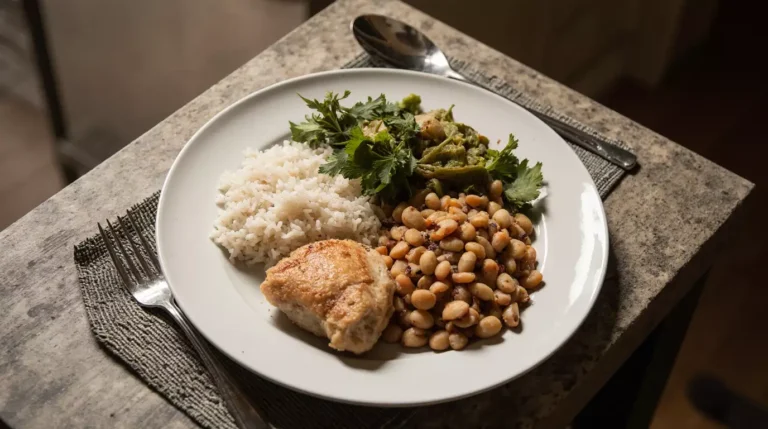
There is a moment that changes how people think about food budgets. You look at grocery prices, feel the pressure, and assume eating well must cost more. That assumption stops many people before they even start. Healthy high protein meals on a budget exist because that belief is wrong.
In short, eating enough protein does not require expensive ingredients or specialty products. It requires structure, repetition, and choosing foods that deliver protein efficiently. When protein is planned first, costs often go down, not up.
The key point is this: budget-friendly eating improves when meals are built intentionally instead of reactively.
Why Protein Is Often Seen as “Expensive”
Protein gets labeled as expensive because of how it is usually approached.
Many people think of protein as:
- Premium cuts of meat
- Specialty supplements
- Single-use ingredients
Those choices add cost quickly. They also reduce flexibility.
Healthy high protein meals on a budget work differently. They rely on everyday foods, repeat purchases, and meals that stretch across multiple servings.
What “Budget” Actually Means in This Context
Budget eating is not about buying the cheapest item available. It is about cost per meal, not cost per item.
A budget-friendly high protein meal:
- Uses ingredients across multiple meals
- Produces leftovers
- Avoids waste
- Delivers consistent protein per serving
This means spending slightly more on the right ingredients often lowers overall costs.
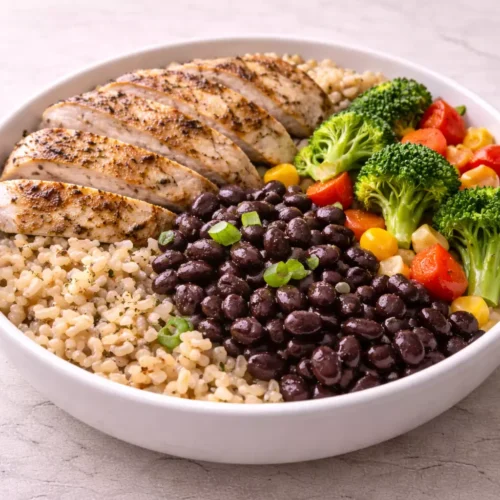
Budget Chicken, Beans & Rice Protein Bowl
Ingredients
Main Ingredients
- 2 cups cooked chicken thighs more affordable than breast
- 1 cup cooked white or brown rice
- 1 cup canned beans black beans or pinto beans, drained and rinsed
- 1 cup frozen mixed vegetables
- 1 tablespoon olive oil
- Salt to taste
- Black pepper to taste
- Paprika or garlic powder optional
Instructions
- Heat the cooked rice according to package directions.
- Warm the chicken thighs in a pan or microwave.
- Heat the frozen vegetables until tender.
- Warm the beans briefly and season lightly.
- Divide rice into bowls, top with beans, vegetables, and chicken.
- Drizzle with olive oil and season to taste.
Notes
The Budget Rule That Changes Everything
In my kitchen, budget meals follow one rule before anything else.
Buy protein that works more than once.
This means choosing proteins that can:
- Be used in multiple meals
- Be repurposed
- Hold well in the fridge or freezer
When protein stretches, the budget stretches with it.
Affordable Protein Sources That Actually Work
Healthy high protein meals on a budget depend on reliable protein options.
Budget-friendly protein staples include:
- Eggs
- Chicken thighs or whole chickens
- Canned tuna or salmon
- Greek yogurt
- Cottage cheese
- Beans and lentils
- Frozen fish or poultry
These foods deliver protein efficiently and adapt to many meals.

Easy Healthy High Protein Meals on a Budget at Breakfast
Breakfast is one of the cheapest meals to make high protein.
Why Breakfast Is Budget-Friendly
Protein-rich breakfast foods are often:
- Affordable
- Easy to portion
- Low waste
Examples of budget-friendly breakfasts include:
- Eggs with toast
- Greek yogurt with oats
- Cottage cheese with fruit
- Simple egg-based meals
These meals cost less per serving than most convenience options and keep you full longer.
Budget-Friendly High Protein Lunches
Lunch is where costs often creep up through takeout or packaged foods.
How to Keep Lunch Affordable
Budget lunches work best when:
- Built from leftovers
- Prepared in batches
- Repeated during the week
Examples include:
- Chicken with rice and vegetables
- Bean-based meals
- Tuna or egg-based lunches
- Yogurt or cottage cheese with simple sides
Repeating lunches is one of the fastest ways to reduce food costs.
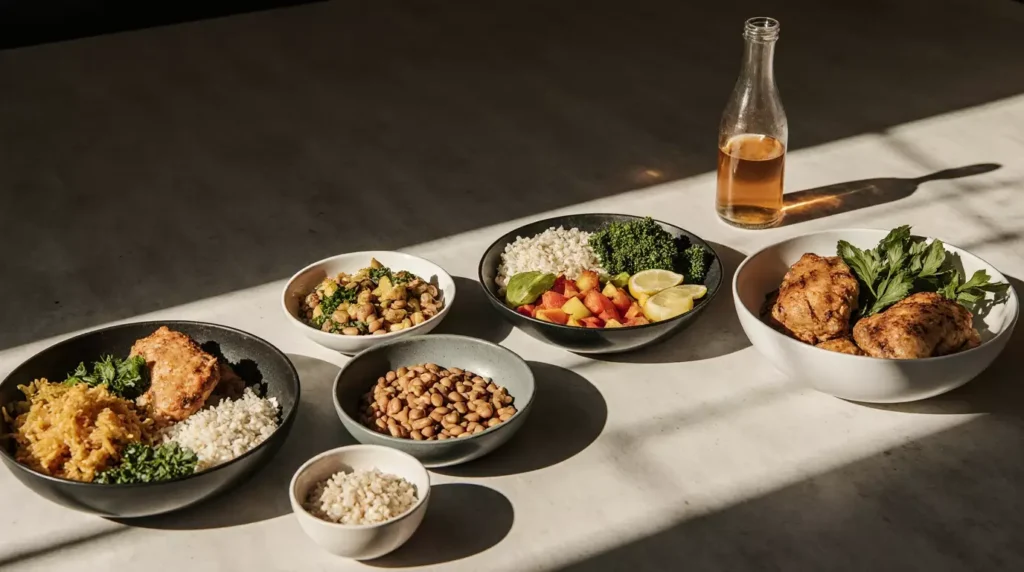
Healthy High Protein Dinners Without Overspending
Dinner does not need to be elaborate to be satisfying.
How Budget Dinners Stay High Protein
Budget dinners focus on:
- Whole ingredients
- Simple cooking methods
- Protein-forward portions
Examples include:
- Protein with roasted vegetables
- Simple stews or one-pot meals
- Meals built around beans or lentils
The protein anchors the meal. Everything else supports it.
Quick Healthy High Protein Meals on a Budget
Speed and budget often overlap.
Quick budget meals succeed when:
- Ingredients are already on hand
- Cooking steps are minimal
- Meals repeat during the week
Examples include:
- Eggs with rice
- Yogurt-based meals
- Canned protein paired with simple sides
Quick meals reduce the temptation to spend money on convenience foods.
Why Repetition Saves Money
Repetition is not boring when it protects your budget.
Repeating meals:
- Reduces impulse purchases
- Simplifies shopping
- Prevents food waste
The best budget meals are not exciting. They are reliable.
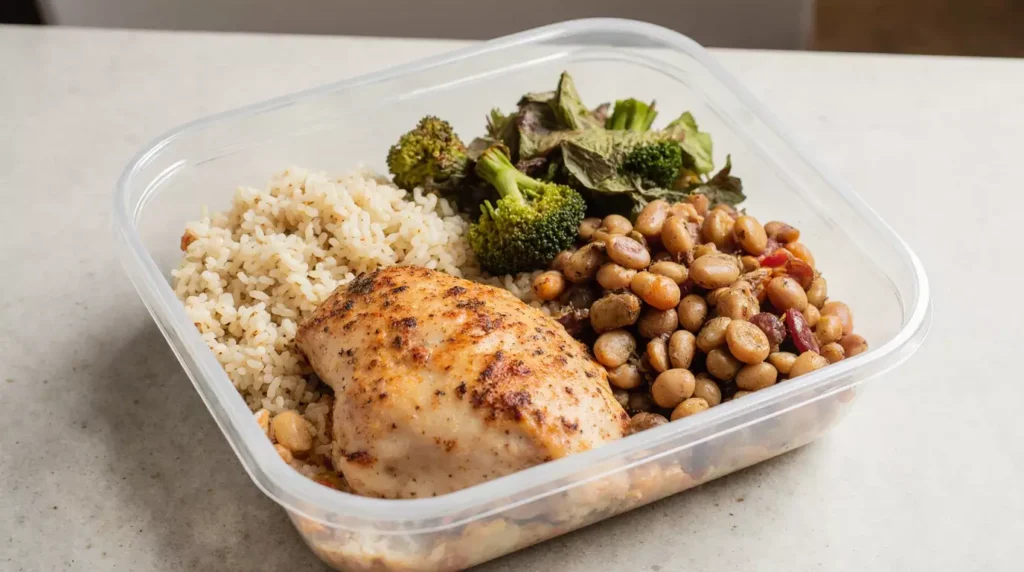
Shopping Strategies That Lower Costs Immediately
Budget success starts at the store.
How to Shop Smarter for Protein
Effective strategies include:
- Buying larger packs
- Choosing store brands
- Using frozen options
- Avoiding single-serve items
These changes lower cost per serving without lowering quality.
How This Budget Approach Fits Into the Bigger System
This article focuses on cost. It does not cover speed, beginner steps, or work-specific meals.
The full framework that connects high protein meals across different needs is explained in the main guide on high protein meals.
This cluster shows how that framework adapts when budget is the main constraint.
How to Plan a Budget-Friendly Week of High Protein Meals
Budget-friendly eating works best when decisions are made before hunger shows up. Planning does not need to be detailed, but it does need to be intentional.
In short, a budget-focused week works when you decide which proteins you will rely on and how often they will repeat.
The key point is that structure reduces spending more than willpower ever does.
A Simple Weekly Budget Structure
Most people succeed with a basic framework:
- One or two breakfast options repeated most days
- One or two lunches repeated during the workweek
- Two or three dinners rotated across the week
This approach limits ingredient variety without limiting nutrition. It also reduces waste, which is one of the biggest hidden costs in food budgets.
Stretching Protein Across Multiple Meals
Protein becomes more affordable when it is used more than once.
How Stretching Protein Saves Money
A single protein source can often cover:
- Multiple lunches
- One dinner plus leftovers
- Breakfast add-ons
Examples include:
- Cooking extra chicken for several meals
- Using beans or lentils across multiple dishes
- Buying larger containers of yogurt or cottage cheese
This reduces cost per serving and makes meal planning easier.
Portion Guidance When Money Is Tight
Portion control is not about eating less. It is about using protein efficiently.
How to Portion Protein on a Budget
Budget-friendly protein portions work best when:
- Protein is present at every meal
- Portions are consistent, not oversized
- Meals include filling sides like vegetables and grains
This means you do not need large amounts of protein in one meal. You need steady intake across the day.
Using Plant Proteins to Support the Budget
Plant-based proteins are often among the most affordable options available.
Why Plant Proteins Help
Beans, lentils, and similar foods:
- Cost less per serving
- Store well
- Work across many meals
Even for people who eat animal products, mixing in plant proteins helps control costs without lowering overall protein intake.
How to Lower Costs Without Lowering Quality
Budget eating does not require cutting corners on quality.
Small Changes That Add Up
Effective budget adjustments include:
- Buying store brands
- Choosing frozen vegetables
- Avoiding pre-cut or pre-packaged foods
- Cooking once and eating twice
These changes reduce spending while keeping meals satisfying.
The Role of Frozen and Shelf-Stable Foods
Frozen and shelf-stable foods are often more budget-friendly than fresh options.
Why These Foods Make Sense
They:
- Reduce waste
- Extend shelf life
- Are available year-round
- Often cost less per serving
Frozen vegetables, canned beans, and frozen proteins help stabilize food budgets over time.
Common Budget Mistakes That Increase Spending
Even well-intentioned plans can fail if certain habits repeat.
Buying Too Many Ingredients at Once
Too much variety increases waste.
Chasing Sales Without a Plan
Sales are only helpful if you will actually use the food.
Relying on Convenience Foods
Convenience foods often cost more per serving and deliver less protein.
Avoiding these mistakes keeps budgets predictable.
How Budget Meals Support Consistency
Consistency matters more than novelty when money is limited.
Healthy high protein meals on a budget work because:
- They reduce decision-making
- They reduce impulse spending
- They make meals predictable
When meals are predictable, stress around food decreases.
Eating Out Less Without Feeling Restricted
Budget-friendly eating often means eating at home more often, but that does not mean eliminating enjoyment.
How to Reduce Eating Out Gradually
Instead of cutting it out completely:
- Reduce frequency
- Choose simpler meals at home
- Save eating out for specific occasions
This approach is more sustainable than strict rules.
How Long Budget-Focused Eating Should Last
Budget-focused eating is not a phase. It is a skill.
Once you learn how to build healthy high protein meals on a budget, those habits carry forward even when budgets loosen.
The key point is that skills stay with you. Prices may change, but structure remains useful.
How This Budget Cluster Fits the Bigger Protein System
This article focuses on cost as the main constraint. It does not attempt to solve every situation.
Other clusters handle speed, beginners, work schedules, and cooking limitations. This one shows how the same protein-first framework adapts when affordability matters most.
That separation keeps the system clear and scalable.
A Clear Budget Summary for Reference
Healthy high protein meals on a budget are meals that prioritize protein, use repeatable ingredients, and minimize waste.
In short:
- Protein is planned first
- Meals repeat intentionally
- Shopping is structured
- Cost per meal matters more than cost per item
This means eating well does not require spending more. It requires planning better.
What is the cheapest high protein meal?
One of the cheapest high protein meals is eggs with a simple carbohydrate like rice, potatoes, or toast. Eggs are affordable, widely available, and provide a solid amount of protein per serving. Bean-based meals and lentils with grains are also among the most budget-friendly high protein options.
What are high protein meals when you are poor?
High protein meals when money is tight focus on affordable staples rather than specialty foods. Meals built around eggs, beans, lentils, canned fish, yogurt, or chicken thighs provide reliable protein without high cost. Healthy high protein meals on a budget work best when ingredients are repeated and used across multiple meals to reduce waste.
What is the cheapest way to eat a lot of protein?
The cheapest way to eat a lot of protein is to rely on foods with a low cost per serving and plan meals around them. Buying eggs, dried beans, lentils, store-brand yogurt, or frozen chicken in larger quantities lowers the price per meal. Repeating meals and cooking at home consistently also reduces overall spending.
Which cheap food has the highest protein?
Among the most affordable high-protein foods are eggs, dried lentils, dried beans, and certain dairy products like cottage cheese or Greek-style yogurt. These foods provide a strong protein return for the cost and can be used in many different meals, making them practical choices for budget-focused eating.
Final Thoughts on Eating Well Without Overspending
Healthy eating should not feel like a luxury. When meals are built intentionally, protein-rich eating becomes more affordable, not less.
By choosing reliable proteins, repeating meals, and reducing waste, healthy high protein meals on a budget become part of everyday life instead of a short-term fix.
That is how structure replaces stress and makes eating well sustainable.