
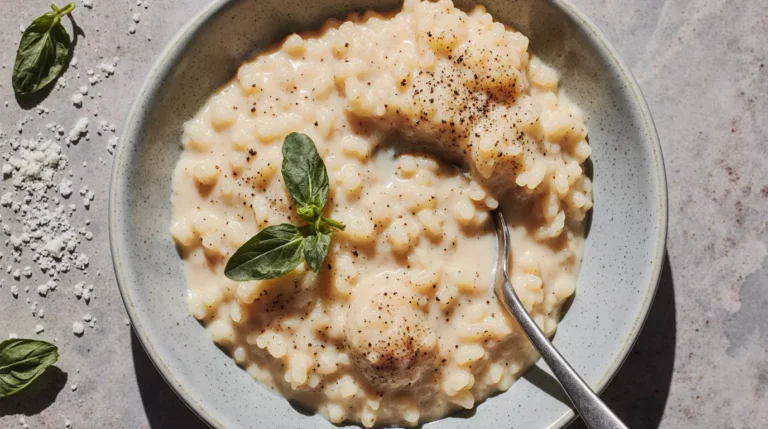
There are evenings when cooking needs to slow you down instead of speeding you up. When that happens in my kitchen, cheese risotto is usually what ends up on the stove. Not because it is flashy, but because it asks you to pay attention in a calm, steady way. Stir. Taste. Adjust. Repeat.
Cheese risotto matters because it is built on fundamentals. Rice, broth, fat, and cheese. No shortcuts, no hiding behind heavy cream or excessive toppings. When those basics are handled correctly, the dish becomes rich, creamy, and satisfying without feeling heavy or complicated.
In this article, I am going to walk you through a cheese risotto recipe that works in a real kitchen. You will learn not just what to do, but why each step matters. We will talk about rice, cheese, timing, texture, storage, and even reheating. By the end, you will understand how to make risotto with confidence instead of guesswork.
Quick Answer
Cheese risotto is a creamy rice dish made by slowly cooking short-grain rice with warm broth and finishing it with cheese. The creamy texture comes from the rice’s natural starch, not from added cream.
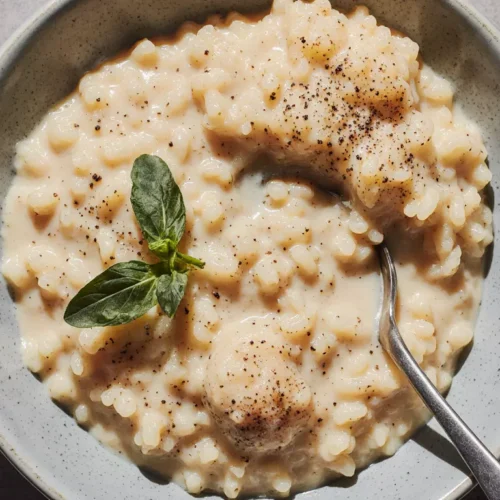
Cheese Risotto
Ingredients
Main Ingredients
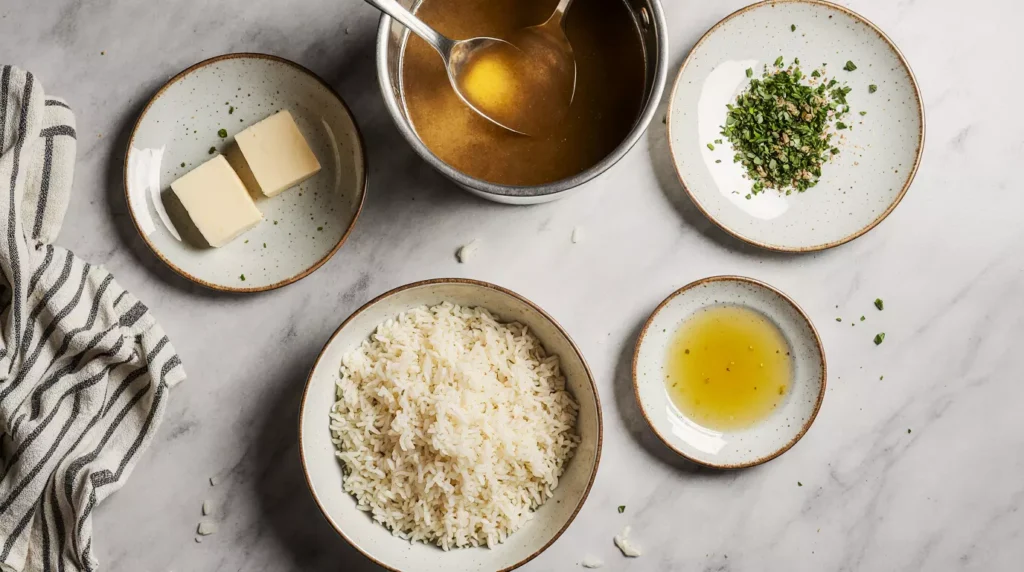
- 1½ cups Arborio rice
- 4½ to 5 cups warm low-sodium broth
- 2 tablespoons olive oil
- 1 tablespoon unsalted butter
- 1 small shallot finely minced
- ½ cup dry white wine
- 1 cup Parmigiano Reggiano finely grated
- Salt to taste
- Freshly ground black pepper
Instructions
- Heat olive oil and butter in a pan over medium heat.
- Sauté the minced shallot until soft and translucent.
- Stir in the Arborio rice and cook for 1–2 minutes until lightly toasted.
- Pour in the white wine and stir until absorbed.
- Add broth one ladle at a time, stirring constantly until rice is creamy and tender.
- Stir in the grated cheese, season with salt and pepper, and serve hot.
Notes
What Cheese Risotto Really Is (And What It Is Not)
A proper risotto with cheese is often misunderstood. Many people think it is simply rice mixed with melted cheese. That is not the case.
Cheese risotto is:
- A starch-driven dish
- Built through gradual hydration
- Finished with cheese for structure and depth
- Creamy without cream
Cheese risotto is not:
- Rice boiled and drained
- A casserole
- A cheese sauce poured over grains
- A dish you rush through
In my kitchen, this works because I respect the rice. The cheese supports the texture. It does not replace the technique.
The Rice Choice That Makes or Breaks Risotto
This is non-negotiable.
For true risotto cheese texture, you must use short-grain rice with high starch content.
Best options
- Arborio
- Carnaroli
- Vialone Nano
Arborio is the most common and works well for home cooking. Carnaroli holds its shape slightly better and is more forgiving if you cook a minute too long.
Avoid:
- Long-grain rice
- Jasmine
- Basmati
- Converted or parboiled rice
Those grains will never release enough starch to create the creamy wave risotto is known for.
Cheese Selection: Flavor Without Overpowering
Cheese is the finish line, not the starting point.
Best cheeses for cheese risotto
- Parmigiano Reggiano
- Grana Padano
- Aged Pecorino Romano (used lightly)
Parmigiano Reggiano is my default. It melts cleanly, adds depth, and enhances the rice rather than fighting it.
I always grate cheese fresh. Pre-grated cheese often contains anti-caking agents that prevent smooth melting. When you are working with just a few ingredients, quality becomes obvious fast.
Broth: The Silent Backbone
Broth does not get much attention, but it shapes the entire dish.
Use:
- Low-sodium vegetable broth
- Or light chicken broth
The broth should taste good on its own. If it is flat, the risotto will be flat.
Always keep broth warm. Cold broth shocks the rice and interrupts starch release, making the texture uneven.
The Primary Recipe: Classic Cheese Risotto
This is the single primary recipe for the article.
Yield
Serves 4 as a main course
Serves 6 as a side
Ingredients
- 1½ cups Arborio rice
- 4½ to 5 cups warm low-sodium broth
- 2 tablespoons olive oil
- 1 tablespoon unsalted butter
- 1 small shallot, finely minced
- ½ cup dry white wine
- 1 cup finely grated Parmigiano Reggiano
- Salt, to taste
- Freshly ground black pepper
Optional finish:
- 1 extra tablespoon butter
- Small splash of warm broth
Step-by-Step Instructions
Step 1: Warm the broth
Heat the broth in a separate pot and keep it at a gentle simmer. Do not let it boil aggressively.
Step 2: Build the base
In a wide, heavy-bottomed pot, heat olive oil and butter over medium heat. Add the shallot and cook gently until soft and translucent. No browning.
Step 3: Toast the rice
Add the rice and stir to coat each grain with fat. Cook for 1 to 2 minutes until the edges of the rice turn translucent and the center remains opaque.
This step helps the rice hold its shape while releasing starch later.
Step 4: Deglaze with wine
Add the wine and stir until it is mostly absorbed. This adds acidity and balance.
Step 5: Add broth gradually
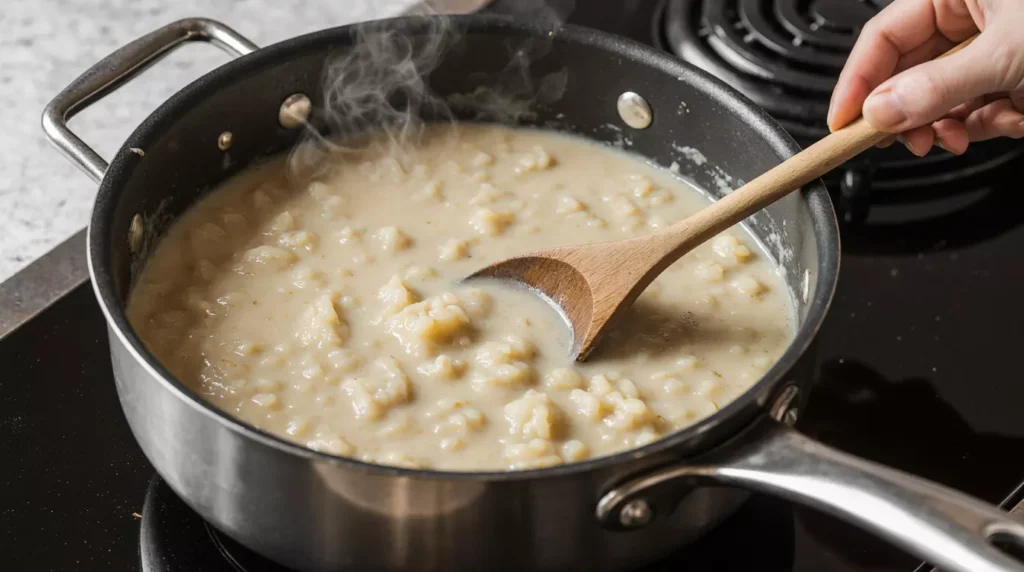
Add warm broth one ladle at a time, stirring gently and regularly. Allow each addition to be mostly absorbed before adding the next.
This process takes about 18 to 22 minutes.
Taste as you go. The rice should be tender but still have a slight bite.
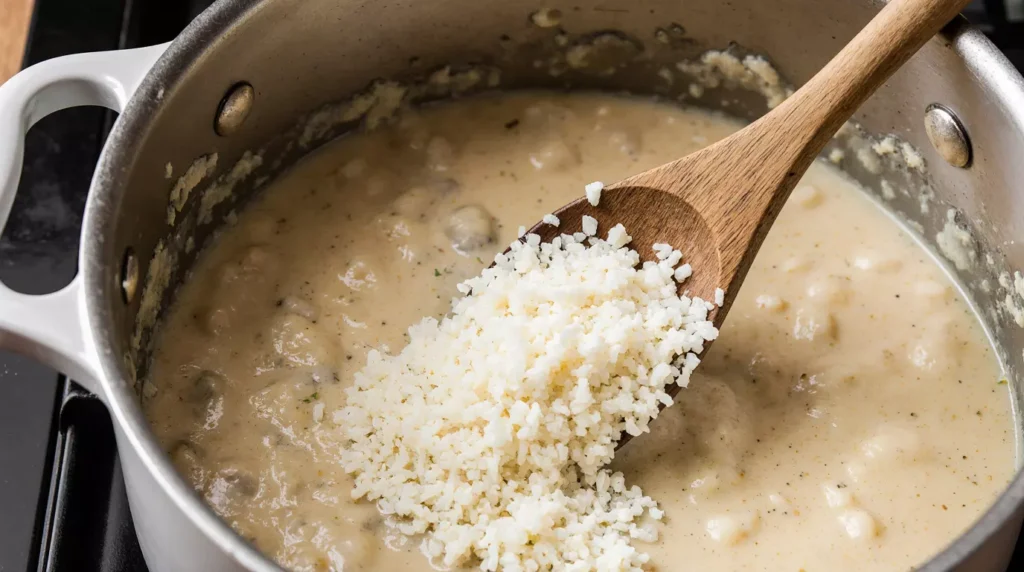
Step 6: Finish with cheese
Remove the pot from heat. Stir in the grated cheese, salt, and pepper. Add a splash of broth if needed to loosen the texture.
Cover and let rest for 1 minute. Stir once more and serve immediately.
Macronutrient Breakdown (Estimated Per Serving)
| Nutrient | Amount (Estimated) |
|---|---|
| Calories | 420 kcal |
| Protein | 14 g |
| Carbohydrates | 58 g |
| Fat | 14 g |
Values are estimates only and vary by ingredient choice and portion size.
Understanding Risotto Texture (All’Onda Explained)
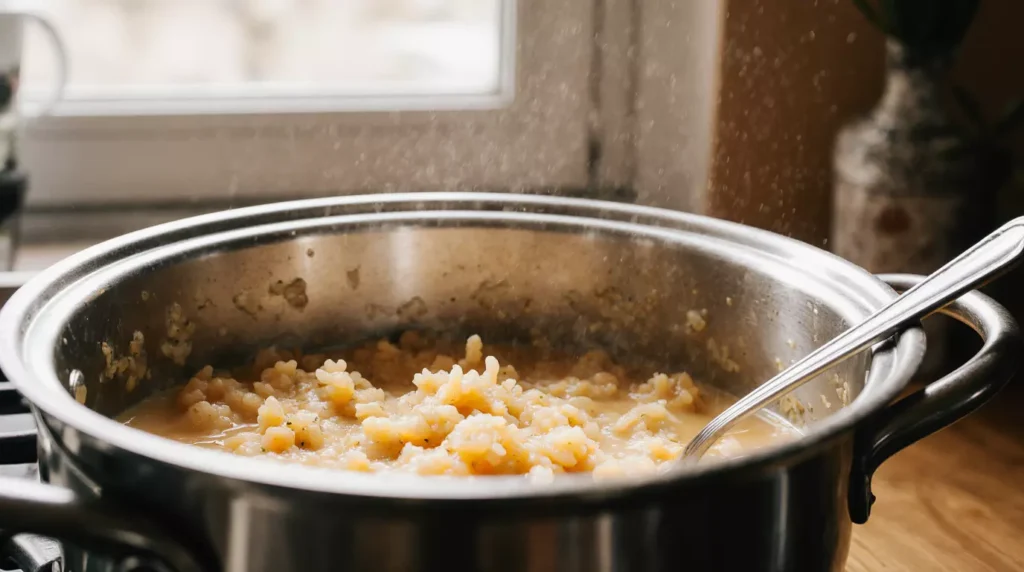
In Italy, risotto is described as all’onda, meaning “like a wave.”
When you spoon risotto onto a plate, it should gently spread. Not run. Not sit stiff.
If it is too thick:
- Add warm broth
- Stir gently
- Serve immediately
If it is too loose:
- Let it rest uncovered for 30 seconds
- Stir again
Texture is dynamic. Risotto continues to tighten after cooking.
Why This Cheese Risotto Works in Real Kitchens
In my kitchen, this works because the method is flexible. You can pause stirring briefly. You can adjust liquid. You are not locked into exact measurements.
This is the same mindset I apply when balancing meals across the day. If dinner is rich, I keep earlier meals lighter, often with something protein-focused like the highest protein tropical smoothie so the day stays balanced.
Common Mistakes and How to Fix Them
Bland flavor
Your broth was under-seasoned. Season the liquid, not just the end.
Gummy texture
Too much aggressive stirring or overcooking. Stir gently and stop earlier.
Dry risotto
Risotto tightens fast. Always finish with a splash of broth.
Clumpy cheese
The risotto was too hot or the cheese too coarse. Remove from heat and grate finely.
Variations That Respect Cheese Risotto
Cheese risotto shines when kept simple.
Extra creamy finish
Add an extra tablespoon of butter at the end.
Pepper-forward version
Increase black pepper and finish with a touch of Pecorino.
Herb finish
Chives or parsley add freshness without distraction.
If you enjoy earthy flavors, you may appreciate a variation like Mushroom Risotto, which uses the same technique with added depth.
Make-Ahead, Storage, and Reheating
Risotto is best fresh, but it can be managed.
Storage
- Cool quickly
- Store airtight up to 3 days
Reheating
- Add broth or water
- Heat gently while stirring
- Finish with butter or cheese
I apply the same moisture-first logic when planning microwave meal prep so reheated food stays enjoyable.
Pairing Cheese Risotto Thoughtfully
Cheese risotto benefits from contrast.
I often pair it with:
- Simple green salads
- Roasted vegetables
- Grilled mushrooms
- Light seafood
Earlier in the day, I keep things lighter. A probiotic-rich option like an Activia yogurt smoothie helps balance a richer dinner.
For evenings that lean relaxed and intentional, cheese risotto followed by a simple drink like a matcha old fashioned can turn an ordinary night into something slower and more satisfying.
Scaling the Recipe Without Losing Quality
Cheese risotto scales well if you respect the pan size.
- Use a wider pot
- Increase broth gradually
- Stir more often as volume increases
Avoid crowding. Rice needs room to move.
Why Learning Cheese Risotto Changes How You Cook
Once you master cheese risotto, you understand:
- Heat control
- Starch behavior
- Timing
- Texture awareness
Those skills transfer to countless dishes. That is why I still make this recipe regularly. It keeps me grounded in fundamentals.
What kind of cheese goes with risotto?
The best cheese for risotto is one that melts smoothly and adds depth without overpowering the rice. Parmigiano Reggiano is the classic choice for cheese risotto because it brings nutty, savory flavor and helps bind the dish into a creamy texture. Grana Padano works similarly and is slightly milder. Pecorino Romano can also be used, but in smaller amounts since it is sharper and saltier. The key is using a well-aged, finely grated cheese so it melts evenly into the risotto.
Does risotto traditionally have cheese?
Yes, many traditional risotto recipes include cheese, especially in northern Italian cooking. While not every risotto contains cheese, versions like risotto with cheese rely on it for richness and structure at the end of cooking. Cheese is usually added during the final step, along with butter, in a process known as finishing. This technique creates the signature creamy consistency without adding cream.
When to add cheese in risotto?
Cheese should always be added at the very end of cooking. Once the rice is tender and the pot is removed from heat, grated cheese is stirred in gently. Adding cheese too early can cause it to clump or separate, which affects both flavor and texture. For a smooth risotto cheese finish, the risotto should be hot but not boiling when the cheese goes in.
What are some common mistakes to avoid when making risotto?
One common mistake is using the wrong type of rice, which prevents proper creaminess. Another is adding all the liquid at once instead of gradually, which stops the starch from developing. Over-stirring can make risotto gummy, while under-seasoned broth leads to bland flavor. Finally, rushing the process or adding cheese too early can ruin the texture. Paying attention to timing and heat makes a noticeable difference in any cheese risotto recipe.
Final Thoughts From My Kitchen
Cheese risotto is not about showing off. It is about patience and attention. When you give it those things, it gives back warmth, comfort, and depth.
This cheese risotto recipe is one you can trust. Make it once with care, and it will become a dish you return to whenever you want food that feels steady, familiar, and deeply satisfying.