
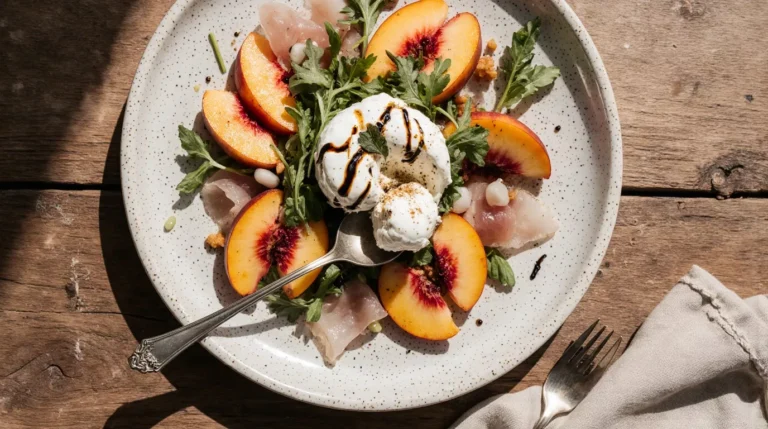
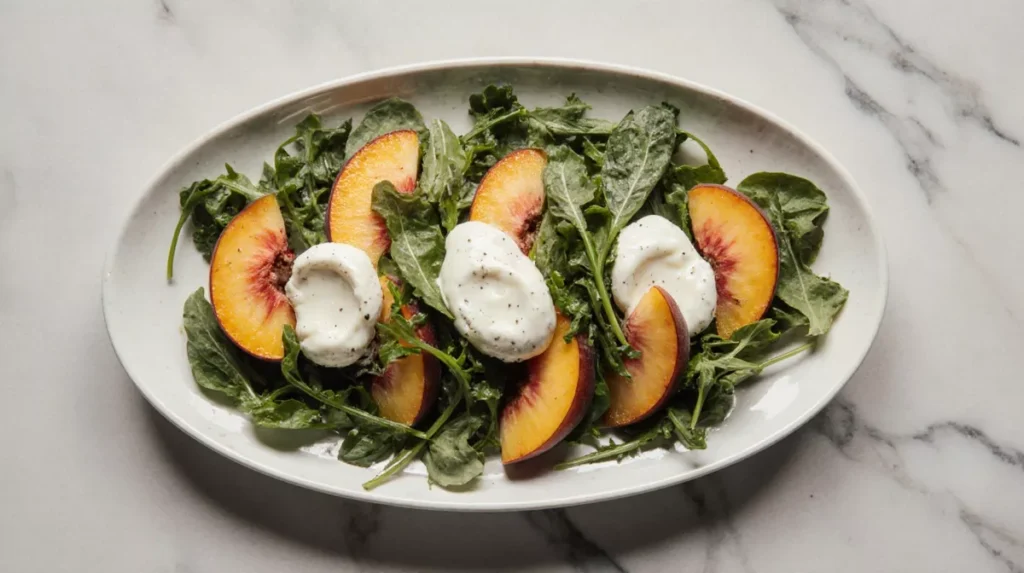
There’s a short window every year when peaches are good enough that you don’t want to hide them. They’re soft, fragrant, and sweet without trying. That’s usually when arugula shows up in my kitchen more often too, sharp and peppery, asking for something to push back against it. Burrata fits naturally into that moment.
This burrata arugula peach salad isn’t about contrast for the sake of contrast. It’s about balance that feels relaxed. Sweet fruit, bitter greens, and soft cheese can easily turn chaotic if handled carelessly. When done with restraint, though, the plate feels settled and complete.
This is the kind of salad I make when I want something fresh that still eats like a meal.
Quick Answer
Burrata arugula peach salad works because sweet, ripe peaches soften the bitterness of arugula while burrata adds richness without heaviness. The key is using ripe fruit, light seasoning, and adding the cheese at the very end.
Why Peaches and Arugula Belong Together
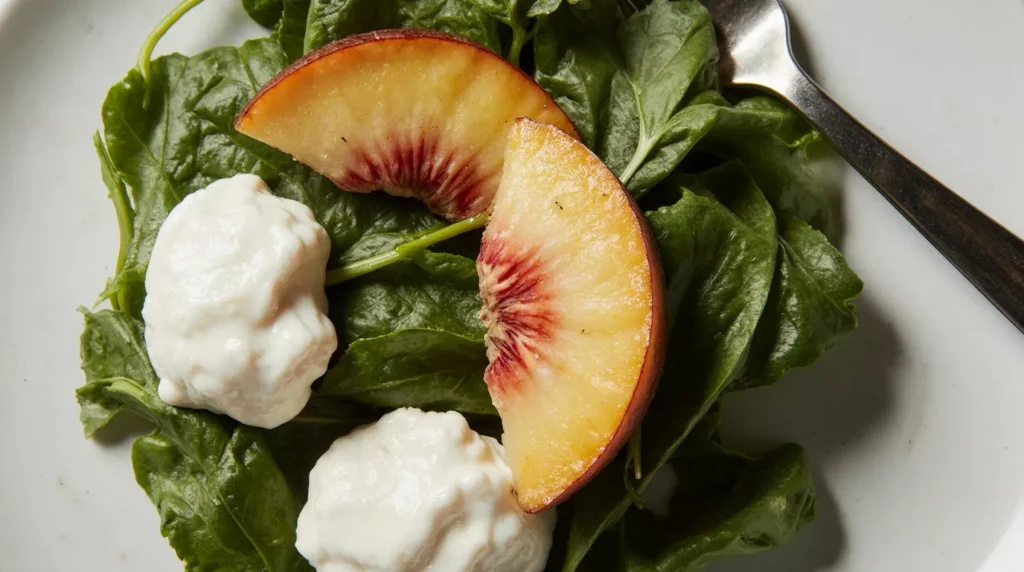
Arugula has an edge to it. Peppery, slightly bitter, and assertive. Peaches, when ripe, are the opposite. They’re soft, sweet, and aromatic. Together, they balance each other without needing much help.
The mistake is treating peaches like a garnish. In this salad, they’re a structural ingredient. Their juices lightly dress the greens, and their sweetness keeps the arugula from feeling aggressive.
I avoid underripe peaches here. Firm fruit doesn’t release juice and turns the salad stiff. If a peach doesn’t smell like anything, it doesn’t belong on this plate.
What Burrata Adds to This Salad
Burrata acts as a buffer. It softens the bite of arugula and rounds out the sweetness of the peaches. Unlike firmer cheeses, it doesn’t compete for attention.
Once torn, burrata spreads gently into the greens and fruit. That’s enough. It shouldn’t be mixed or broken down further. In this salad, the cheese is placed, not tossed.
This approach lines up with how burrata behaves in everyday meals, where timing and placement matter more than technique. Added at the end, it keeps its character and does its job quietly.

Burrata Arugula Peach Salad
Ingredients
Main Ingredients
- 2 ripe peaches sliced
- 2 cups fresh arugula
- 1–2 balls burrata cheese
- 2 tablespoons olive oil
- Salt to taste
- Freshly ground black pepper
- 1 tablespoon lemon juice or white wine vinegar
- Toasted nuts optional, for texture
Instructions
- Place arugula in a wide bowl or on a serving plate.
- Season with a pinch of salt and drizzle with olive oil. Toss gently.
- Arrange peach slices over the greens, letting juices fall naturally.
- Tear burrata into large pieces and place across the salad.
- Finish with black pepper and a few drops of lemon juice or vinegar.
- Top with toasted nuts if using and serve immediately.
Notes
The One Recipe That Belongs Here
This is the only recipe in this cluster.
Burrata Arugula Peach Salad
Serves: 2 as a light main or 3 as a shared plate
Ingredients
- Ripe peaches, sliced
- Fresh arugula
- Burrata cheese
- Olive oil
- Salt
- Black pepper
- A mild acid such as lemon juice or white wine vinegar
- Optional: toasted nuts for texture
Method
- Place the arugula in a wide bowl or directly on a serving plate.
- Season lightly with salt and a small amount of olive oil. Toss gently.
- Arrange the peach slices over the greens, letting any juice fall naturally.
- Tear the burrata into large pieces and place it across the salad.
- Finish with black pepper and a few drops of acid if needed.
Stop there. More ingredients won’t improve it.
Why This Salad Needs a Light Hand
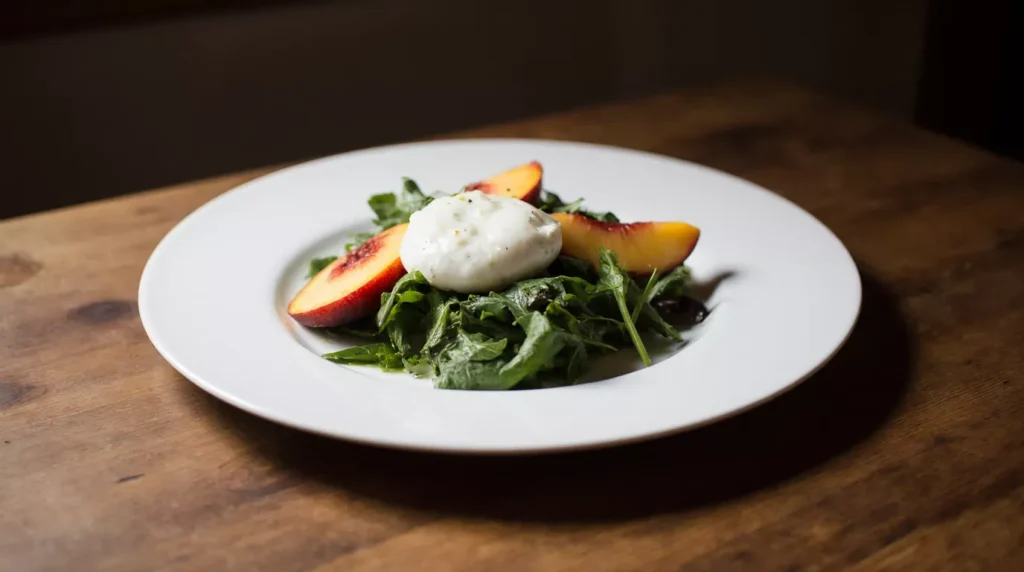
This salad collapses under too much dressing. The peaches already bring moisture. Burrata adds richness. Olive oil should support, not coat.
I also avoid sweet dressings or heavy vinaigrettes. They blur the line between fruit and salad in a way that feels forced. A few drops of acid are enough to sharpen the plate.
Texture matters too. If you add nuts, keep them sparse. Crunch should punctuate, not dominate.
Common Mistakes That Throw It Off
Using cold peaches is a common issue. Cold dulls sweetness and aroma. Let them come to room temperature before slicing.
Over-tossing is another problem. Once the burrata is added, the salad should be left alone. Mixing breaks the cheese down too far.
Too much arugula can also overwhelm the balance. This salad works best when greens, fruit, and cheese feel evenly matched.
How This Salad Fits Into Real Life Cooking
I make burrata arugula peach salad on warm evenings when cooking feels unnecessary. It works as a light main with bread or alongside something simple on the grill.
It’s also a good example of a salad that doesn’t feel like an afterthought. It holds its own on the table without trying to impress.
This is food that respects the season and stops before it becomes complicated.
Storage and Make-Ahead Notes
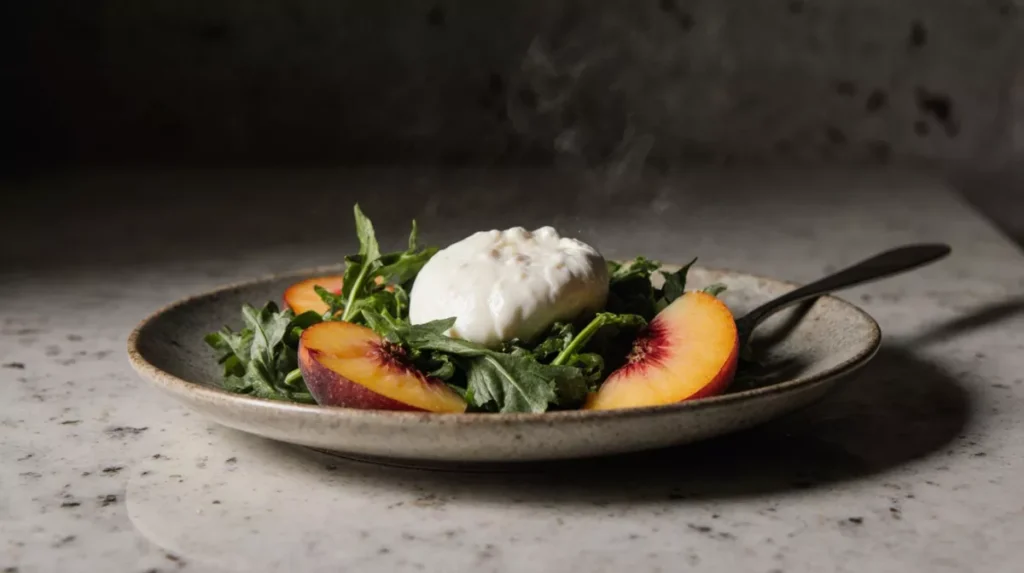
This salad is best assembled just before serving. Arugula wilts quickly once dressed, and burrata loses its structure once opened.
If you need to prep ahead, slice the peaches and keep them covered at room temperature. Wash and dry the greens early. Assemble everything at the last moment.
Estimated Nutrition Per Serving
| Calories (kcal) | Protein (g) | Carbohydrates (g) | Fat (g) |
|---|---|---|---|
| 270 | 9 | 14 | 20 |
Values are estimates based on moderate portions and ripe seasonal fruit. Exact numbers will vary.
Do peaches need to be peeled for a burrata arugula peach salad?
Peeling peaches is not necessary for this salad. The skin adds structure and helps the slices hold their shape, especially when paired with arugula and burrata. As long as the peaches are ripe, the skin blends in naturally.
What makes arugula work better than other greens in this salad?
Arugula has a natural peppery bite that stands up to sweet peaches and rich burrata. Milder greens tend to disappear once the fruit and cheese are added, while arugula keeps the salad from tasting flat.
How ripe should peaches be for this salad?
Peaches should be ripe enough to release juice when sliced but still hold their shape. Overripe peaches break down too quickly and turn the salad soft, while underripe fruit lacks aroma and sweetness.
Should this salad be dressed before or after adding burrata?
The greens should be lightly dressed before the burrata is added. Once the cheese is placed, the salad should not be tossed again. This keeps the burrata intact and prevents the plate from becoming muddy.
Can this salad work outside of peach season?
It can, but the result will be different. Out-of-season peaches are often firm and low in flavor, which weakens the balance of the dish. This salad works best when peaches are naturally aromatic and juicy.
Final Thoughts From My Kitchen
Burrata arugula peach salad works when you let each ingredient stay in its lane. Sweet, bitter, and soft don’t need much help when they’re in season.
This is the kind of dish that reminds you to trust good ingredients and stop early. That’s often the difference between a salad that feels thoughtful and one that feels busy.