
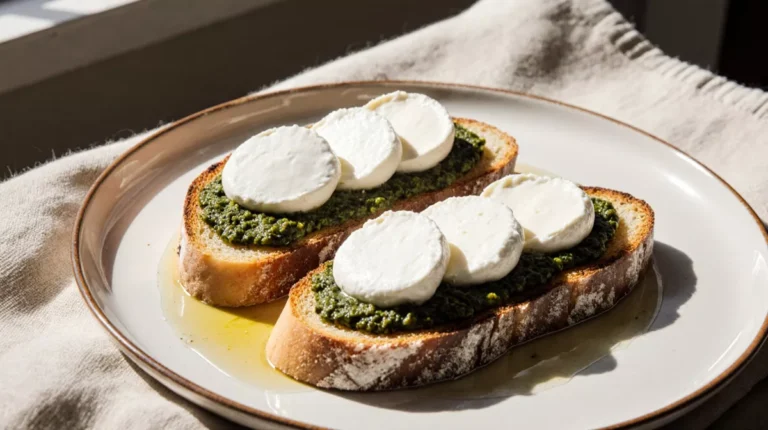
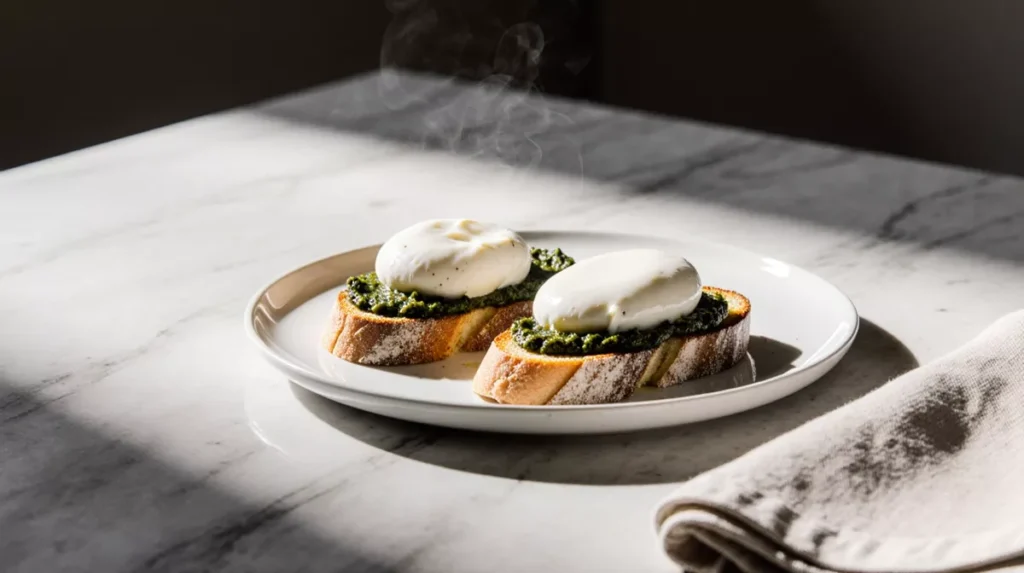
Bruschetta is one of those dishes that exposes how you cook. There’s nowhere to hide. Bread, topping, seasoning. That’s it. When burrata and pesto come together on toast, the balance matters immediately. Too much of anything and the whole thing tips.
Burrata and pesto bruschetta works best when it feels deliberate but relaxed. Crisp bread, herbal pesto, and soft cheese all doing their job without competing. This is not a piled-high toast. It’s a composed bite.
This is something I make when I want to serve food that feels thoughtful without turning into a project.
Quick Answer
Burrata and pesto bruschetta works best when the bread is toasted well, the pesto is used sparingly, and the burrata is added at the very end. The goal is contrast between crisp, fresh, and soft without heaviness.
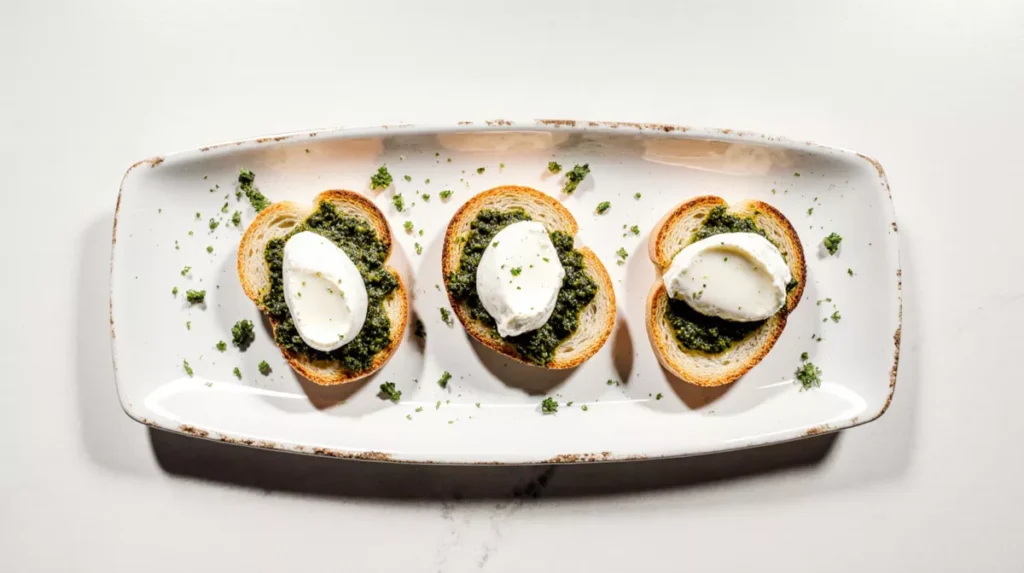
Why Burrata and Pesto Work on Toast
Pesto is intense by nature. Basil, garlic, oil, and cheese all concentrated into a small amount. Burrata softens that intensity. It spreads gently and cools the palate.
Toast provides structure. Without it, the pairing would feel loose and unfinished. With it, everything has a place.
The key is proportion. Pesto should never dominate. Burrata should never drown the bread.
Choosing the Right Bread for Bruschetta
Bread matters more here than people expect. You want something sturdy enough to hold toppings but open enough to stay light.
I usually reach for a rustic loaf with a good crust. Slices should be thick enough to toast properly without becoming brittle.
Toast the bread until it’s crisp on the outside but still tender inside. That contrast keeps the bruschetta from feeling dry.
How Burrata Behaves on Toast
Burrata should be added after the bread has cooled slightly. Direct heat causes it to lose structure too quickly.
Once placed, it softens naturally against the warm surface. That’s enough. It doesn’t need to be spread aggressively.
This same timing principle is explained in how burrata behaves in everyday meals, where placement matters more than force or heat.
The One Recipe That Belongs Here
This is the only recipe in this cluster.
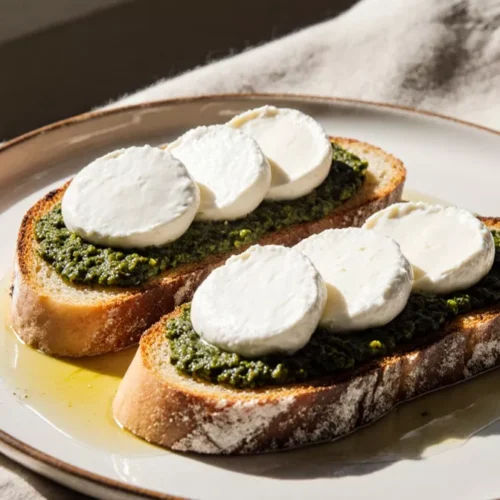
Burrata and Pesto Bruschetta
Ingredients
Main Ingredients
- 4 to 6 slices rustic bread
- 1 ball burrata cheese
- ¼ cup basil pesto
- 2 tablespoons olive oil
- Salt to taste
- Freshly ground black pepper
Instructions
- Toast bread slices until crisp and lightly golden.
- Let toast cool slightly, then brush lightly with olive oil.
- Spoon a small amount of pesto onto each slice and spread gently.
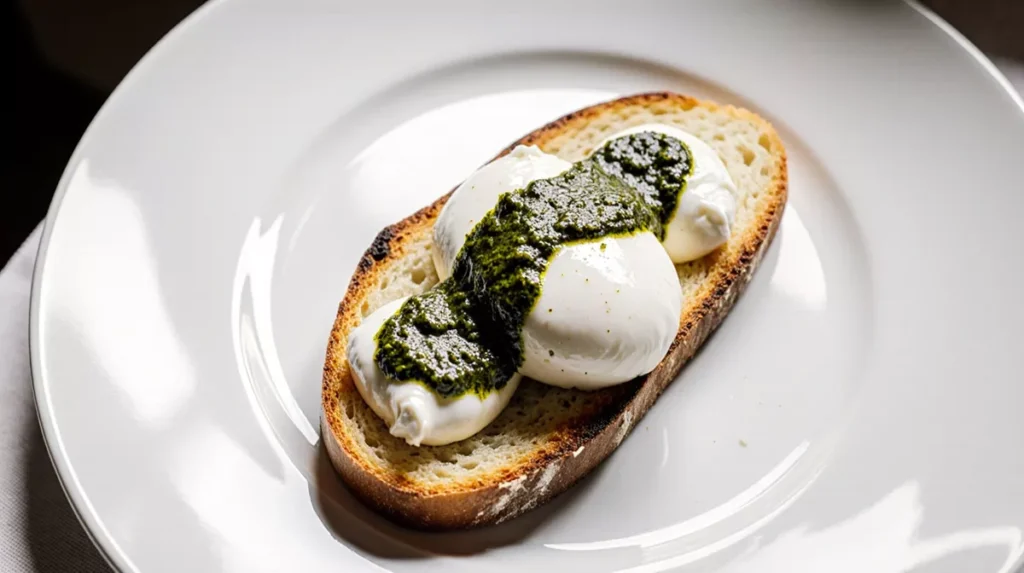
- Tear burrata into large pieces and place on top of each toast.
- Finish with black pepper and a pinch of salt if needed. Serve immediately.
Notes
Burrata and Pesto Bruschetta
Serves: 2 to 3 as a shared plate
Ingredients
- Rustic bread, sliced
- Burrata cheese
- Basil pesto
- Olive oil
- Salt
- Black pepper
Method
- Toast the bread slices until crisp and lightly golden.
- Let the toast cool slightly, then brush lightly with olive oil.
- Spoon a small amount of pesto onto each slice and spread gently.
- Tear the burrata into large pieces and place it on top.
- Finish with black pepper and a pinch of salt if needed.
Stop before adding anything else.
Why Less Is Always Better Here
Pesto is powerful. A thin layer is enough to flavor the entire bite.
Burrata adds richness but should never soak the bread. Too much turns the toast soggy and heavy.
This bruschetta works because each element stays defined.
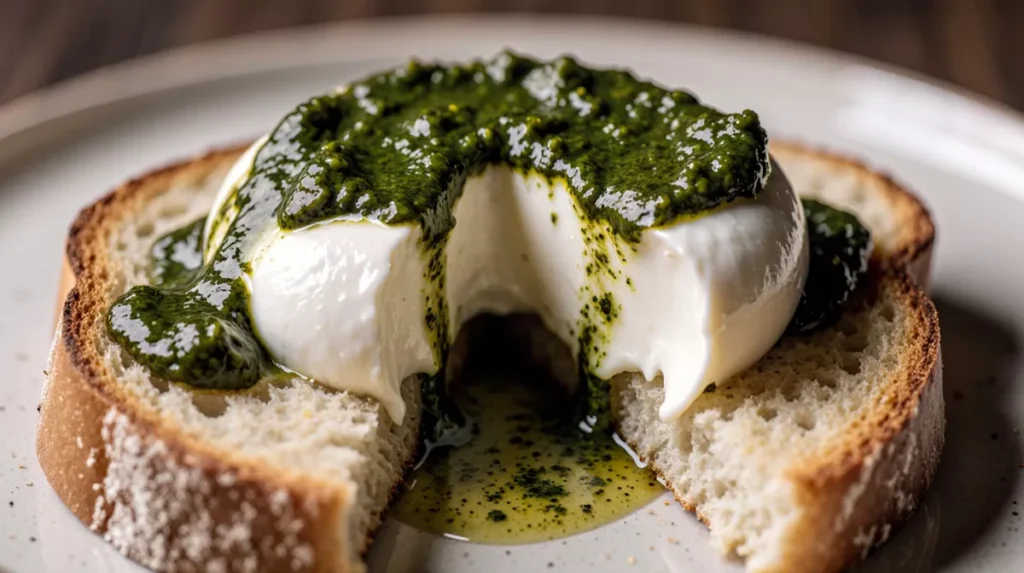
Common Mistakes With Burrata and Pesto Bruschetta
Using too much pesto overwhelms everything else.
Adding burrata while the toast is still very hot causes it to collapse.
Over-toasting the bread makes the dish hard to eat.
Crowding the plate makes the bruschetta feel clumsy instead of inviting.
How This Fits Into Real Life Meals
I serve burrata and pesto bruschetta as a starter when I want something clean and confident on the table. It also works as a light meal alongside a salad or vegetables.
It’s easy to scale up for guests and easy to stop after one or two pieces.
This is food that respects attention spans.
Variations That Stay Honest
If you want to adjust, keep changes minimal.
- Use different herbs in the pesto if they’re fresh.
- Rub the toast lightly with garlic before topping.
- Serve with tomatoes only if they’re in season.
If the variation becomes the focus, the bruschetta loses its point.
Storage and Make-Ahead Notes
Toast can be prepared ahead and kept at room temperature.
Pesto can be made in advance.
Burrata should always be added just before serving.
Once assembled, bruschetta should be eaten immediately.
Estimated Nutrition Per Serving
| Calories (kcal) | Protein (g) | Carbohydrates (g) | Fat (g) |
|---|---|---|---|
| 310 | 9 | 22 | 22 |
Values are estimates based on moderate portions and standard pesto.
Does pesto go with burrata?
Yes, pesto goes well with burrata because its herbal intensity is softened by the cheese. When paired together, pesto provides structure and flavor, while burrata adds richness that keeps the combination from tasting sharp or overwhelming.
Is burrata good for bruschetta?
Burrata works well on bruschetta when it is added after the bread has cooled slightly. Its soft texture contrasts with crisp toast, making it a natural fit for simple bruschetta toppings without soaking the bread.
Can I use pesto on bruschetta?
Pesto is commonly used on bruschetta, but it should be applied sparingly. A thin layer is enough to flavor the toast without overpowering the bread or competing with other toppings like burrata.
What does burrata cheese pair well with?
Burrata pairs best with ingredients that are either fresh or lightly seasoned. Toasted bread, herbs, ripe vegetables, and simple sauces like pesto allow the cheese to stay balanced and recognizable rather than hidden.
Final Thoughts From My Kitchen
Burrata and pesto bruschetta is about control. Crisp bread, restrained topping, and soft cheese placed with intention.
When you stop before it feels finished, that’s usually when it’s right.