
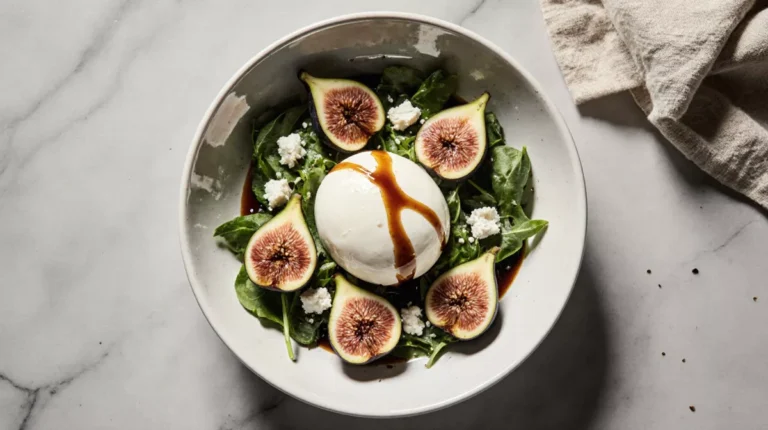
Figs are one of those ingredients that don’t ask for much time. They show up briefly, taste unmistakably like themselves, and then disappear again. When I bring figs home, it’s usually because I don’t want to cook much. I want to slice, season, and stop. Burrata fits that instinct perfectly.
Burrata and figs feel like a pairing meant for slowing down. Sweet fruit, soft cheese, and just enough seasoning to make the plate feel deliberate. It’s not dramatic food. It’s confident food.
This is something I make when I want the table to feel thoughtful without turning dinner into a project.
Quick Answer
Burrata and figs work best when ripe figs are served at room temperature and paired with burrata added just before serving. The contrast between sweet fruit and soft cheese creates balance without needing heavy seasoning.
Why Figs and Burrata Make Sense Together
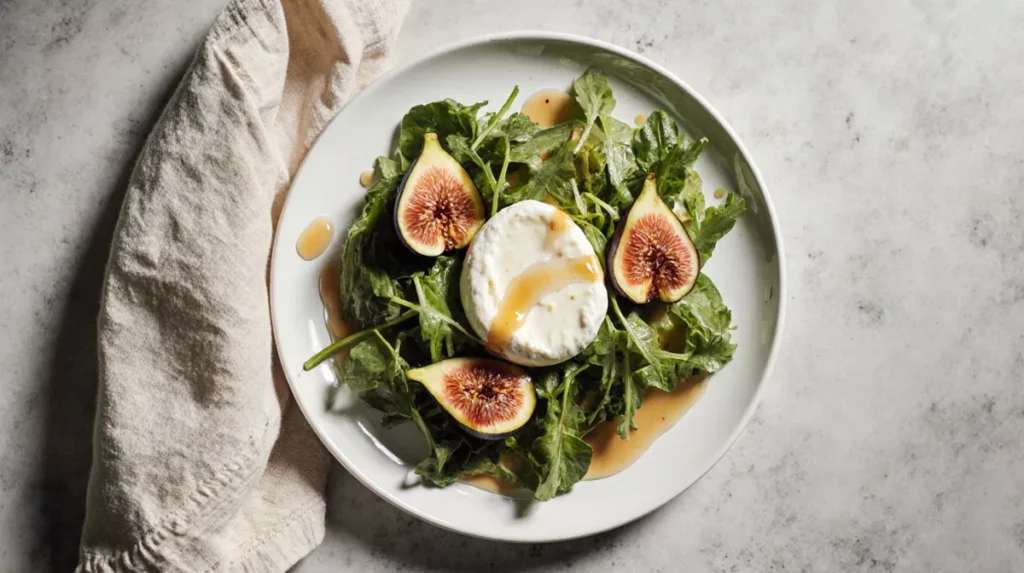
Figs are naturally sweet, but they’re not sharp like most fruit. Their sweetness is round and mellow. Burrata meets that softness instead of fighting it.
When figs are ripe, their interior is tender and slightly jammy. Burrata mirrors that texture while adding richness. Together, they create a plate that feels cohesive rather than layered.
The mistake is treating figs like garnish. In this pairing, they’re the foundation. Everything else should step back.
Choosing the Right Figs for This Pairing
Ripe figs matter more here than any other ingredient. A good fig should feel soft but not collapsing. The skin should give slightly when pressed.
Overripe figs break down too fast and turn the plate messy. Underripe figs taste flat and chalky. If a fig doesn’t smell faintly sweet, it’s not ready.
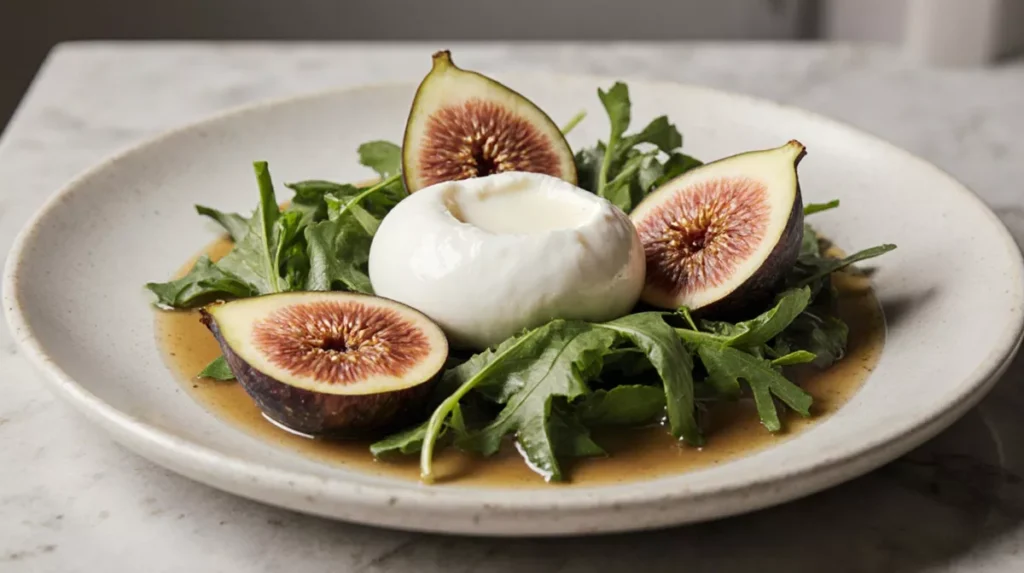
I usually slice figs lengthwise into halves or quarters. That exposes the interior without crushing it.
What Burrata Adds to Figs
Burrata softens the sweetness of figs and gives the plate weight. Without it, figs can feel light and fleeting.
The cheese should be torn gently and placed, not spread. Its job is to sit alongside the fruit and relax into it slightly.
This same placement logic follows how burrata behaves in everyday meals, where timing and restraint matter more than mixing or heat.
The One Recipe That Belongs Here
This is the only recipe in this cluster.
Burrata and Figs
Ingredients
Main Ingredients
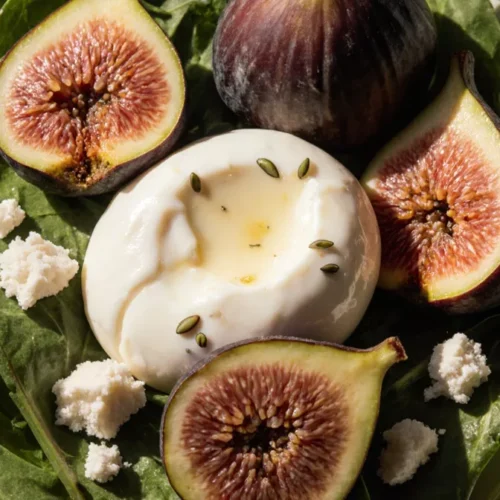
- 6–8 fresh figs halved or quartered
- 1–2 balls burrata cheese
- 2 tablespoons olive oil
- Flaky salt to taste
- Freshly ground black pepper
- Fresh thyme or basil optional
Instructions
- Arrange the figs on a wide serving plate with space between pieces.
- Lightly season with flaky salt and drizzle with olive oil.
- Tear the burrata into large sections and place among the figs.
- Finish with freshly ground black pepper and herbs if using.
- Serve immediately as a light main or shared appetizer.
Notes
Burrata and Figs
Serves: 2 as a light main or shared plate
Ingredients
- Fresh figs, halved or quartered
- Burrata cheese
- Olive oil
- Flaky salt
- Black pepper
- Optional: a mild herb such as thyme or basil
Method
- Arrange the figs on a wide plate with space between pieces.
- Season lightly with salt and a small amount of olive oil.
- Tear the burrata into large sections and place it among the figs.
- Finish with black pepper and herbs if using.
Stop there. The dish should feel open, not crowded.
Why This Dish Needs Restraint
Figs don’t need sweetness added. Honey and heavy glazes overpower them quickly.
Burrata already brings richness. Extra fats blur the balance.
This plate works because nothing is forced. Each ingredient stays recognizable.
Common Mistakes With Burrata and Figs
Using cold figs dulls their flavor. Let them sit at room temperature before serving.
Adding burrata too early causes it to lose structure.
Over-seasoning masks the natural sweetness of the fruit.
Crowding the plate makes everything feel heavy.
How Burrata and Figs Fit Into Real Life Cooking
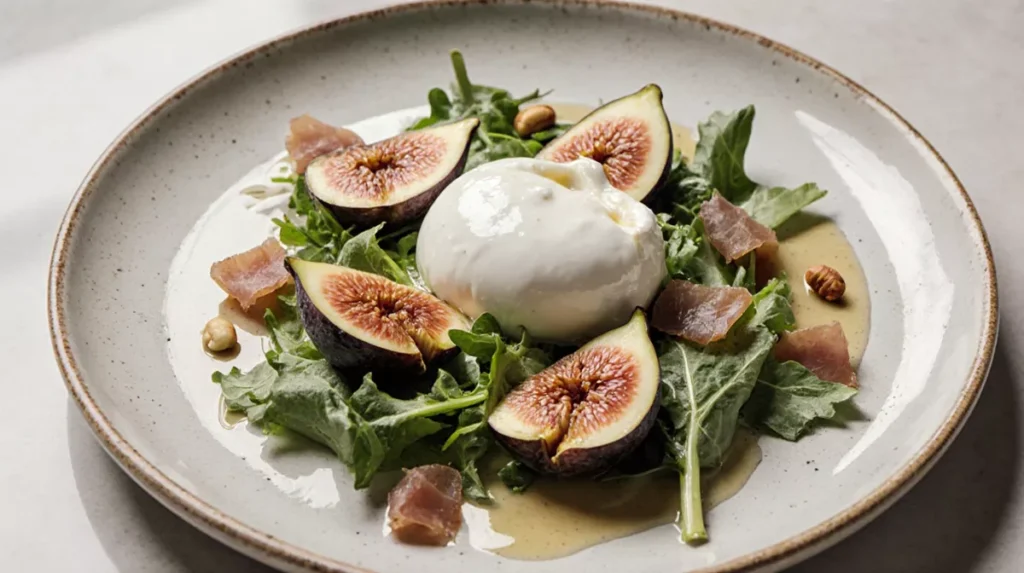
I make burrata and figs when I want something seasonal that doesn’t demand attention. It works as a light main with bread or as a calm starter that sets the tone for a meal.
This is food for evenings when you want to taste what’s in season and stop there.
It’s not meant to impress. It’s meant to feel right.
Variations That Stay Honest
If you adjust, keep changes minimal.
- Add herbs only if they’re fresh and subtle.
- Use olive oil sparingly.
- Pair with simple bread if needed.
If the variation becomes the point, you’ve gone too far.
Storage and Make-Ahead Notes
This dish should be assembled just before serving. Once cut, figs lose moisture quickly, and burrata does not improve with time.
Prep nothing ahead. Assemble and eat.
Estimated Nutrition Per Serving
| Calories (kcal) | Protein (g) | Carbohydrates (g) | Fat (g) |
|---|---|---|---|
| 290 | 9 | 18 | 22 |
Values are estimates based on ripe figs and moderate burrata portions.
Does burrata go with figs?
Yes, burrata goes well with figs because their textures complement each other. Ripe figs are soft and sweet, while burrata adds richness and balance without overpowering the fruit. Together, they create a pairing that feels natural rather than forced.
Which cheese goes best with figs?
Soft, mild cheeses work best with figs. Burrata is a strong option because it supports the sweetness of figs without competing with them. Firmer or sharper cheeses can overwhelm the fruit and make the plate feel heavy.
What fruit pairs well with burrata?
Fruits with gentle sweetness and soft texture pair best with burrata. Figs are a classic choice, but peaches, pears, and certain berries also work when they are ripe and in season. The key is balance rather than contrast.
How do you make toast with burrata and figs?
To make toast with burrata and figs, start with well-toasted bread that can support soft toppings. Place burrata on the warm toast first, then add sliced figs on top. Finish lightly with olive oil or black pepper and serve immediately.
Final Thoughts From My Kitchen
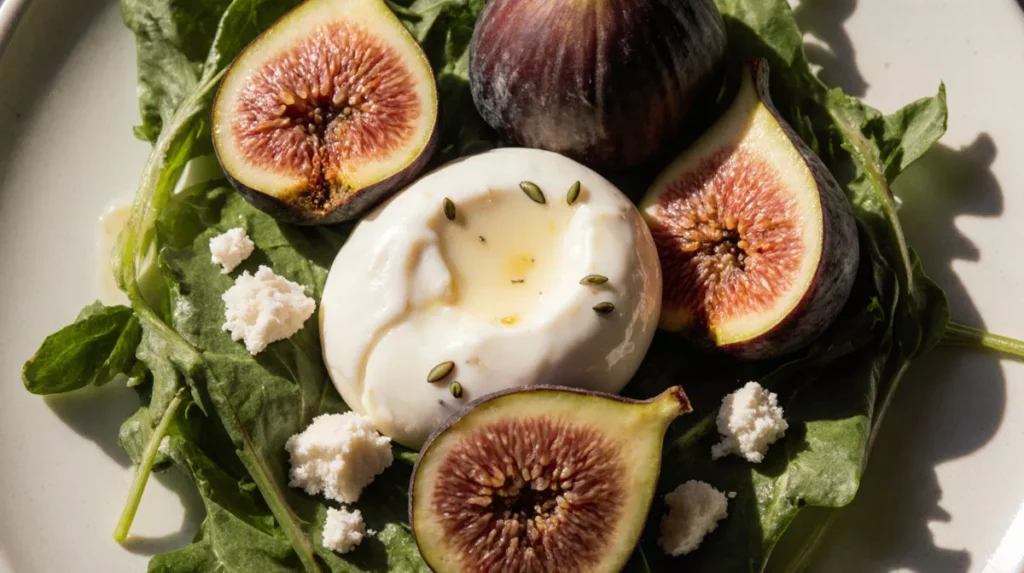
Burrata and figs are at their best when nothing tries to steal focus. Sweet fruit, soft cheese, and careful seasoning are enough.
This is the kind of dish that reminds you why seasonal cooking matters. Not because it’s trendy, but because it tells you when to stop.