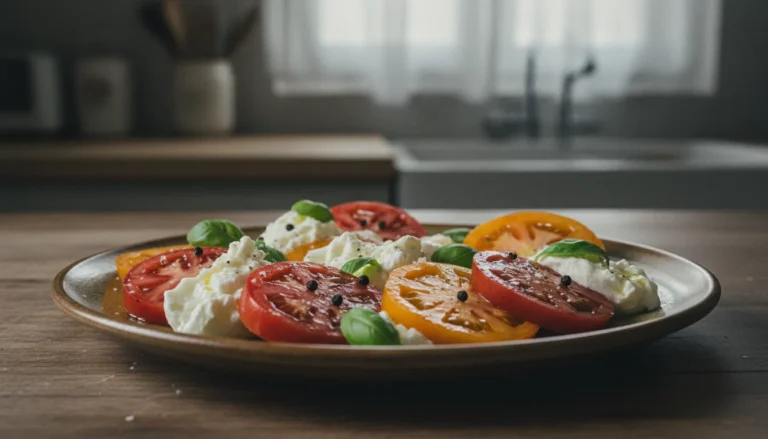
There’s a point every summer when tomatoes stop being background ingredients and start becoming the reason dinner happens at all. When heirloom tomatoes finally show up looking uneven, deeply colored, and imperfect, I know burrata cheese is not far behind. This is the kind of meal that doesn’t come from planning. It comes from noticing what looks good and getting out of the way.
Heirloom tomatoes and burrata cheese get lumped together as a restaurant starter, but that framing misses how practical this pairing really is. At home, this combination works because it requires almost nothing and still feels complete. No cooking. No tricks. Just timing, seasoning, and restraint.
This article is about using heirloom tomatoes and burrata cheese the way they actually work in a real kitchen. Not plated for effect. Not stretched into something complicated. Just a meal that earns its place on the table.
Quick Answer
Heirloom tomatoes and burrata cheese work best when both are served at room temperature and lightly seasoned. The tomatoes provide acidity and structure, while the burrata adds softness without overpowering the plate.
Why Heirloom Tomatoes Change the Whole Dish
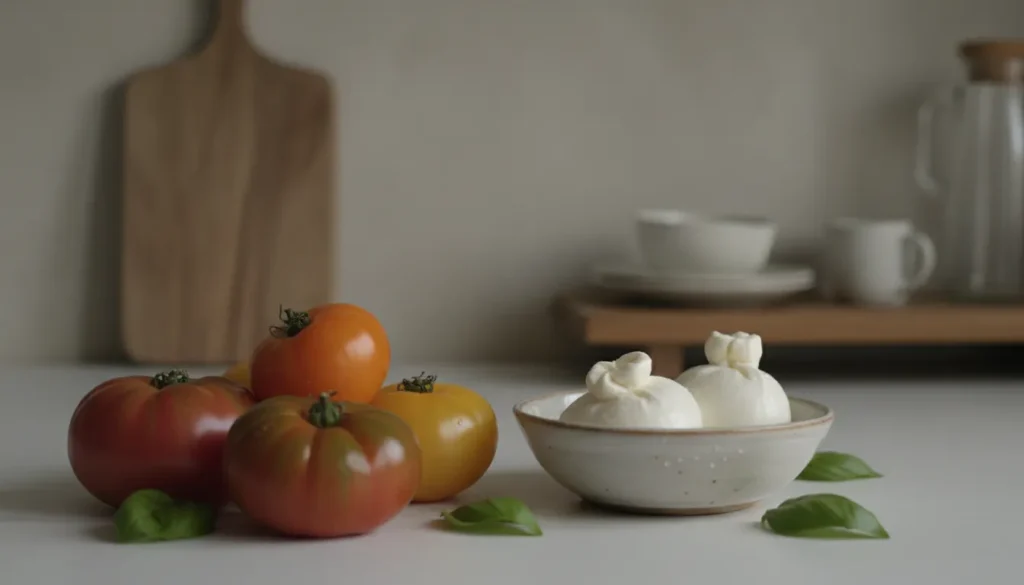
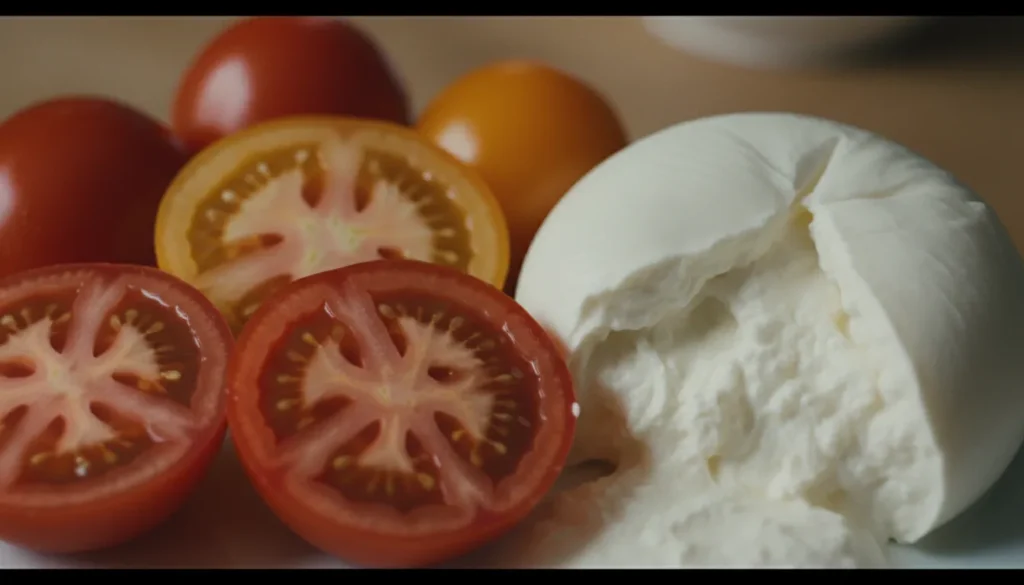
Not all tomatoes behave the same. Heirloom tomatoes are softer, juicier, and more irregular than standard varieties. That matters when pairing them with burrata cheese.
Their acidity is gentler but more complex. Their texture breaks down easily, releasing juice that becomes part of the dish. This juice is not a flaw. It’s the base. When burrata hits that surface, it doesn’t sit there awkwardly. It settles in.
In my kitchen, I never chill heirloom tomatoes. Cold dulls their flavor and tightens the flesh. Room temperature tomatoes taste fuller and give burrata something worth responding to.
This pairing fails when tomatoes are underripe or overly firm. Without softness and acidity, the dish turns flat fast.
What Burrata Cheese Contributes Here
Burrata cheese is not the star in this dish. It’s the stabilizer. It smooths out the acidity of the tomatoes and connects everything on the plate.
Once opened, burrata spreads instead of sitting neatly. That’s exactly what you want here. It mixes with tomato juice, olive oil, and salt to create something closer to a loose dressing than a topping.
The mistake people make is adding too much. Burrata should never bury the tomatoes. It should soften them, not replace them.
The One Recipe That Actually Works at Home
This is the only recipe in this cluster. Everything else is explanation.
Heirloom Tomatoes With Burrata Cheese
Ingredients
Main Ingredients
- 2–3 heirloom tomatoes sliced or torn
- 2 balls burrata cheese
- 2 tablespoons extra virgin olive oil
- Flaky salt to taste
- Freshly ground black pepper
- Fresh basil or soft herbs optional
Instructions
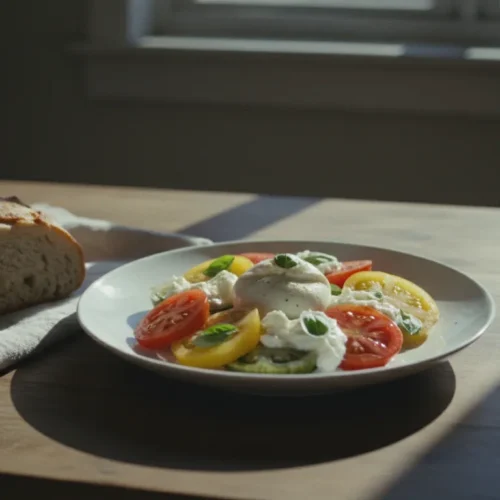
- Slice or tear heirloom tomatoes and spread on a wide plate.
- Let sit a few minutes to allow juices to release.
- Lightly season tomatoes with flaky salt; taste before adding more.
- Tear burrata into large pieces and place over the tomatoes.
- Drizzle with olive oil and finish with black pepper.
- Add fresh herbs if desired and serve immediately.
Notes
Heirloom Tomatoes With Burrata Cheese
Serves: 2 to 3 as a light main or shared plate
Ingredients
- Heirloom tomatoes, sliced or torn
- Burrata cheese
- Extra virgin olive oil
- Flaky salt
- Black pepper
- Fresh basil or similar soft herb, optional
Method
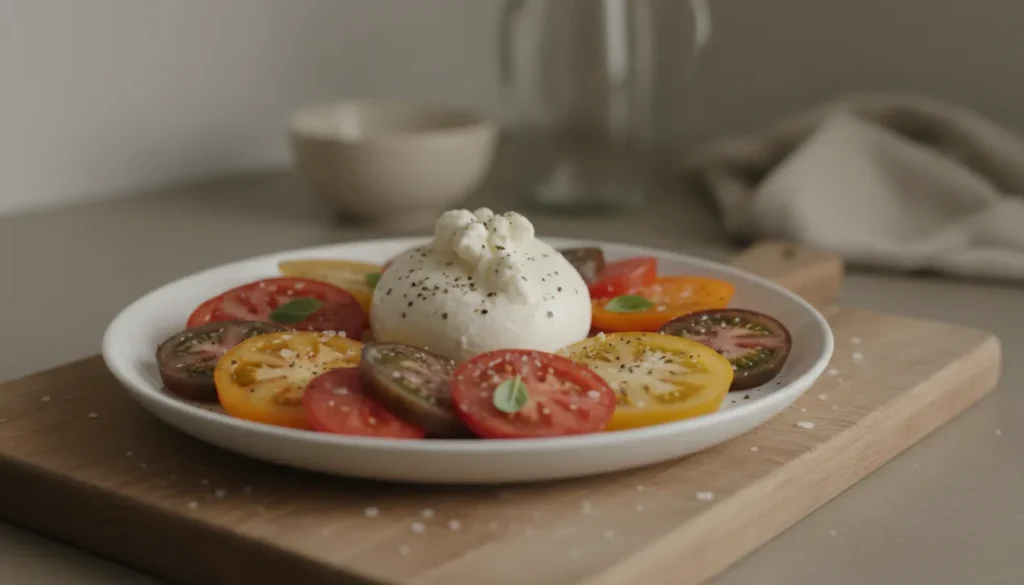
- Slice or tear the heirloom tomatoes and spread them across a wide plate. Let them sit for a few minutes so the juices start to release.
- Lightly season the tomatoes with salt. Taste before adding more.
- Tear the burrata cheese into large pieces and place it over the tomatoes.
- Drizzle olive oil over the plate and finish with black pepper.
- Add herbs only if they smell fresh and clean.
That’s it. If you feel the urge to do more, stop.
Why This Works Without Cooking
This dish succeeds because everything is already doing its job. The tomatoes bring acidity and moisture. The burrata brings fat and softness. Olive oil carries flavor. Salt ties it together.
Heat would only get in the way. Cooking the tomatoes would dull their brightness. Heating the burrata would ruin its texture.
In real meals, knowing when not to cook is just as important as knowing how.
This pairing works because the tomatoes already provide acidity and moisture, which allows the cheese to soften naturally without direct heat. This same principle is explained in more detail when looking at how burrata behaves in everyday meals, where timing matters more than cooking.
Common Mistakes That Ruin This Pairing
The biggest mistake is using cold ingredients. Cold tomatoes and cold burrata taste muted and stiff.
Another mistake is over-seasoning. People panic and add vinegar, balsamic glaze, or heavy spices. That turns a balanced plate into something loud and unfocused.
Cutting everything too neatly also works against you. This dish benefits from irregular shapes. It should look like food, not a diagram.
Finally, using poor olive oil shows immediately. With so few ingredients, quality matters.
How This Dish Fits Into Real Life Meals
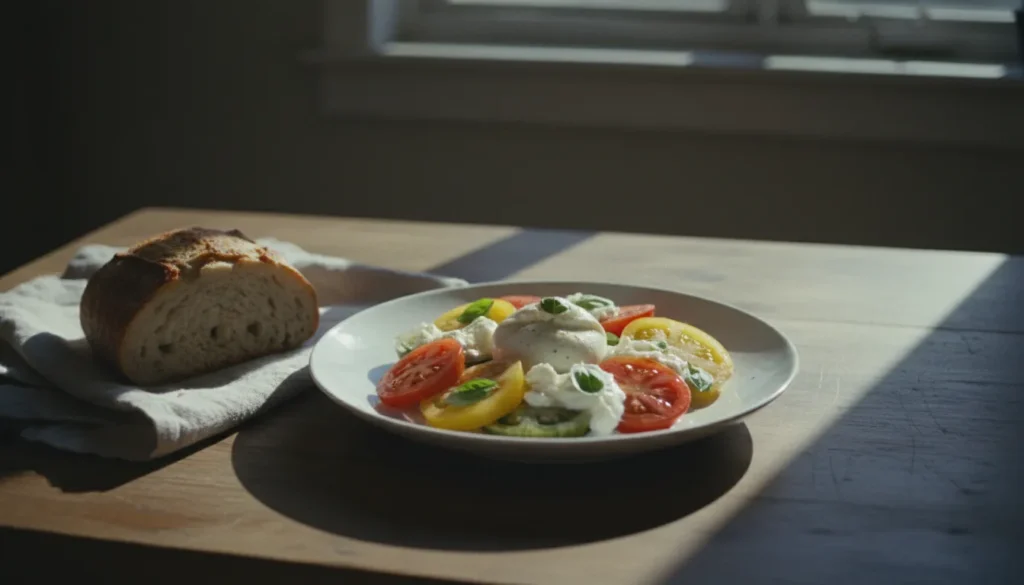
I make heirloom tomatoes and burrata cheese when I want dinner to feel intentional without effort. It works as a light main with bread. It works as a shared plate that anchors a table. It works when it’s too hot to cook.
This is not a special occasion dish. It’s a seasonal one. When tomatoes are right, this meal makes sense. When they’re not, it doesn’t.
That’s a good thing.
Variations That Still Respect the Dish
If you need to adjust, keep it subtle.
- Add thinly sliced red onion only if it’s mild.
- Use a small amount of citrus zest, not juice.
- Pair with grilled bread rubbed lightly with garlic.
If the variation becomes the focus, you’ve gone too far.
Storage and Leftovers
This dish does not store well. Once assembled, it should be eaten. Tomatoes release more liquid over time, and burrata loses its structure.
If you need to prep ahead, slice tomatoes and store them separately. Keep burrata unopened until serving.
Estimated Nutrition Per Serving
| Calories (kcal) | Protein (g) | Carbohydrates (g) | Fat (g) |
|---|---|---|---|
| 280 | 10 | 8 | 24 |
Values are estimates based on moderate portions. Ingredient amounts and tomato size will affect totals.
What is burrata with heirloom tomatoes?
Burrata with heirloom tomatoes is a simple dish that pairs fresh, ripe tomatoes with soft burrata cheese. The tomatoes provide acidity and structure, while the burrata adds richness without overpowering the plate.
What tomatoes go with burrata?
Soft, ripe tomatoes with good acidity work best with burrata. Heirloom tomatoes are a strong choice because their texture breaks down easily and their flavor stands up to the creaminess of the cheese.
How do you cut heirloom tomatoes for burrata?
Heirloom tomatoes are best sliced or gently torn into uneven pieces. Irregular cuts release juice naturally and help the tomatoes mix with the burrata instead of sitting stiffly underneath it.
What’s the big deal about heirloom tomatoes?
Heirloom tomatoes are prized for their flavor and texture rather than uniform appearance. They tend to be juicier and more complex in taste, which makes them especially good for simple dishes where tomatoes are the main ingredient.
Final Thoughts From My Kitchen
Heirloom tomatoes and burrata cheese work because neither one tries to dominate the plate. They meet in the middle and let texture and seasoning do the work.
When ingredients are this good, the job is not to improve them. It’s to stop before you get in their way.