There are days when cooking is not difficult, just impossible. No stove. No microwave. No energy. Maybe you are at work, traveling, or simply done for the day. No cook high protein meals exist for those moments, not as a shortcut, but as a solution.
In short, these meals deliver protein without heat, appliances, or preparation steps that require cooking. They matter because when cooking is removed, protein is usually removed with it. Meals turn into snacks, hunger comes back quickly, and structure disappears.
The key point is this: no cook does not mean low quality or low protein. It means intentional assembly instead of cooking.
What “No Cook” Really Means in Practice
No cook meals are often misunderstood.
They do not mean:
- Raw-only eating
- Cold food with no structure
- Protein bars replacing meals
No cook high protein meals are meals built entirely from foods that are already cooked, ready to eat, or safe to eat as-is.
This includes:
- Dairy-based proteins
- Canned or pouch proteins
- Pre-cooked proteins
- Plant-based proteins that require no heat
If the food is ready the moment you open it, it qualifies.
Why Protein Is the First Thing Lost Without Cooking
When cooking disappears, people default to convenience foods.
Common no-cook patterns include:
- Bread-based meals
- Snack combinations
- Fruit-only meals
These foods are easy, but they are not filling.
No cook high protein meals work by restoring structure. Protein becomes the anchor again, even without heat.
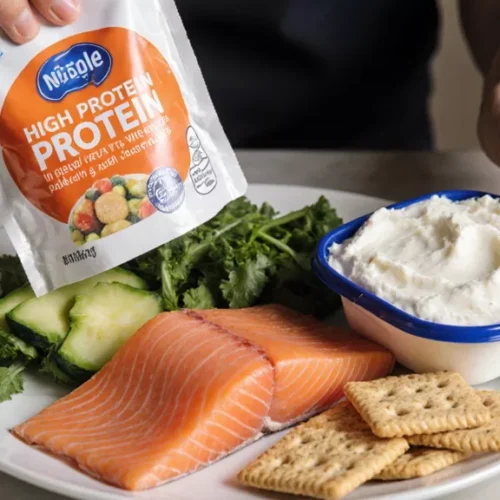
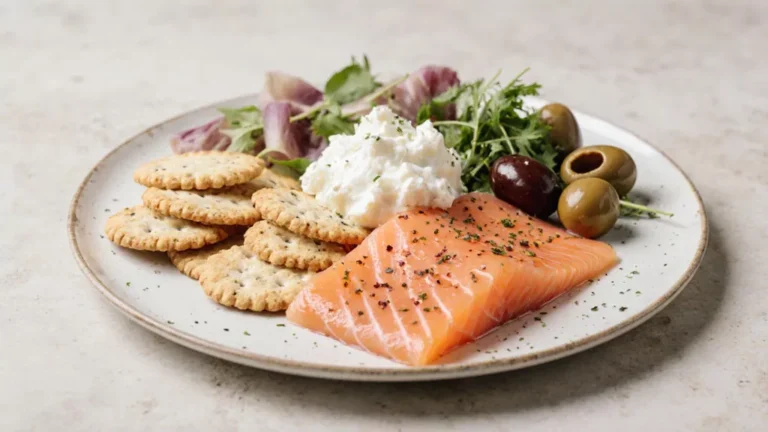
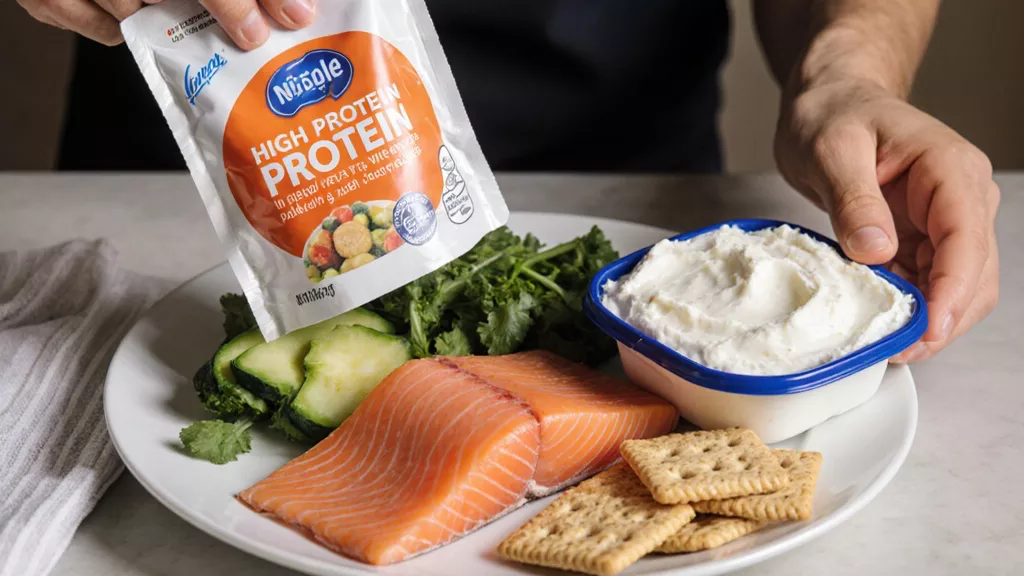
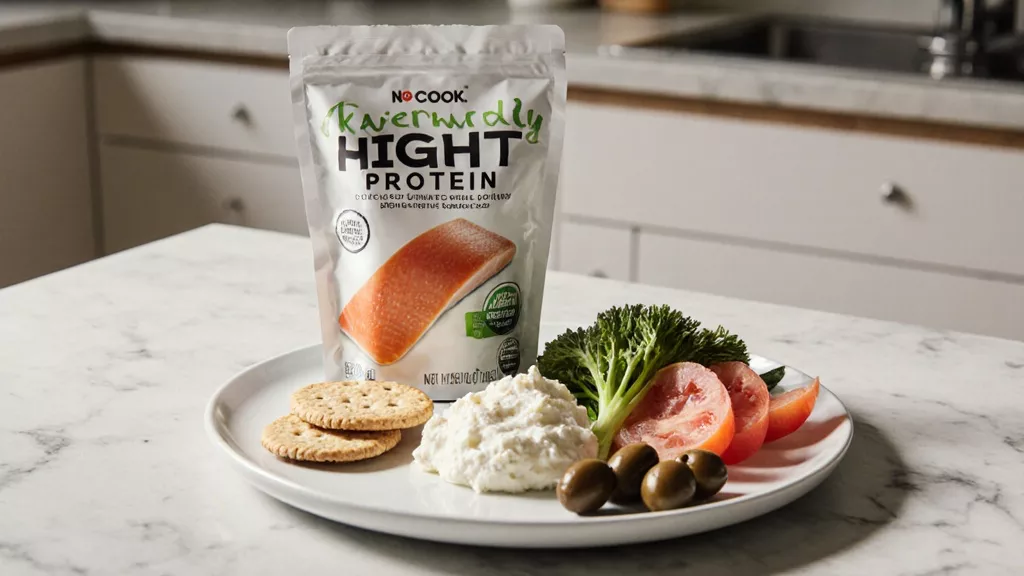
No-Cook Salmon, Cottage Cheese & Crackers Protein Plate
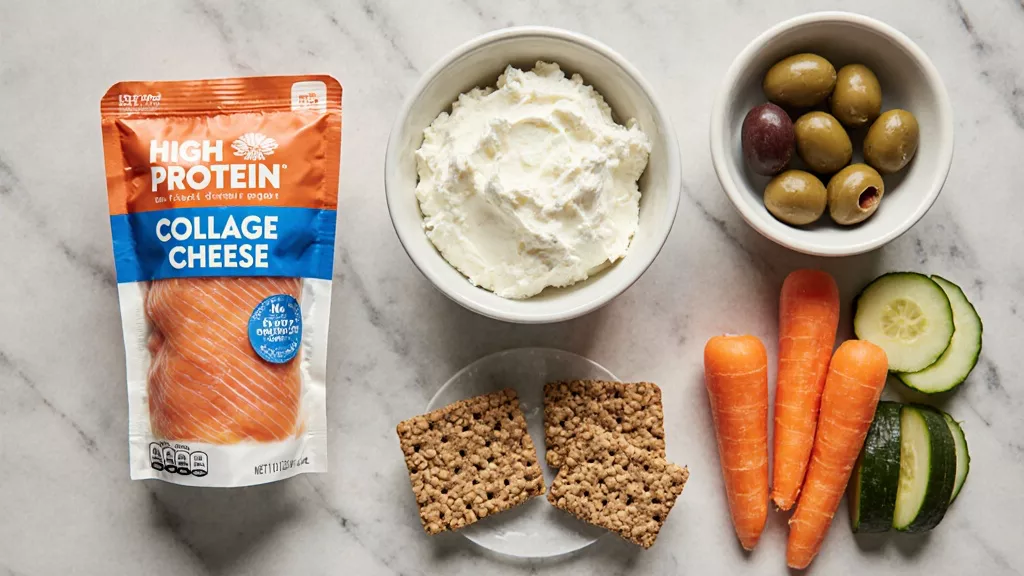
Ingredients
Main Ingredients
- 1 salmon pouch or canned salmon drained
- ½ cup cottage cheese
- 6–8 whole-grain crackers
- ¼ cup olives
- Raw vegetables carrot sticks, cucumber slices, or cherry tomatoes
Instructions
- Open the salmon pouch or can and drain if needed.
- Spoon cottage cheese onto a plate or container.
- Add crackers, olives, and raw vegetables.
- Serve immediately or pack for later.
Notes
The No Cook Rule That Makes Everything Easier
In my kitchen, no cook meals follow one rule.
If it cannot be eaten as-is, it is not part of the meal.
This rule simplifies decisions instantly. It removes half the options and makes meals faster to assemble.
Once protein is chosen, everything else becomes supportive.
Reliable No Cook Protein Sources
The success of no cook meals depends on dependable protein options.
Common no cook protein sources include:
- Greek-style yogurt
- Cottage cheese
- Canned tuna or salmon
- Ready-to-eat chicken
- Deli-style proteins with minimal ingredients
- Tofu
- Beans and lentils
These foods require no heat and hold their structure well.
No Cook High Protein Breakfasts
Breakfast is one of the easiest meals to keep no cook.
Why No Cook Breakfasts Work
Morning meals already lean toward cold or ready foods. Adding protein restores balance.
Examples include:
- Yogurt-based bowls
- Cottage cheese with fruit or crackers
- Protein-rich smoothies without cooking
These meals are fast, filling, and repeatable.
No Cook High Protein Lunches
Lunch is where no cook meals become especially useful.
When Lunch Has No Kitchen Access
Workplaces, travel days, and errands often remove access to cooking.
No cook lunches work best when they:
- Are easy to pack
- Hold well at room temperature or chilled
- Include a clear protein source
Examples include:
- Protein paired with crackers or bread
- Bean-based meals
- Dairy-based bowls
The structure matters more than variety.
No Cook High Protein Dinners
Dinner without cooking often feels incomplete, but it does not have to be.
How No Cook Dinners Stay Satisfying
No cook dinners work when:
- Protein portions are sufficient
- Meals are treated as complete, not snacks
- Components are balanced intentionally
Examples include:
- Protein with vegetables and grains
- Protein-focused plates assembled from ready foods
These meals feel simple but still provide closure to the day.
Portion Awareness Without Cooking
No cook meals can become unbalanced if protein portions are too small.
A simple guideline:
- Protein should be the most intentional part of the meal
- Supporting foods add volume and flavor, not bulk
- Snacks should not replace meals
When protein is visible, portions tend to self-correct.
When No Cook Meals Are Most Useful
No cook high protein meals are especially helpful:
- At work
- While traveling
- During hot weather
- On low-energy days
- When kitchens are unavailable
They exist to protect consistency, not replace cooking entirely.
How No Cook Meals Fit Into the Bigger Protein System
No cook meals are one application of the same protein-first approach used across all meals.
The full framework that connects different eating situations is explained in the main guide on high protein meals.
This cluster focuses only on meals that require no heat or cooking.
Common Mistakes With No Cook High Protein Meals
Some mistakes repeat often.
Treating Snacks as Meals
Snacks alone rarely deliver enough protein.
Underestimating Protein Portions
Small amounts of protein lead to hunger returning quickly.
Overcomplicating Assembly
No cook meals work best when they are simple.
Avoiding these mistakes keeps meals reliable.
How to Plan a Week of No Cook High Protein Meals
No cook meals work best when they are planned lightly, not improvised every day. Planning does not mean preparing full meals in advance. It means deciding which no cook proteins you will rely on during the week.
In short, the goal is to remove daily food decisions when cooking is not available.
The key point is to plan ingredients, not recipes.
A Simple Weekly No Cook Structure
A realistic no cook week usually looks like this:
- One or two no cook breakfasts
- One or two no cook lunches
- One or two no cook dinners used as backups
This structure ensures that no cook meals support your routine instead of taking it over completely.
How to Keep No Cook Meals Balanced
Without cooking, balance becomes intentional instead of automatic.
The Balance Check
A no cook meal stays balanced when:
- Protein is clearly present
- Carbohydrates provide energy
- Vegetables or fruit add volume
- Fats support fullness
When protein is missing, the meal becomes a snack. When protein is present, the meal holds.
Budget-Friendly No Cook High Protein Meals
No cook meals can become expensive if convenience items are overused.
How to Keep Costs Down
Budget-friendly no cook meals rely on:
- Larger containers of dairy-based proteins
- Store-brand canned or pouch proteins
- Plant-based proteins like beans and lentils
- Repeating the same proteins across meals
Buying single-serve items too often increases cost without adding value.

Portable No Cook Meals for Work and Travel
Portability is one of the biggest advantages of no cook meals.
What Makes a No Cook Meal Portable
A portable no cook meal:
- Holds its texture
- Does not require heating
- Can be eaten cold or at room temperature
- Stays intact during transport
These meals work well in offices, cars, airports, and anywhere kitchens are unavailable.
Eating No Cook Meals Without Feeling Unsatisfied
No cook meals often feel incomplete because portions are too small or protein is treated as optional.
How to Make No Cook Meals Feel Like Meals
To avoid that:
- Use a full protein portion
- Treat the meal as complete, not temporary
- Sit and eat when possible
When no cook meals are respected as meals, satisfaction improves.
Common No Cook Pitfalls to Avoid
Certain mistakes reduce the effectiveness of no cook meals.
Relying Too Heavily on Bread and Crackers
Carbohydrates alone digest quickly and lead to hunger.
Underestimating Protein Needs
Small protein portions do not last long.
Overcomplicating Assembly
No cook meals work best when they are simple and repeatable.
Avoiding these pitfalls keeps no cook meals reliable.
When No Cook Meals Should Be the Primary Choice
No cook meals are especially useful:
- During travel
- At work without kitchen access
- On extremely busy or low-energy days
- During hot weather
- When cooking feels overwhelming
They exist to protect consistency, not to replace cooking permanently.
When No Cook Meals Should Support, Not Replace Cooking
No cook meals are a tool, not a rule.
Cooking still matters:
- When time allows
- When preparing food for multiple days
- When variety is needed
The best approach uses no cook meals strategically instead of exclusively.
How No Cook Meals Support Long-Term Consistency
Consistency matters more than perfection.
No cook high protein meals support consistency because they:
- Remove barriers
- Reduce excuses
- Keep protein intake steady
- Fit unpredictable schedules
When meals adapt to life, habits last longer.
A Clear Summary of No Cook High Protein Meals
No cook high protein meals are meals built from ready-to-eat foods that deliver protein without heat or appliances.
In short:
- Protein is chosen first
- Assembly replaces cooking
- Meals are intentional, not random
- Simplicity supports consistency
This means eating well does not depend on having a kitchen.
How to eat high protein without cooking?
Eating high protein without cooking works when meals are built from ready-to-eat protein sources. Foods like Greek yogurt, cottage cheese, canned fish, ready-to-eat chicken, tofu, beans, and lentils provide protein without heat. No cook high protein meals succeed when protein is chosen first and the rest of the meal is assembled around it.
How can I get 30g of protein in every meal?
Getting 30g of protein in every meal is easier when protein is treated as the base rather than a side. For no cook meals, this often means using a full serving of a high-protein food like yogurt, cottage cheese, canned fish, or tofu and pairing it with simple carbohydrates and vegetables. Consistency across meals matters more than exact numbers.
What food has the highest protein that isn’t meat?
Some of the highest-protein foods that are not meat include Greek-style yogurt, cottage cheese, tofu, tempeh, lentils, beans, and certain dairy products. These foods work especially well in no cook high protein meals because they can be eaten as-is and used in both savory and sweet combinations.
How to get 40g of protein in one meal?
Reaching 40g of protein in one meal usually requires combining two protein sources. In no cook meals, this might look like pairing yogurt with cottage cheese, tofu with beans, or canned fish with a dairy-based side. Building meals this way keeps protein high without needing cooking or large portions.
Final Thoughts on No Cook Eating
No cook meals are not lazy meals. They are practical ones.
When protein remains the anchor, meals stay satisfying even without cooking. By planning a few reliable no cook options, you protect your routine on the days when cooking is simply not possible.
That is how no cook meals support real life instead of fighting it.