
High protein meals for beginners are meals where protein is intentionally chosen first and clearly visible on the plate. In short, they are not extreme, not complicated, and not based on tracking numbers. They are built using familiar foods and simple preparation so beginners can eat consistently without feeling overwhelmed.
This matters because most beginners fail not from lack of motivation, but from lack of structure. When meals are random or protein is treated as an afterthought, hunger comes back quickly and energy drops. High-protein meals for beginners solve this by making meals more filling and predictable from the start.
This means the goal is not to change everything at once. The goal is to learn how to recognize and build meals that support fullness, energy, and confidence using food you already know.
What “High Protein” Means When You’re Just Starting
For beginners, high protein does not need a strict number attached to it. What matters most is proportion and visibility.
A beginner-friendly high-protein meal is one where protein is the main component of the meal, not a small side. When you look at the plate, the protein should be obvious.
The key point is this: if protein is easy to identify, you are doing it right.
Common beginner-friendly protein sources include:
- Eggs
- Chicken or turkey
- Fish
- Greek yogurt
- Cottage cheese
- Beans and lentils
- Tofu or tempeh
These foods are widely available, affordable, and easy to prepare or assemble.

Why Beginners Often Undereat Protein Without Realizing It
Most beginners are not avoiding protein on purpose. It usually happens by habit.
How Low-Protein Meals Sneak In
Many common meals look filling but are low in protein:
- Toast-based breakfasts
- Pastries or cereal without protein
- Salads with minimal protein
- Snack-style lunches made mostly of carbs
These meals for beginners digest quickly and lead to hunger returning soon after.
High protein meals for beginners change this pattern by shifting focus. Protein becomes the starting point instead of an afterthought.
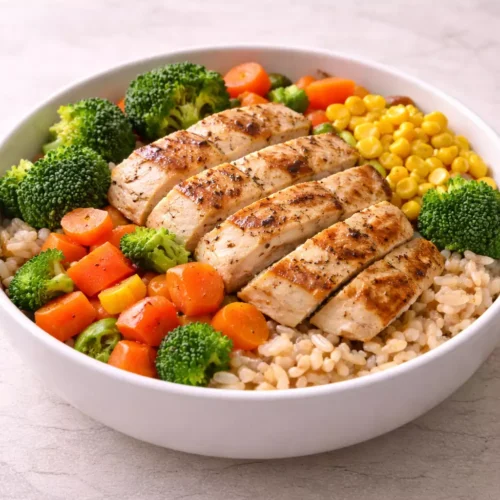
Beginner Chicken, Rice & Veggie Protein Bowl
Ingredients
Main Ingredients
- 2 cups cooked chicken rotisserie or pre-cooked works great
- 2 cups microwavable brown rice or cooked rice
- 2 cups frozen mixed vegetables steam-in-bag or microwaved
- 2 tablespoons olive oil or a simple dressing
- 1 tablespoon soy sauce or lemon juice optional, for flavor
- Salt to taste
- Black pepper to taste
Instructions
- Warm the cooked chicken, rice, and vegetables according to package directions.
- Divide rice evenly into two bowls.
- Top with chicken and steamed vegetables.
- Drizzle with olive oil or your favorite dressing.
- Add soy sauce or lemon juice for extra flavor, if desired.
- Season with salt and black pepper to taste.
Notes
The One Rule Beginners Should Follow First
If there is one rule that makes high-protein eating easier for beginners, it is this:
Choose the protein first.
In my kitchen, this rule simplifies everything. Once the protein is chosen, the rest of the meal builds itself. You are no longer guessing what to eat or how much.
This approach removes pressure and reduces mistakes. It also helps beginners feel confident early, which matters more than perfect execution.
Easy High Protein Meals for Beginners at Breakfast
Breakfast is often the hardest meal for beginners to change because many people are used to quick, carb-heavy options.
Why Protein at Breakfast Matters
Protein at breakfast supports steady energy and reduces cravings later in the day. In short, it makes the rest of the day easier.
Beginner-Friendly Breakfast Formats
Instead of thinking in recipes, beginners should think in formats.
Simple options include:
- Eggs with toast and fruit
- Greek yogurt with nuts and berries
- Cottage cheese with fruit or whole-grain crackers
- Protein-rich smoothies with simple ingredients
These meals require little skill and can be repeated daily without boredom.
The key point is consistency. Repeating the same high-protein breakfast most days builds momentum.
Simple High Protein Lunches for Beginners
Lunch is where beginners often lose structure due to time pressure.
What a Beginner Lunch Should Look Like
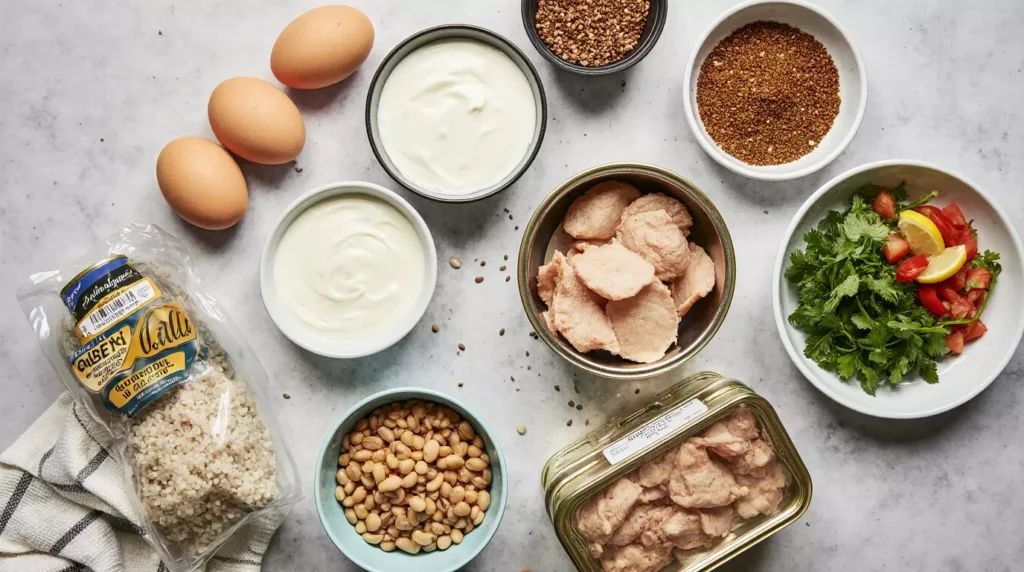
A beginner-friendly high-protein lunch usually includes:
- One clear protein source
- One supporting carb
- One or two simple sides
Examples include:
- Chicken with rice and vegetables
- Tuna or egg salad with bread or crackers
- Leftover dinner protein with a simple side
- Yogurt or cottage cheese paired with fruit and nuts
These meals are easy to prepare, easy to pack, and easy to recognize as balanced.
Beginner Dinners That Feel Familiar
One common beginner mistake is trying to completely change dinner habits. This often backfires.
High-protein dinners for beginners should feel normal. The difference is intention.
How to Adjust Dinner Without Overhauling It
Instead of removing favorite foods, beginners should:
- Choose a clear protein
- Build the meal around it
- Keep portions reasonable
Examples include:
- Protein with roasted vegetables
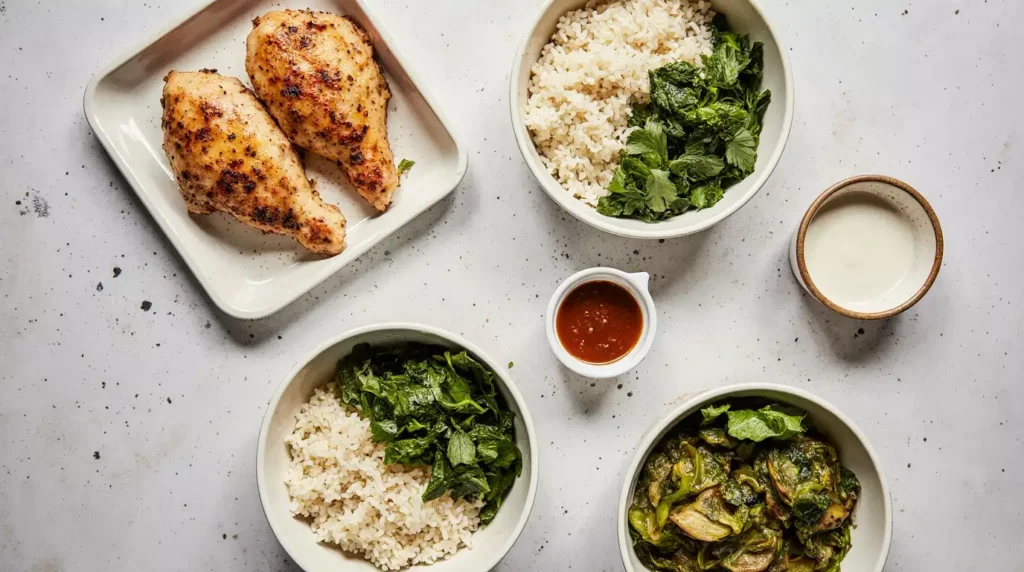
- Protein with grains and greens
- Simple one-pan meals
The meal still feels familiar, just more structured.
How Many Meals Beginners Should Change at Once
Beginners do not need to fix everything at the same time.
In short, changing one meal is enough.
Most beginners succeed by:
- Starting with breakfast
- Then adjusting lunch
- Then improving dinner gradually
This approach prevents overwhelm and improves consistency.
Grocery Shopping Made Simple for Beginners
Shopping is often where beginners feel stuck. High-protein meals simplify this process.
How Beginners Should Think About Shopping
Instead of shopping by recipes, beginners should shop by protein.
Start with:
- Two or three protein options you already enjoy
- Foods you know how to prepare
Then add:
- Simple carbs like rice, potatoes, or bread
- Vegetables you already eat
- Basic fats like olive oil or nuts
This keeps shopping realistic and repeatable.
Easy High Protein Meals for Beginners Without Cooking Skills
Beginners often assume high-protein meals require cooking expertise. That is not true.
Many beginner-friendly meals require minimal or no cooking:
- Yogurt-based meals
- Egg-based meals
- Ready-to-eat proteins paired with simple sides
The key point is not culinary skill. It is food selection.
Common Beginner Mistakes to Avoid Early On
Avoiding common mistakes helps beginners stay consistent.
Trying to Be Perfect
Perfection creates pressure. High-protein meals for beginners should feel easy, not restrictive.
Overcomplicating Meals
Complex meals are harder to repeat. Simple meals build habits faster.
Skipping Protein Earlier in the Day
Waiting until dinner to eat protein often leads to low energy and overeating later.
How This Beginner Approach Fits Into the Bigger System
This article focuses only on beginners. It does not attempt to cover every scenario.
The full framework that connects breakfast, lunch, and dinner into a flexible system is explained in the main guide on high protein meals.
That page shows how beginner habits scale into long-term structure.
How Beginners Can Build a Simple Weekly Routine
Once beginners understand how to structure individual meals, the next challenge is consistency across the week. This is where many people overthink things.
In short, a weekly routine does not require seven different meals. It requires a small set of meals that repeat.
For beginners, repetition is not a weakness. It is the reason habits stick.
A Beginner-Friendly Weekly Structure
Most beginners do well with a simple pattern:
- One or two breakfast options
- Two lunch options
- Two or three dinner options
This means you are not constantly deciding what to eat. You are rotating meals you already know how to make.
The key point is predictability. When meals are predictable, it becomes easier to stay consistent even on busy days.
How to Choose Meals For Beginners That Repeat Well
Not every meal is a good candidate for repetition. Beginners should choose meals that meet three criteria.
Familiar
If you already like the food, you are more likely to eat it again.
Simple
Meals with too many steps often get skipped. Simple meals survive real life.
Flexible
Meals that allow small changes feel less boring. Changing a vegetable or seasoning keeps things interesting without adding complexity.
Portion Guidance for Beginners Without Tracking
Beginners often worry about how much protein they should eat. This concern is understandable, but tracking is not required at this stage.
Visual Portion Cues That Work
Instead of counting grams, beginners can use visual cues:
- A palm-sized portion of protein at most meals
- Slightly larger portions on more active days
- Smaller portions paired with protein-rich sides when appetite is lower
This approach allows beginners to adjust naturally without feeling restricted.
Why Tracking Is Not Necessary at the Beginning
Tracking can be useful later, but for beginners it often creates stress.
High protein meals tend to regulate appetite on their own. When protein is present, meals are more filling and hunger is easier to manage.
This means beginners can focus on habits first and numbers later if needed.
How Long Beginners Should Follow This Phase
There is no strict timeline for the beginner phase.
In general, beginners should stay in this phase until:
- High-protein meals feel normal
- Grocery shopping feels easier
- Meals feel predictable instead of confusing
For many people, this takes several weeks or longer. There is no rush.
The goal is comfort and confidence, not speed.
Signs Beginners Are Doing It Right
Beginners often wonder if they are making progress. There are simple signs to look for.
Feeling Full Longer After Meals
When protein intake improves, meals tend to last longer.
Fewer Cravings Between Meals
Stable meals reduce the urge to snack constantly.
Less Stress Around Food Decisions
When meals are structured, eating feels simpler.
These signals matter more than perfection.
How Beginners Can Adjust Without Starting Over
Progress is rarely linear. Beginners will have days where meals are less structured.
The key point is not to restart. It is to adjust.
If one meal goes off track, the next meal is a chance to return to structure. There is no need to compensate or restrict.
High protein meals support flexibility because they are forgiving.
Eating Out and Social Meals as a Beginner
Beginners often worry about eating out or social situations.
High protein meals still apply.
Simple Strategy That Works
When eating out:
- Look for a clear protein option
- Build the meal around it
- Do not worry about perfection
This keeps beginners aligned with their habits without avoiding social situations.
What Beginners Should Ignore Early On
There is a lot of noise around protein and nutrition. Beginners do better by ignoring most of it.
Ignore Extreme Rules
Rules that eliminate entire food groups create unnecessary stress.
Ignore Perfection Online
Social media meals are not daily meals. Beginners need repeatable meals, not impressive ones.
Ignore Constant Changes
Jumping between approaches prevents habits from forming.
Consistency beats novelty at this stage.
When Beginners Are Ready to Expand
Once high protein meals feel automatic, beginners may want more variety or structure.
This might include:
- Faster meals
- Budget-focused meals
- Work-friendly meals
- Dietary-specific approaches
The important point is that these are expansions, not replacements.
The beginner framework remains the foundation.
A Clear Beginner Summary for Reference
High protein meals for beginners are meals built around one clear protein source using familiar foods and simple preparation.
In short:
- Protein is chosen first
- Meals are kept simple and repeatable
- Breakfast, lunch, and dinner all matter
- Perfection is not required
This means beginners can focus on habits instead of rules and confidence instead of complexity.
What is the easiest high protein meal to make?
The easiest high protein meal to make is one built around a single, ready-to-use protein and simple sides. For beginners, examples include eggs with toast, Greek yogurt with nuts, cottage cheese with fruit, or chicken with rice and vegetables. Easy high protein meals for beginners work best when they use familiar foods and minimal preparation.
How to get 100g of protein a day easily?
Getting 100g of protein a day is easier when protein is spread across meals instead of packed into one. For beginners, this often means aiming for protein at breakfast, lunch, and dinner using simple foods like eggs, yogurt, chicken, fish, or beans. High-protein meals for beginners focus on consistency across the day rather than hitting a large number all at once.
Is 100g of protein too much for a meal?
For most beginners, 100g of protein in a single meal is more than necessary and often uncomfortable. High protein meals are usually easier to digest and sustain when protein is distributed throughout the day. This means smaller, balanced meals tend to work better than trying to get all your protein at once.
How do I get 150g of protein a day?
Reaching 150g of protein a day typically requires planning and experience. Beginners usually reach this level by building every meal around protein and adding protein-rich snacks if needed. Easy high protein meals for beginners focus on learning structure first, then gradually increasing intake as meals become more consistent and predictable.
Final Thoughts for Beginners
High protein meals for beginners are not about changing who you are or how you eat overnight. They are about making one part of the meal intentional.
When protein becomes the anchor, meals become easier to plan, easier to repeat, and easier to enjoy.
Start simple. Repeat what works. Adjust when needed.
That is how high protein eating becomes sustainable.