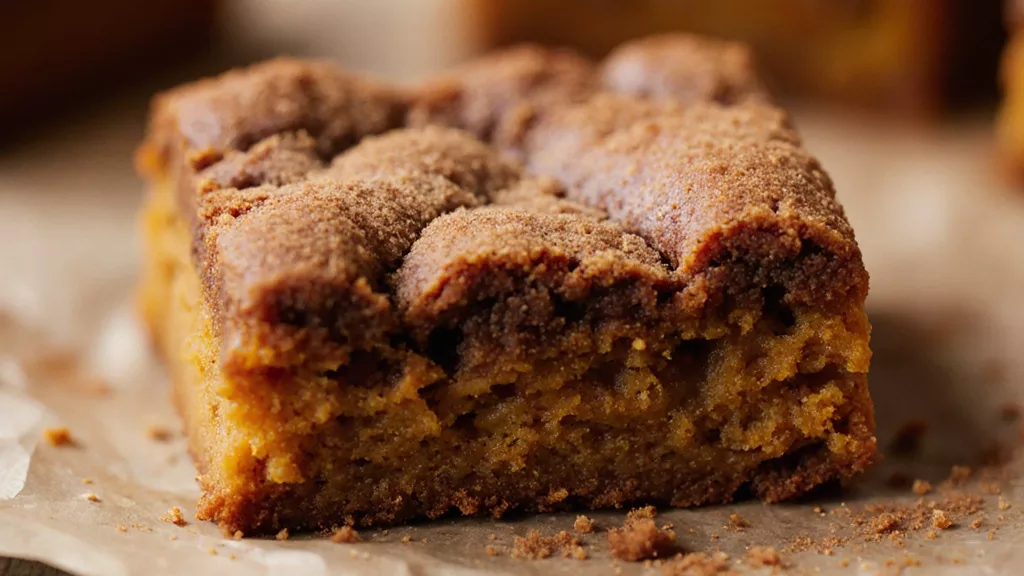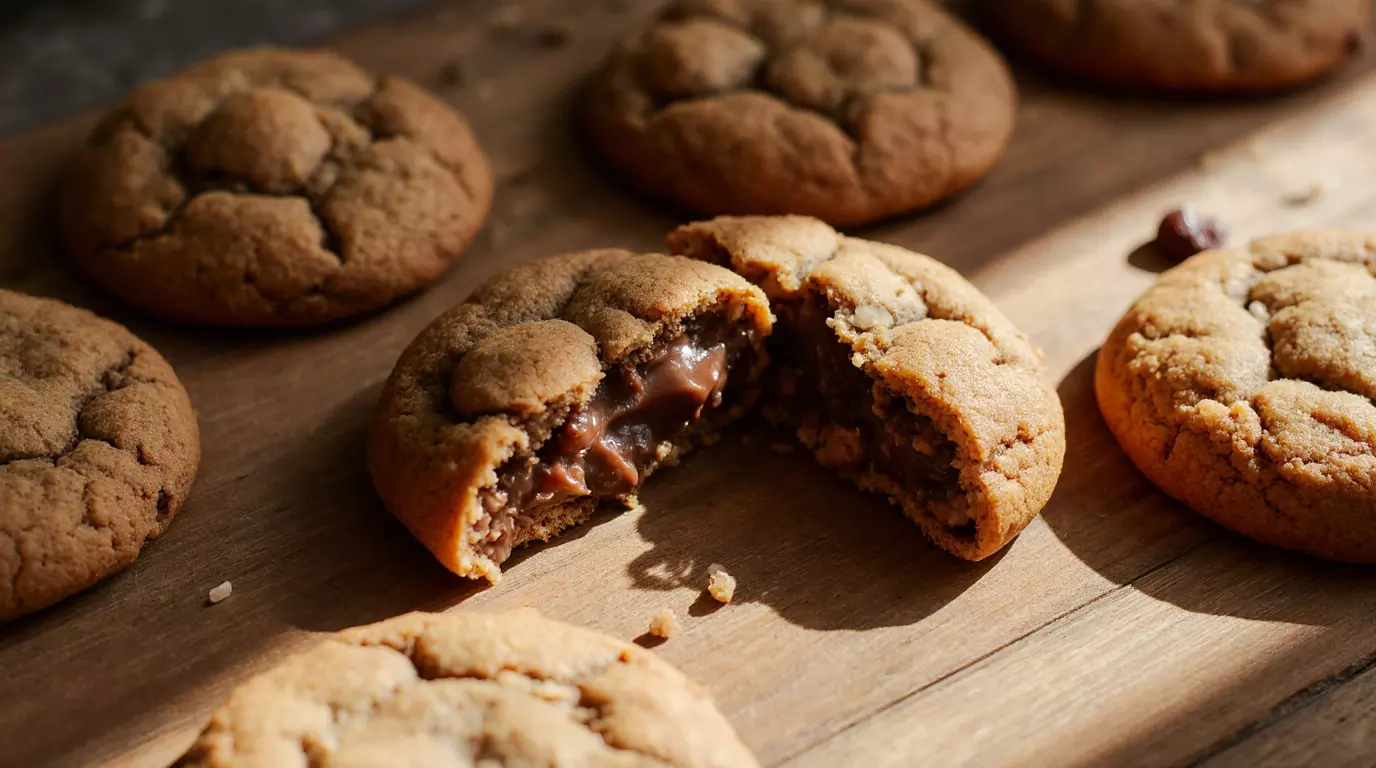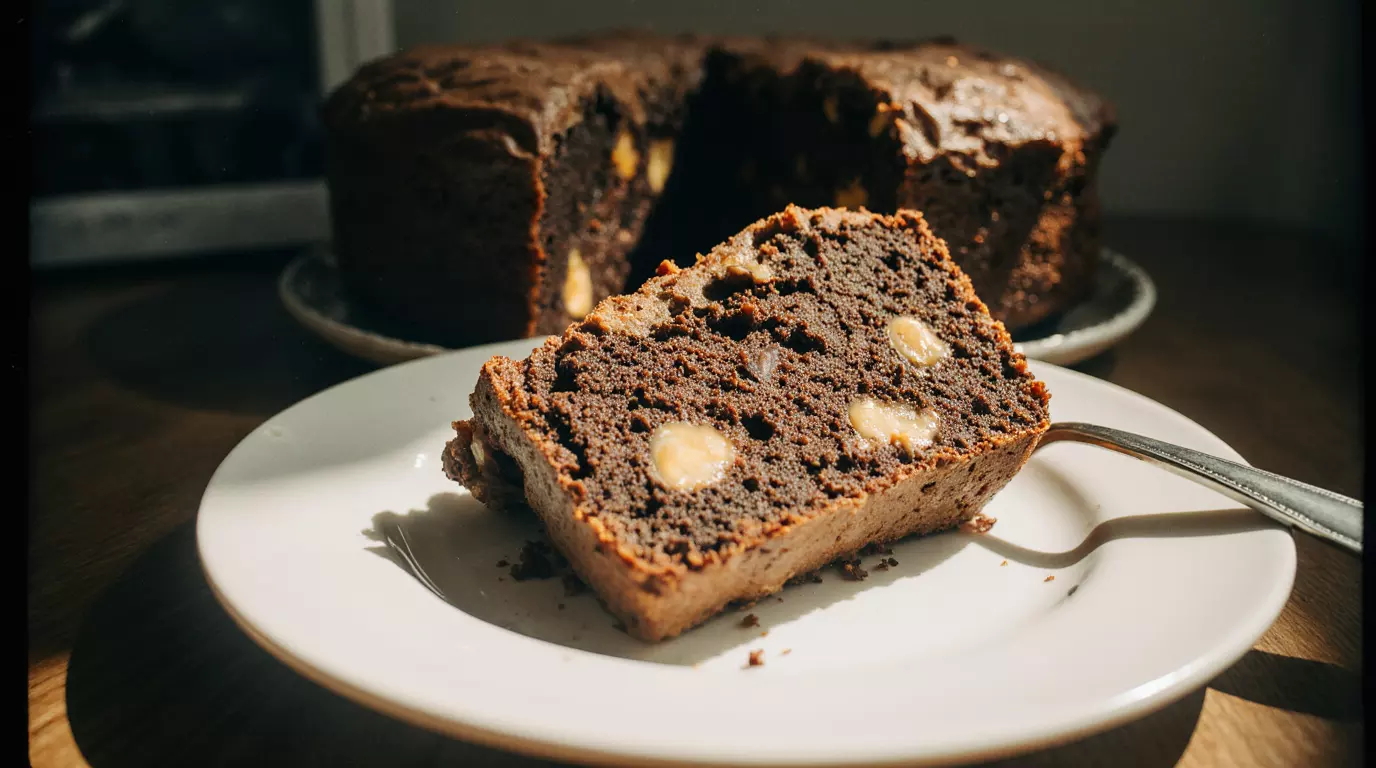
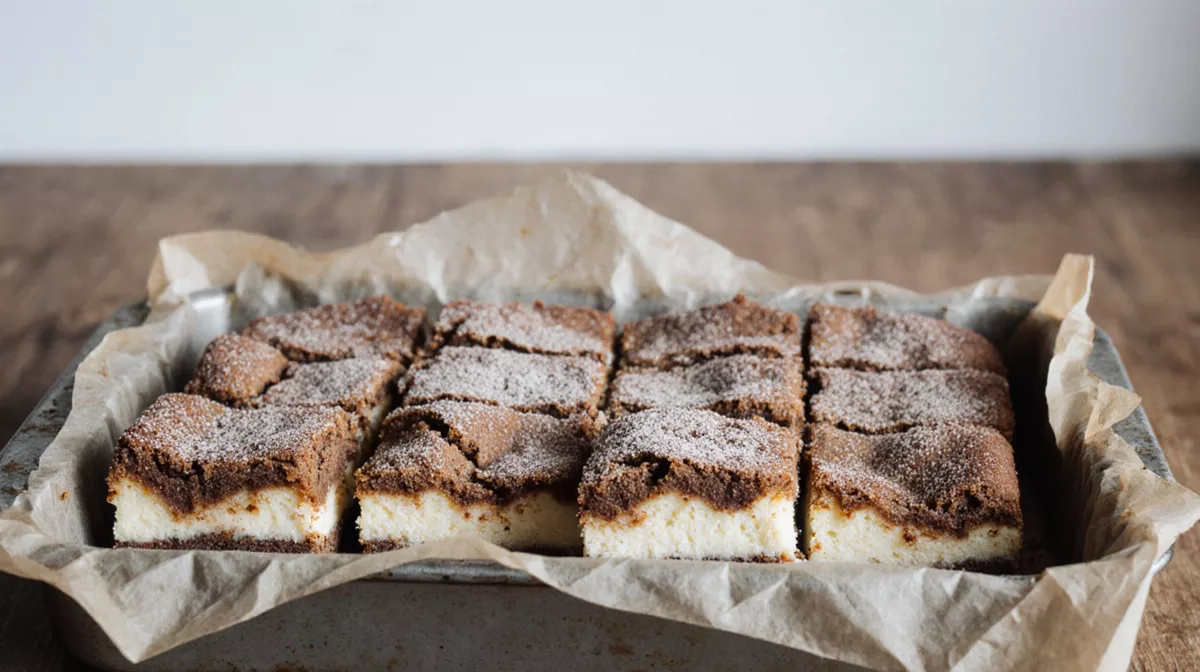
There’s a clear line between a swirl and a layer. Once I started baking cheesecake snickerdoodle blondies, that difference mattered more than anything else. These bars aren’t about subtle contrast. They’re about structure, weight, and that moment when a slice holds together cleanly instead of slumping onto the plate.
This version exists because some days a light swirl isn’t enough. A full cheesecake layer brings richness and presence, but it also brings risk. If the balance is off, the blondie bakes unevenly, the cheesecake stays loose, or the whole pan turns into a soft mess.
In this guide, I’ll show you how I build cheesecake snickerdoodle blondies with a defined base, a stable cheesecake center, and a cinnamon sugar top that ties everything together without overpowering it.
Quick Answer
Cheesecake snickerdoodle blondies are dessert bars made with a full cheesecake layer baked over a snickerdoodle blondie base.
They work when the layers are built separately, baked gently, and cooled completely before slicing.
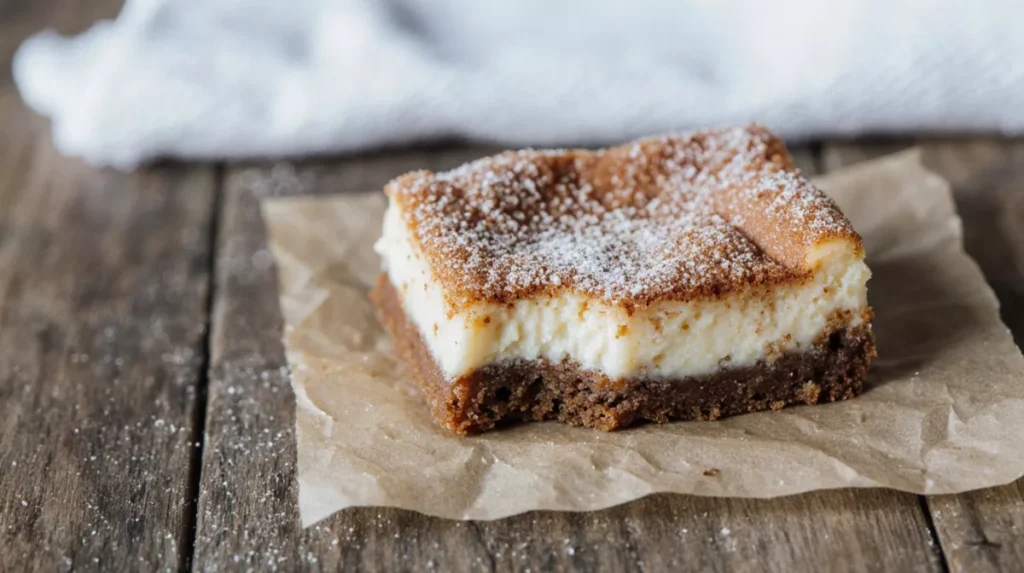
What Makes This Different From a Cream Cheese Swirl
This is not a swirl recipe. That distinction matters.
A swirl blends into the blondie. A cheesecake layer sits on top of it. The texture, bake time, and cooling behavior are completely different.
In my kitchen, the mistake people make is treating this like a thicker swirl. That approach leads to loose centers and broken slices. Cheesecake needs structure, patience, and a slightly gentler bake.
How This Recipe Builds on the Base Structure
This recipe is built from the same foundation used in my snickerdoodle blondies recipes built from one reliable base, but the assembly changes significantly.
What changes:
- A par-baked blondie base
- A fully mixed cheesecake layer
- Longer cooling time before cutting
What stays the same:
- Melted butter for chew
- Cinnamon sugar topping for aroma and contrast
- One-pan baking approach
The blondie anchors the dessert. The cheesecake becomes the centerpiece.
Cheesecake Snickerdoodle Blondies Recipe
Ingredients
Snickerdoodle Blondie Base
- Unsalted butter, melted and cooled
- Brown sugar
- Granulated sugar
- Large eggs, room temperature
- Vanilla extract
- All-purpose flour
- Cream of tartar
- Baking soda
- Fine salt
- Ground cinnamon
Cheesecake Layer
- Full-fat cream cheese, fully softened
- Granulated sugar
- Large eggs, room temperature
- Vanilla extract
Cinnamon Sugar Topping
- Granulated sugar
- Ground cinnamon
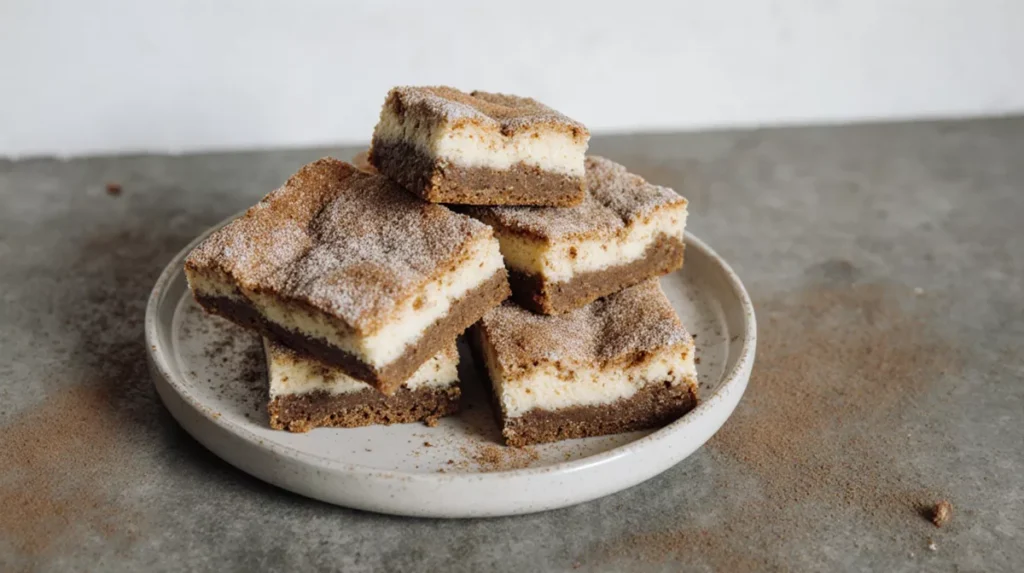
In my kitchen, this works because the base sets enough to support the cheesecake without drying out.
Why Par-Baking the Base Matters
Skipping the par-bake is the fastest way to ruin this recipe.
Without it, the cheesecake sinks into raw batter and bakes unevenly. The base ends up gummy, and the cheesecake never sets properly.
A short par-bake creates a barrier. It gives the cheesecake something firm to sit on while both layers finish together.
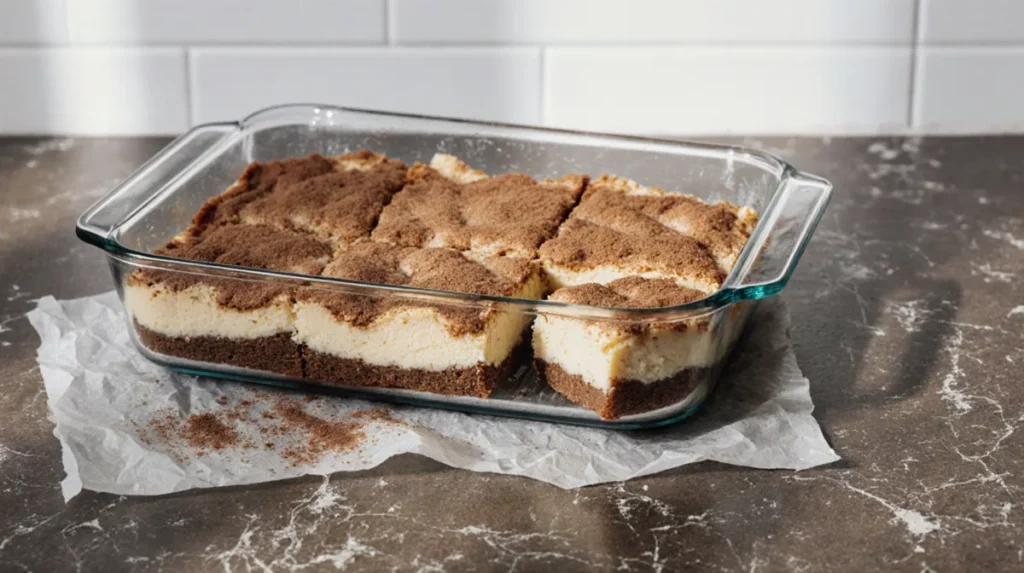
Cheesecake Texture Comes From Restraint
Cheesecake does not need air. Overmixing introduces bubbles that rise, crack, and collapse.
I mix the cheesecake layer slowly and stop as soon as it’s smooth. That restraint keeps the layer dense, creamy, and sliceable instead of fluffy and unstable.
How to Tell When Cheesecake Blondies Are Done
Time alone won’t save you here.
I look for:
- Firm edges on the cheesecake layer
- A center that jiggles slightly but does not ripple
- Cinnamon sugar melted evenly across the top
If the center still looks liquid, it’s not ready. If it’s fully firm, it’s overbaked.
Cooling Is Part of the Recipe
Cheesecake sets as it cools. Cutting early guarantees messy slices.
I cool the pan completely at room temperature, then refrigerate for several hours before slicing. This is what gives you clean layers and defined edges.
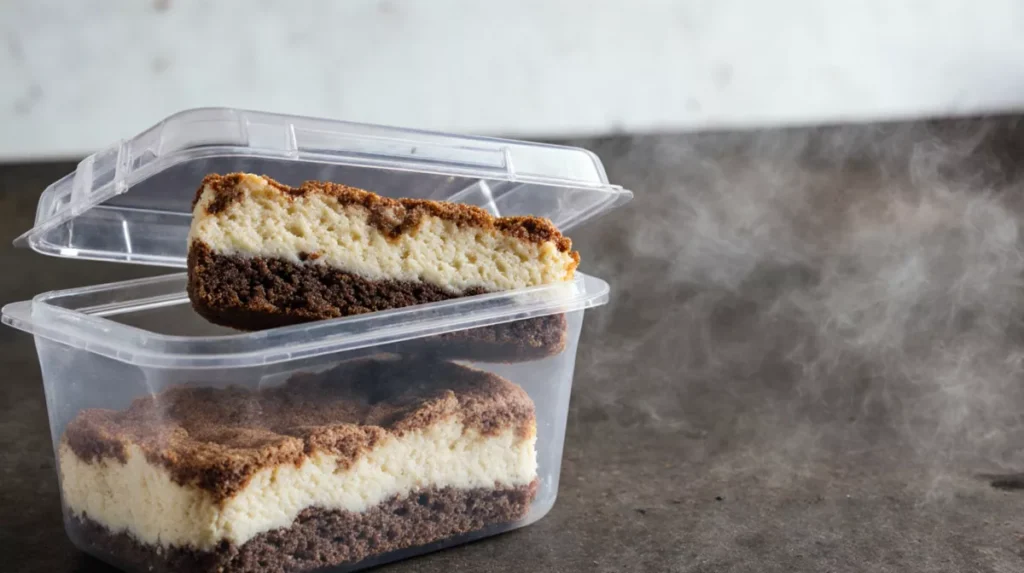
Storage and Make-Ahead Tips
- Refrigerator: Store covered for up to 5 days
- Freezer: Freeze sliced bars individually up to 2 months
- Serving: Let chilled bars sit at room temperature briefly for best texture
These bars are ideal for making a day ahead.
When I Make These at Home
I bake cheesecake snickerdoodle blondies when I want a dessert that feels intentional and substantial. They’re rich without being overwhelming, and they hold their shape beautifully when sliced.
This is the version I choose when presentation matters.
Common questions
Do cheesecake snickerdoodle blondies need a water bath?
Why did my cheesecake layer crack on top?
Can you bake cheesecake snickerdoodle blondies in a metal pan?
Should cheesecake snickerdoodle blondies be served cold or room temperature?
Why is my blondie base gummy under the cheesecake layer?
Can cheesecake snickerdoodle blondies be made a day ahead?
Final Thoughts From My Kitchen
Cheesecake snickerdoodle blondies succeed when structure comes first. The base supports. The cheesecake sets. The cinnamon sugar finishes the whole thing with warmth.
This recipe isn’t about shortcuts. It’s about building layers that behave the way you expect them to.