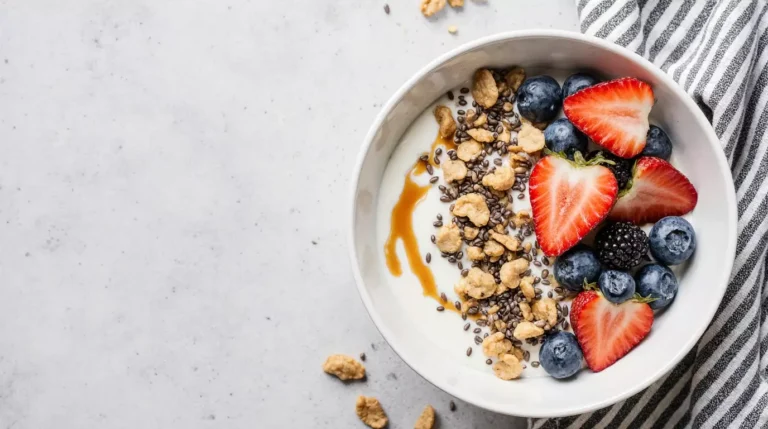
There are mornings when breakfast feels rushed, unplanned, and forgettable. You grab something quick, eat it half-aware, and feel hungry again an hour later. High protein breakfast bowl recipes exist to solve that exact problem. They bring structure to the morning without adding stress.
In short, a high protein breakfast bowl is a complete meal built in one bowl, where protein is the main component and everything else supports it. These bowls matter because mornings set the tone for the day. When breakfast includes enough protein, energy feels steadier and decisions get easier.
The key point is this: breakfast bowls work not because they are trendy, but because they are practical, repeatable, and easy to balance.
What Makes a Breakfast Bowl High Protein
Not every breakfast bowl is high protein. Many are built mostly around fruit or grains, with protein added in small amounts.
A high protein breakfast bowl is different.
It has:
- A clear protein base
- Supporting carbohydrates for energy
- Optional fats for fullness
- Ingredients that work together in one bowl
If protein is the largest or most intentional part of the bowl, you are on the right track.
Why Breakfast Bowls Work So Well in the Morning
Breakfast bowls succeed where many breakfasts fail because they are structured.
One Bowl, One Decision
When everything goes into one bowl, meals feel simpler. There is no guessing, no side dishes, and no imbalance.
This means:
- Less preparation stress
- Easier portion control
- Better consistency
In my kitchen, breakfast bowls are reliable because they remove unnecessary choices early in the day.
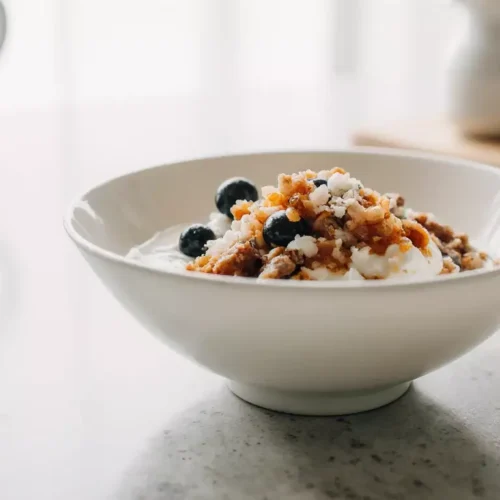
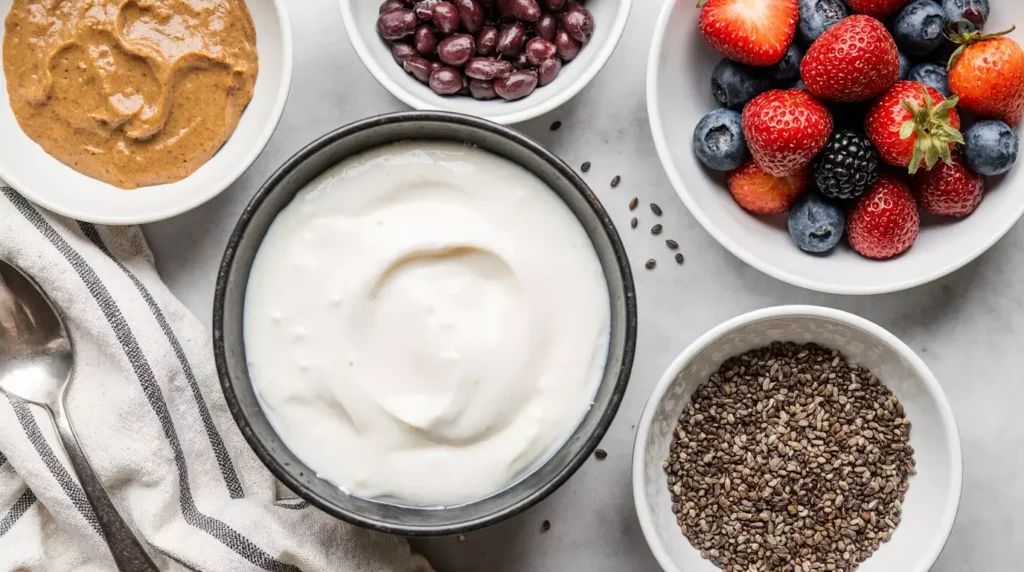
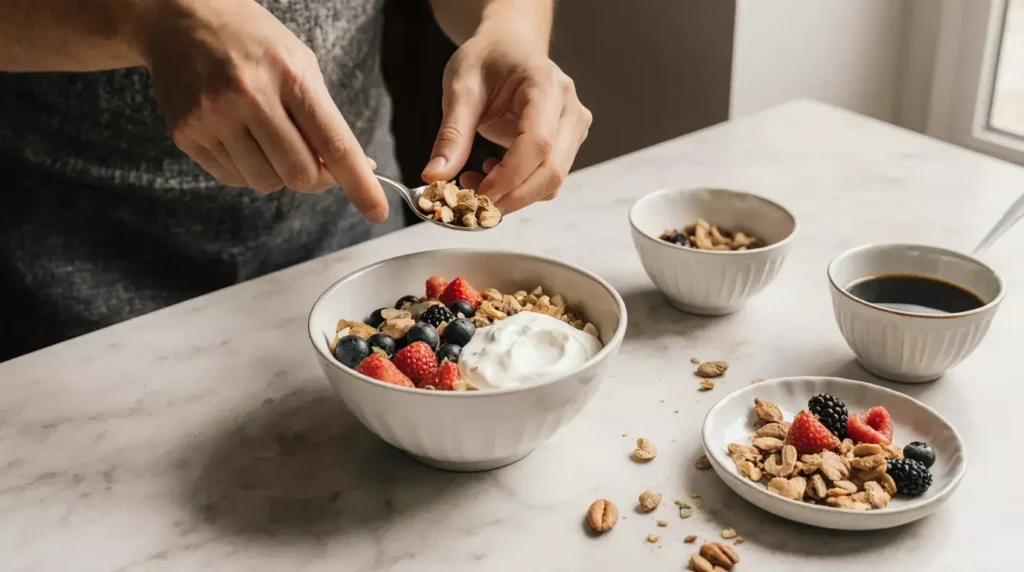
High Protein Greek Yogurt Breakfast Bowl
Ingredients
Main Ingredients
- 1 cup plain Greek yogurt
- 2 tablespoons peanut butter or almond butter
- 1 tablespoon chia seeds
- ½ cup berries fresh or frozen, thawed
- Honey optional, for drizzling
Instructions
- Spoon Greek yogurt into a bowl.
- Swirl in peanut butter.
- Sprinkle chia seeds on top.
- Add berries.
- Finish with honey if using.
Notes
Protein First Is the Rule for Breakfast Bowls
Just like other high protein meals, breakfast bowls work best when protein is chosen first.
Before adding fruit, grains, or toppings, decide:
- What is the protein in this bowl?
Once that is clear, everything else becomes easier to build.
This approach prevents bowls from becoming sugar-heavy or unbalanced.
Common Protein Bases for Breakfast Bowls
High protein breakfast bowl recipes usually rely on a few dependable protein bases.
Common options include:
- Eggs
- Greek yogurt
- Cottage cheese
- Tofu or tempeh
- Protein-enriched grains or blends
These proteins are easy to portion and pair well with breakfast-friendly flavors.
High Protein Breakfast Bowls With Eggs
Egg-based bowls are one of the most beginner-friendly options.
Why Eggs Work Well in Bowls
Eggs:
- Cook quickly
- Pair well with savory ingredients
- Provide structure and satiety
Egg breakfast bowls often include:
- Cooked eggs as the base
- Vegetables or grains for volume
- Simple toppings for flavor
These bowls feel hearty without being heavy.
Yogurt-Based High Protein Breakfast Bowls
Yogurt bowls are popular because they require little preparation.
Making Yogurt Bowls High Protein
To keep yogurt bowls high protein:
- Use Greek-style yogurt or similar options
- Add protein-rich toppings
- Avoid relying only on fruit
A yogurt bowl works best when protein stays central, not decorative.
Cottage Cheese Breakfast Bowls
Cottage cheese bowls are often overlooked, but they are highly effective.
Why Cottage Cheese Works
Cottage cheese:
- Is naturally high in protein
- Has a neutral flavor
- Works with sweet or savory ingredients
When used as a base, it creates a filling bowl without much effort.
Plant-Based High Protein Breakfast Bowls
Breakfast bowls also work well for plant-based eaters.
Plant Proteins That Fit Breakfast
Plant-based protein options include:
- Tofu
- Tempeh
- Legume-based mixes
- Protein-rich grains
The key is intentional pairing to keep protein levels high.
Sweet vs Savory Breakfast Bowls
High protein breakfast bowl recipes fall into two main categories.
Sweet Bowls
Sweet bowls often include:
- Yogurt or cottage cheese
- Fruit
- Nuts or seeds
These work well for people who prefer lighter flavors in the morning.
Savory Bowls
Savory bowls often include:
- Eggs or tofu
- Vegetables
- Grains or potatoes
These feel more like a traditional meal and keep hunger away longer for some people.
Both formats work. Preference matters more than rules.
Portion Awareness Without Measuring
Breakfast bowls make portion awareness easier because everything is visible.
In short:
- Protein should take up the largest share
- Carbs support energy, not dominate
- Toppings add flavor, not bulk
When bowls are built this way, tracking is rarely necessary.
Why Breakfast Bowls Are Easy to Repeat
Repeatability is one of the biggest strengths of breakfast bowls.
You can:
- Change toppings
- Swap fruits or vegetables
- Adjust textures
Without changing the core structure.
This makes breakfast bowls sustainable over time.
How Breakfast Bowls Fit Into the Bigger Protein Framework
Breakfast bowls are one application of the protein-first system.
The full framework that connects breakfast, lunch, and dinner into a flexible approach is explained in the main guide on high protein meals.
This article focuses only on breakfast bowls and does not overlap with other scenarios.
How to Prep High Protein Breakfast Bowls Ahead of Time
One reason breakfast bowls work so well is that they can be prepared ahead without losing quality. For busy mornings, this matters.
In short, a prep-friendly breakfast bowl has a stable protein base and toppings that hold well overnight or for several days.
The key point is to prep components, not necessarily the entire bowl.
Component-Based Meal Prep for Breakfast Bowls
Instead of assembling full bowls days in advance, it is often better to prepare the main elements separately.
A simple prep approach includes:
- Cooking or portioning the protein
- Washing and cutting fruits or vegetables
- Cooking grains if needed
Then, bowls can be assembled quickly in the morning.
This keeps textures fresh and flavors balanced.
Quick High Protein Breakfast Bowls vs Cooked Bowls
Not all breakfast bowls require cooking.
Quick, No-Cook Breakfast Bowls
Quick bowls usually rely on:
- Greek yogurt
- Cottage cheese
- Ready-to-eat proteins
These bowls come together in minutes and are ideal for rushed mornings.
Cooked Breakfast Bowls
Cooked bowls often use:
- Eggs
- Tofu
- Warm grains or vegetables
These feel more substantial and work well when you have a bit more time.
Both types fit the high protein breakfast bowl framework.
How to Balance Flavor Without Overloading the Bowl
One common mistake with breakfast bowls is adding too many toppings.
Why Simplicity Matters
Too many ingredients:
- Increase prep time
- Blur protein focus
- Make bowls harder to repeat
High protein breakfast bowl recipes work best when:
- Protein stays central
- Toppings are intentional
- Portions are controlled
Flavor comes from balance, not quantity.
Budget-Friendly High Protein Breakfast Bowls
Breakfast bowls can be very affordable when built intentionally.
How to Keep Bowls Budget-Friendly
Budget-friendly bowls rely on:
- Affordable protein bases like eggs, yogurt, or cottage cheese
- Seasonal or frozen produce
- Repeated ingredients across the week
This keeps cost per serving low without sacrificing protein.
Sweet Breakfast Bowls That Stay High Protein
Sweet bowls are often the easiest to overdo.
Keeping Sweet Bowls Balanced
To keep sweet bowls high protein:
- Start with a protein-dense base
- Add fruit in controlled portions
- Use nuts or seeds for texture, not bulk
This prevents bowls from becoming sugar-heavy.
Savory Breakfast Bowls for Longer Satiety
Savory bowls often feel more filling for many people.
They typically include:
- Eggs or tofu as the base
- Vegetables for volume
- Grains or potatoes for energy
These bowls resemble full meals and can keep hunger away for hours.
Portion Guidance for Breakfast Bowls
Portion awareness is easier when everything is visible in one bowl.
A balanced breakfast bowl usually looks like:
- Protein as the largest portion
- Carbs as a supporting layer
- Fats as accents
When bowls are built this way, they feel satisfying without excess.
Common Mistakes With High Protein Breakfast Bowl Recipes
Avoiding a few mistakes makes bowls much more effective.
Relying Too Much on Fruit
Fruit adds flavor, but it should not replace protein.
Treating Protein as a Topping
Protein needs to be the base, not an afterthought.
Changing Too Many Ingredients at Once
Too much variety slows prep and reduces consistency.
How Often to Eat Breakfast Bowls
Breakfast bowls do not need to be eaten every day.
Many people rotate:
- Breakfast bowls on busy days
- Other protein-based breakfasts on slower mornings
The structure matters more than the format.
How Breakfast Bowls Fit Into the Bigger High Protein System
Breakfast bowls are one tool within a larger protein-first approach.
They support:
- Consistent protein intake
- Easy meal prep
- Repeatable habits
This cluster focuses only on bowl-style breakfasts.
A Clear Summary for High Protein Breakfast Bowl Recipes
High protein breakfast bowl recipes are meals built in one bowl with protein as the foundation.
In short:
- Protein is chosen first
- Ingredients are simple and repeatable
- Bowls can be sweet or savory
- Prep can be minimal or planned
This means breakfast becomes structured without becoming stressful.
What has the highest protein for breakfast?
Foods like eggs, Greek-style yogurt, cottage cheese, tofu, and protein-enriched dairy options are among the highest-protein breakfast choices. In breakfast bowls, these foods work best as the base rather than as toppings, which keeps protein intake high without adding complexity.
How do I get 30g of protein in my breakfast?
Getting 30g of protein at breakfast is easiest when you build the bowl around one main protein source. For example, using Greek yogurt or eggs as the base and keeping fruit or grains as supporting ingredients usually gets you there without measuring or tracking closely. High protein breakfast bowl recipes are designed to make this kind of intake realistic and repeatable.
What are the 5 ingredient protein bowls?
Five ingredient protein bowls are simple breakfast bowls built with a protein base and four supporting components. A common structure is a protein base, one fruit or vegetable, one carb, one fat, and one flavor element. Keeping the ingredient count low makes these bowls fast to assemble and easy to repeat during the week.
How can I get 40g of protein for breakfast?
Reaching 40g of protein at breakfast usually means combining two protein sources in one bowl. For example, pairing eggs with cottage cheese, or Greek yogurt with an added protein-rich topping, can help you reach that level. High protein breakfast bowl recipes make this easier by keeping the bowl balanced instead of oversized.
Final Thoughts on Making Breakfast Bowls Work Long Term
High protein breakfast bowls are not about trends or presentation. They are about starting the day with intention.
When protein anchors the bowl, breakfast becomes more filling, more predictable, and easier to repeat. That consistency carries into the rest of the day.
Build a few bowl combinations you enjoy. Rotate them. Adjust when needed.
That is how breakfast bowls stay useful long after the novelty wears off.